
Parrot Blue and Gold Macaw

The Blue and Gold Macaw (Ara ararauna) stands out as one of South America’s most striking parrots, captivating bird enthusiasts with its brilliant cobalt blue wings and bright yellow chest. This comprehensive guide is perfect for bird lovers, potential pet owners, wildlife researchers, and anyone curious about these magnificent creatures.
We’ll explore the macaw’s impressive physical characteristics that make identification easy, from their powerful beaks to their distinctive coloring patterns. You’ll also discover their natural blue macaw habitat across South American rainforests and wetlands, plus learn about their complex macaw diet in wild environments. Finally, we’ll cover essential pet macaw requirements for those considering these intelligent birds as companions, along with current macaw conservation status and the threats these beautiful parrots face in the wild.
Physical Characteristics and Identification Features

Distinctive Blue and Gold Plumage Patterns
The Blue and Gold Macaw displays one of nature’s most striking color combinations. Their backs, wings, and tails showcase brilliant cobalt blue feathers that shimmer in sunlight, while their chest, belly, and underwing coverts feature rich golden-yellow plumage. This vibrant contrast makes them instantly recognizable among South American parrots.
The blue coloration extends from the crown of their head down through their back and wing coverts, creating a dramatic cape-like appearance. The golden yellow starts at the throat and spreads across the entire underside, creating perfect color balance. Some individuals may show slight variations in intensity, with deeper blues or more vibrant yellows depending on their genetics and diet.
Juvenile birds display duller versions of these colors, gradually developing the full intensity as they mature. The feathers themselves have a glossy, almost metallic quality that helps distinguish them from other macaw species.
Size and Weight Specifications
Ara ararauna ranks among the largest flying parrots in the world. Adult birds typically measure 32-34 inches (81-86 cm) from head to tail tip, with their impressive tail feathers accounting for roughly half this length.
| Measurement | Range |
|---|---|
| Total Length | 32-34 inches (81-86 cm) |
| Wingspan | 42-45 inches (107-114 cm) |
| Weight | 2-2.5 pounds (900-1,130 grams) |
| Tail Length | 15-18 inches (38-46 cm) |
Their substantial wingspan allows for powerful, graceful flight across vast distances in their natural habitat. Males tend to be slightly larger than females, though the difference is subtle and not always reliable for sexing purposes.
Beak Structure and Coloration
The macaw’s beak serves as their most powerful tool, perfectly adapted for cracking tough nuts and seeds. The upper mandible displays a distinctive black coloration that contrasts sharply with their colorful plumage. This dark pigmentation indicates high levels of melanin, which strengthens the beak structure.
The lower mandible typically appears lighter, ranging from dark gray to black. Both mandibles curve dramatically, with the upper beak overlapping the lower to create incredible crushing power – capable of generating over 400 pounds per square inch of pressure.
The beak’s shape varies slightly between individuals, with some showing more pronounced curves. This variation often relates to their preferred food sources and can indicate genetic lineages within populations.
Eye Color and Facial Features
Adult Blue and Gold Macaws possess striking pale yellow to golden eyes that provide excellent color vision and depth perception. Young birds start with dark brown or black eyes that gradually lighten as they mature, reaching full adult coloration by 3-4 years of age.
Their most distinctive facial feature is the bare white skin patches that surround their eyes and extend down to their lower beak. These featherless areas contain tiny black feather lines that create unique patterns – much like human fingerprints, no two birds share identical facial markings.
The white facial patches can flush pink or red when the bird becomes excited, stressed, or during courtship displays. This color change results from increased blood flow to the area and serves as an important communication tool between birds.
Natural Habitat and Geographic Distribution
South American Rainforest Regions
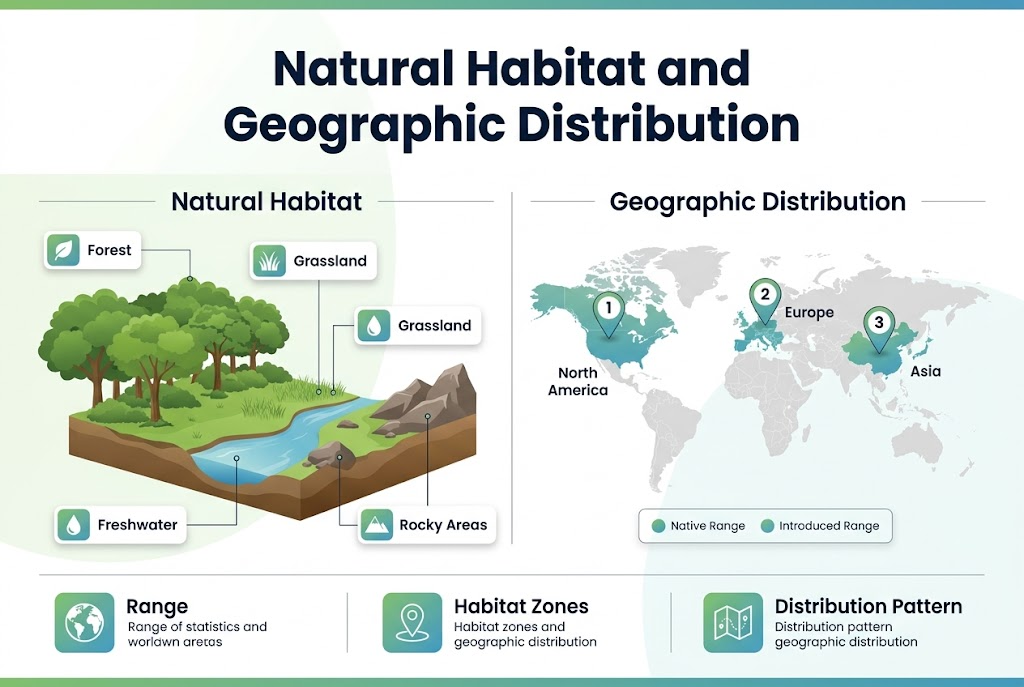
Blue and Gold Macaws call the vast rainforests of South America their home, with the Amazon Basin serving as their primary stronghold. These magnificent birds inhabit a massive territory that stretches across multiple countries, including Brazil, Peru, Colombia, Ecuador, Venezuela, Guyana, Suriname, French Guiana, and Bolivia. The species thrives in lowland tropical rainforests, preferring areas below 500 meters in elevation where the canopy provides both protection and abundant food sources.
The Amazon rainforest’s complex ecosystem perfectly suits the Blue and Gold Macaw’s needs, offering dense tree cover, river systems, and seasonal flooding patterns that create diverse microhabitats. These parrots also occupy gallery forests along major river systems like the Amazon, Orinoco, and their tributaries. The birds favor areas where primary forest meets secondary growth, taking advantage of the varied vegetation that provides different food sources throughout the year.
Climate plays a crucial role in their distribution. Ara ararauna populations concentrate in regions with consistent rainfall patterns and minimal seasonal temperature variations. The humid tropical climate maintains the forest canopy year-round, ensuring continuous access to their preferred food sources and nesting sites.
Preferred Tree Species and Nesting Sites
Blue and Gold Macaws show strong preferences for specific tree species that serve dual purposes as food sources and nesting locations. Palm trees, particularly Mauritia flexuosa (moriche palm) and Astrocaryum species, rank among their favorites. These palms provide both nutritious fruits and suitable nesting cavities in their tall, sturdy trunks.
For nesting, these macaws seek out large, mature trees with natural cavities or holes excavated by other animals. Cecropia trees, with their hollow trunks, often become prime real estate for breeding pairs. The birds also utilize cavities in Brazil nut trees (Bertholletia excelsa), mahogany trees, and various fig species. These nesting sites typically sit 15-30 meters above ground, offering protection from predators and flooding.
The macaws prefer cavities with specific dimensions – typically 30-40 centimeters in diameter and 60-100 centimeters deep. These specifications provide adequate space for the adult pair and their developing chicks while maintaining security. Dead palm snags often become highly sought-after nesting sites because their soft interior wood allows easier cavity modification.
| Tree Species | Primary Use | Height Range |
|---|---|---|
| Mauritia flexuosa | Food & Nesting | 20-35m |
| Cecropia species | Nesting | 15-25m |
| Bertholletia excelsa | Food & Nesting | 30-50m |
| Astrocaryum species | Food & Nesting | 10-20m |
Seasonal Migration Patterns
Blue and Gold Macaw exhibit fascinating seasonal movement patterns tied closely to food availability and breeding cycles. Unlike true migration, these birds engage in local and regional movements following fruit and nut production cycles across their habitat. During the wet season (December through May in most regions), the birds spread out across the forest as food becomes abundant and widely distributed.
The dry season triggers more concentrated movements as certain tree species fruit in specific areas. Large flocks often gather at clay licks along riverbanks, where they consume mineral-rich soil to supplement their diet. These gatherings can include hundreds of individuals from vast surrounding areas, creating spectacular wildlife viewing opportunities.
Breeding season movements show different patterns, with pairs becoming more territorial and reducing their ranging behavior. Young birds, once they leave their parents, often join nomadic flocks that can travel considerable distances searching for food and suitable habitat. These juvenile groups may cover territories spanning hundreds of square kilometers.
River systems heavily influence Blue and Gold Macaw movements, serving as natural highways through the forest. The birds follow these waterways during seasonal movements, using them for navigation and accessing different habitat types. Seasonal flooding in many areas forces temporary relocations to higher ground, where the macaws concentrate until water levels recede.
Weather patterns also drive short-term movements. During heavy storms or extended periods of rain, flocks seek shelter in dense forest areas and may remain relatively stationary until conditions improve.
Diet and Feeding Behaviors in the Wild
Primary Food Sources and Nutritional Needs
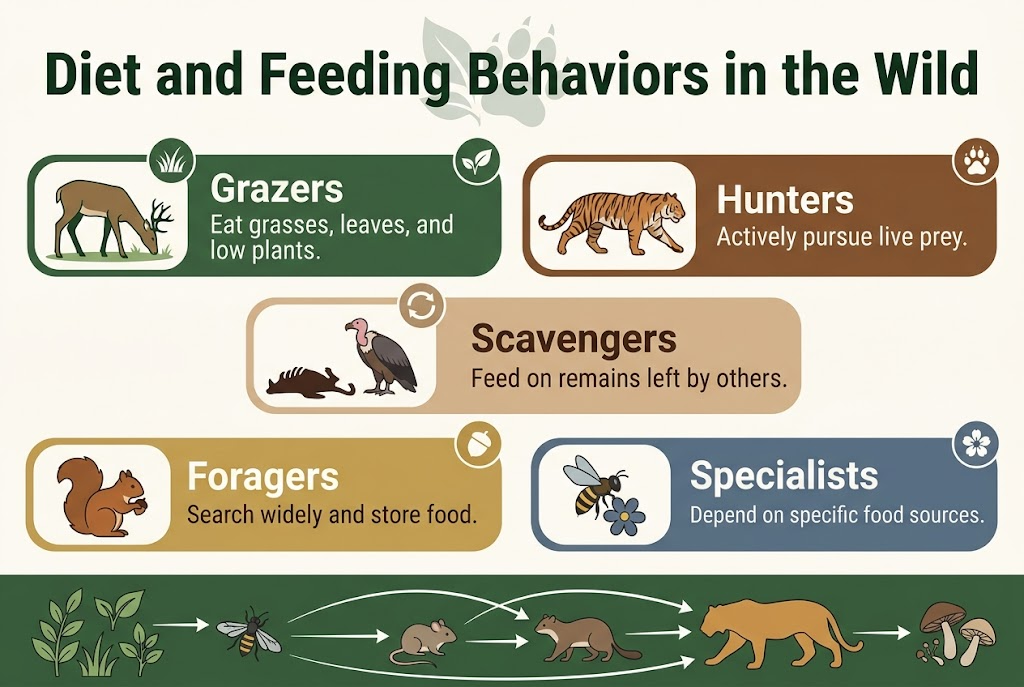
The Blue and Gold Macaw’s macaw diet wild consists primarily of fruits, nuts, seeds, and palm fruits. These magnificent birds show a strong preference for palm fruits, particularly from species like Mauritia flexuosa and Attalea maripa. Their powerful beaks can crack open even the toughest nuts, including Brazil nuts and various palm seeds that other animals cannot access.
Ara ararauna requires a diverse nutritional profile to maintain their vibrant plumage and high energy levels. Their diet includes:
- Fruits: Figs, mangoes, and various rainforest berries
- Seeds: Sunflower seeds, grass seeds, and legume pods
- Nuts: Brazil nuts, palm nuts, and cashews
- Vegetation: Young leaves, flowers, and bark
- Clay: Rich mineral deposits from riverbank clay licks
The clay consumption plays a crucial role in their health, providing essential minerals and helping neutralize toxins from certain seeds and fruits. These South American parrots can often be seen gathering at clay licks in large numbers, creating spectacular displays of blue and gold against the earthy riverbanks.
Foraging Techniques and Daily Feeding Schedule
Blue and Gold Macaw are active foragers that spend considerable portions of their day searching for food. They typically begin feeding at dawn, taking advantage of cooler temperatures and peak fruit availability. Their feeding schedule follows a pattern:
Morning (5:00-9:00 AM): Primary feeding period focusing on energy-rich fruits and nuts
Midday (11:00 AM-2:00 PM): Rest period with occasional snacking
Afternoon (3:00-6:00 PM): Secondary feeding session before roosting
These intelligent birds use various foraging techniques. They often hang upside down from branches to reach fruits, demonstrating remarkable acrobatic abilities. Their zygodactyl feet (two toes forward, two backward) provide exceptional gripping strength for manipulating food items. Macaws also use their tongues as tools, manipulating seeds and extracting pulp from fruits with precision.
Social foraging is common among Blue and Gold Macaw flocks. They share information about food sources through vocalizations and follow each other to productive feeding areas. Younger birds learn foraging techniques by observing adults, creating a knowledge transfer system that benefits the entire flock.
Role in Seed Dispersal and Ecosystem Balance
Blue and Gold Macaw serve as crucial seed dispersers in their blue macaw habitat. Their large size and extensive flight range allow them to transport seeds across vast distances, sometimes over 15 kilometers from the parent plant. This long-distance dispersal helps maintain genetic diversity among plant populations and enables forest regeneration across fragmented landscapes.
The macaws’ digestive system is perfectly adapted for seed dispersal. Many seeds pass through their digestive tract unharmed, often with improved germination rates due to the scarification process. Large seeds that would otherwise fall close to parent trees get distributed to new areas, reducing competition and increasing survival chances.
Their feeding habits create a ripple effect throughout the ecosystem:
| Impact Area | Description |
|---|---|
| Forest Regeneration | Disperses seeds to clearings and forest edges |
| Plant Diversity | Maintains genetic flow between plant populations |
| Habitat Creation | New plant growth creates habitats for other species |
| Soil Enrichment | Droppings provide fertilizer for dispersed seeds |
The loss of macaw populations directly impacts forest dynamics. Studies show that areas with reduced macaw populations experience decreased seed dispersal for large-seeded plants, leading to changes in forest composition over time. This makes their conservation essential not just for the species itself, but for maintaining the ecological balance of South American rainforests.
Social Structure and Communication Methods

Flock Dynamics and Pair Bonding
Blue and Gold Macaws are highly social creatures that form complex relationships both within large flocks and as monogamous pairs. In the wild, these magnificent Ara ararauna parrots gather in flocks ranging from 10 to 30 individuals, creating a dynamic social hierarchy based on age, experience, and breeding status. Adult pairs maintain strong bonds that often last for life, spending considerable time preening each other and sharing food as displays of affection and trust.
The flock structure serves multiple purposes beyond companionship. Experienced birds teach younger macaws essential survival skills, including identifying food sources, recognizing predators, and navigating their territory. Dominant pairs typically lead feeding expeditions and choose roosting sites, while subordinate birds follow their guidance. During breeding season, established pairs may temporarily separate from the main flock to focus on nesting duties, but they typically return with their offspring once chicks are independent.
Social grooming plays a crucial role in maintaining these relationships. Macaws spend hours each day preening their partner’s head and neck feathers – areas they cannot reach themselves. This mutual grooming strengthens pair bonds and helps maintain healthy plumage essential for flight and temperature regulation.
Vocal Calls and Their Meanings
Macaw communication involves an impressive repertoire of vocalizations, each serving specific social functions. Their powerful calls can be heard over distances exceeding one mile, making them essential for maintaining contact across their expansive rainforest habitat.
Contact Calls: Sharp, penetrating squawks help flock members stay connected while foraging in dense canopy. These calls vary in intensity and frequency depending on distance and urgency.
Alarm Calls: Rapid, high-pitched screams alert the entire flock to potential threats. Different predators trigger distinct alarm patterns – aerial threats produce different warnings than ground-based dangers.
Food Calls: Softer, rhythmic vocalizations announce discovered food sources to nearby flock members. These calls often include specific notes indicating food quality and quantity.
Courtship Vocalizations: Mated pairs exchange gentle, melodic sounds during bonding sessions. These intimate calls are typically quieter and more musical than other vocalizations.
Territorial Calls: Deep, resonant screams establish ownership of roosting sites and feeding areas. These calls are particularly intense during breeding season when competition for prime nesting locations increases.
Body Language and Visual Displays
Blue and Gold Macaws communicate extensively through body language and visual signals. Their expressive faces and dynamic postures convey emotions and intentions clearly to other flock members.
Feather Positioning: Raised head feathers indicate alertness or aggression, while flattened feathers suggest submission or fear. Partially raised crest feathers often signal curiosity or mild excitement.
Wing Displays: Spread wings can indicate territorial behavior, mating readiness, or threat displays. Quick wing flutters often express excitement or anticipation, particularly around feeding time.
Beak Movements: Open beaks paired with forward-leaning postures typically signal aggression or defensive behavior. Gentle beak touching between pairs demonstrates affection and bonding.
Eye Contact: Direct, sustained eye contact often indicates dominance challenges, while averted gazes suggest submission. Rapid blinking can signal stress or uncertainty.
Posture Changes: Upright, tall postures display confidence and dominance, while crouched positions indicate submission or fear. Relaxed, slightly hunched postures suggest contentment and security.
Territory Marking Behaviors
Macaws establish and maintain territories through various marking behaviors that communicate ownership and boundaries to other birds. These territorial displays become particularly pronounced during breeding season when competition for prime nesting sites intensifies.
Scent Marking: Macaws rub their preen glands against tree branches and nest entrances, leaving distinctive scents that identify their territory. This chemical communication helps prevent conflicts by clearly marking claimed areas.
Visual Markers: Pairs often create visible signs of occupation by stripping bark from trees around their nesting sites and leaving distinctive bite marks on branches. These physical alterations serve as lasting territorial markers.
Vocal Boundaries: Regular calling from specific perches establishes acoustic territories. Pairs perform coordinated calling sessions from prominent locations, essentially creating invisible boundary lines through sound.
Flight Patterns: Territorial birds establish regular flight routes between feeding areas, water sources, and roosting sites. These consistent patterns help other macaws recognize claimed territories and avoid conflicts.
Successful territory establishment requires both partners to participate actively in marking behaviors. The size and quality of defended territories directly impact breeding success, as larger territories typically provide better access to food resources and safer nesting locations for raising young.
Breeding Cycle and Reproductive Habits
Conservation Status and Environmental Threats
Population Decline Factors
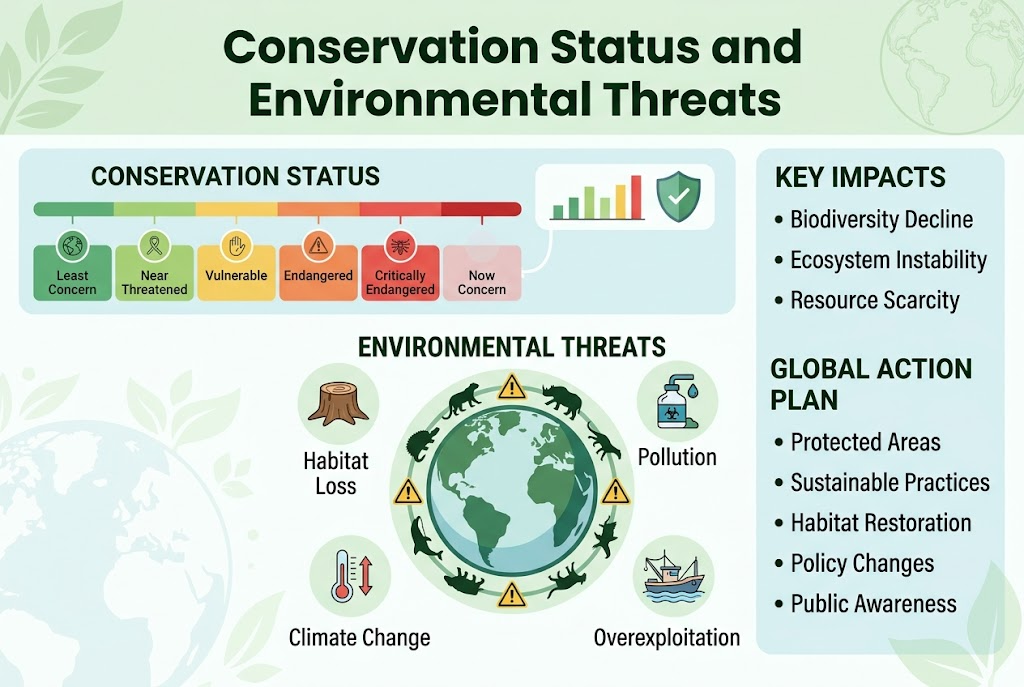
The Blue and Gold Macaw faces significant challenges that have led to concerning population drops across their range. Wild populations have decreased by approximately 30% over the past three decades, with some regional populations experiencing even steeper declines.
Climate change plays a major role in these decreases. Shifting weather patterns affect the availability of their primary food sources, particularly palm fruits that make up a large portion of their diet. Extended dry seasons and unpredictable rainfall disrupt breeding cycles and reduce nesting success rates.
Human encroachment into their territories creates additional stress. As communities expand into previously untouched areas, Ara ararauna populations become fragmented and isolated. This isolation reduces genetic diversity and makes recovery more difficult.
Disease transmission from domestic animals and other introduced species has also impacted wild populations. Macaws have limited natural immunity to certain pathogens that spread as human activity increases in their habitats.
Habitat Destruction Impact
Deforestation remains the most significant threat to Blue and Gold Macaw populations. The Amazon rainforest loses approximately 17,000 square kilometers annually, directly destroying the tall trees these magnificent birds depend on for nesting and roosting.
Agricultural expansion accounts for roughly 80% of this habitat loss. Cattle ranching and soy cultivation have converted millions of acres of pristine forest into farmland. Palm oil plantations have also claimed substantial portions of their natural habitat, removing the very trees that provide their food source.
Mining operations create additional problems beyond direct habitat loss. Heavy metals and chemicals contaminate water sources and soil, affecting the entire ecosystem. The noise and activity from mining equipment disrupts breeding behaviors and forces birds to abandon traditional nesting areas.
Infrastructure development, including roads and dams, fragments remaining habitat into smaller, disconnected patches. These isolated areas cannot support stable breeding populations and make it difficult for young birds to find mates and establish territories.
Illegal Pet Trade Consequences
The international pet trade has devastated wild macaw conservation status across South America. A single Blue and Gold Macaw can sell for $15,000-$25,000 in illegal markets, creating strong financial incentives for poachers.
Nest raiding is particularly damaging because collectors target young chicks, removing them before they can contribute to wild populations. Professional poachers often destroy nesting trees in the process, eliminating future breeding sites. Studies show that for every bird successfully captured and transported, three to five others die during the process.
The most devastating aspect is the loss of breeding adults. When parent birds are killed defending their nests, entire family units are destroyed. This creates a cascading effect where fewer experienced adults remain to teach survival skills to younger generations.
Cross-border smuggling networks have become increasingly sophisticated, making enforcement difficult. Birds are often drugged during transport, leading to high mortality rates and long-term health problems for survivors.
Current Protection Efforts
Several countries have implemented comprehensive protection programs for South American parrots. Brazil’s National Action Plan for Macaw Conservation includes habitat restoration, anti-poaching enforcement, and community education initiatives.
Protected reserves now cover approximately 60% of the Blue and Gold Macaw’s historic range. These areas provide safe breeding grounds and help maintain genetic diversity through connected corridors. The Mamirauá Sustainable Development Reserve in Brazil has become a model for balancing conservation with local community needs.
Community-based conservation programs have shown remarkable success. Local indigenous groups receive training and equipment to monitor macaw populations while generating income through eco-tourism. These programs create economic incentives for protection rather than exploitation.
Captive breeding programs contribute to conservation through research and potential reintroduction efforts. Facilities like the Loro Parque Foundation have successfully bred hundreds of macaws while advancing understanding of their reproductive needs and behaviors.
International cooperation through CITES (Convention on International Trade in Endangered Species) has strengthened enforcement against illegal trade. Regular monitoring and reporting requirements help track population trends and identify emerging threats before they become critical.
Care Requirements for Captive Birds
Housing and Space Specifications
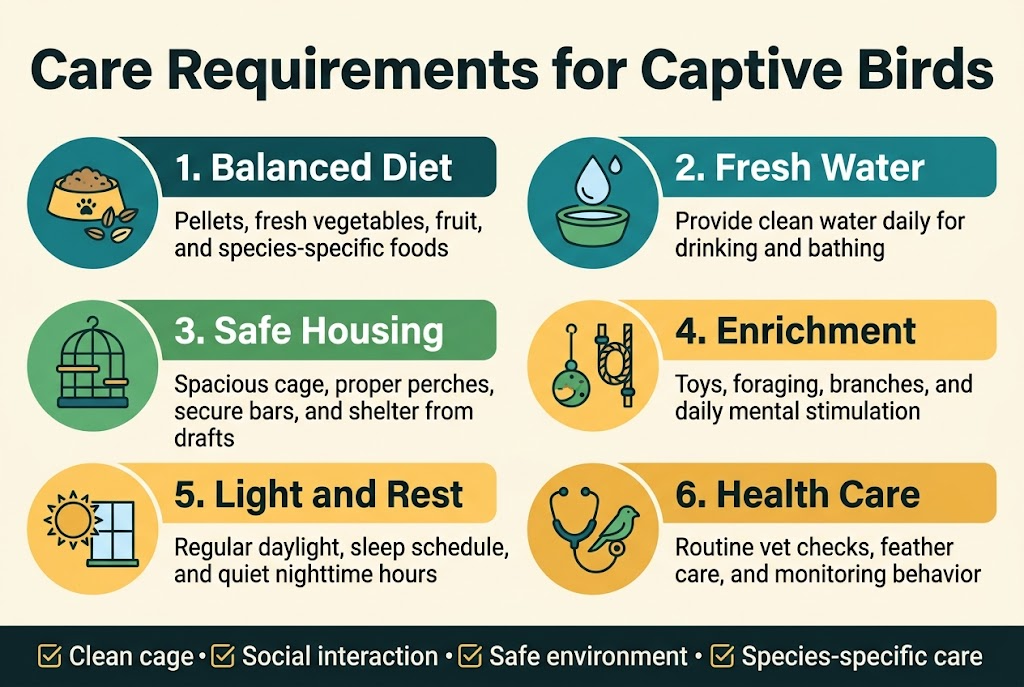
Blue and Gold Macaws are massive birds that need equally massive living spaces. A minimum cage size of 40 x 30 x 75 inches represents the absolute smallest acceptable dimensions, though bigger is always better for these intelligent giants. The bar spacing should measure between 1 to 1.5 inches – wide enough to prevent toe catching but narrow enough to stop escape attempts.
Stainless steel or powder-coated metal cages work best since these powerful birds can easily destroy weaker materials with their beaks. Avoid galvanized metal which can cause zinc poisoning. The cage should include multiple perches of varying diameters (1-3 inches) made from natural hardwood branches like apple, willow, or birch to promote proper foot health.
Daily flight time outside the cage remains non-negotiable. Pet macaw requirements include several hours of supervised freedom in a bird-proofed room or outdoor aviary. Outdoor flight enclosures should measure at least 30 x 15 x 15 feet with proper protection from predators and weather elements.
Temperature control matters significantly – maintain environments between 65-80°F with 50-60% humidity. Position cages away from kitchens (cooking fumes are toxic), drafty areas, and direct sunlight. These South American parrots naturally roost high in trees, so place cages at eye level or higher when possible.
Nutritional Diet Planning
Proper nutrition for captive Blue and Gold Macaws requires careful planning that mimics their diverse wild diet while meeting their specific nutritional needs. A high-quality pellet should form the foundation, making up 60-70% of their daily intake. Choose pellets specifically formulated for large parrots without artificial colors or excessive sugar.
Fresh fruits and vegetables should comprise 25-30% of their diet. Excellent choices include:
- Safe fruits: Apples (seedless), bananas, berries, grapes, oranges, papayas, and mangoes
- Recommended vegetables: Leafy greens, carrots, sweet potatoes, broccoli, bell peppers, and squash
- Healthy proteins: Cooked chicken, hard-boiled eggs, and legumes (2-3 times weekly)
Nuts and seeds should only represent 5-10% of their diet despite being favorites. Macaws love almonds, Brazil nuts, walnuts, and pine nuts, but these high-fat treats can lead to obesity and liver problems if overfed.
Foods to avoid completely include chocolate, avocado, caffeine, alcohol, fruit pits, onions, garlic, and high-sodium processed foods. Fresh water should always be available and changed daily.
Feed adult macaws twice daily with consistent timing. Young birds may need three smaller meals. Monitor portion sizes carefully – an adult Blue and Gold Macaw typically eats about 1/2 to 3/4 cup of food daily.
Mental Stimulation and Enrichment Activities
Blue and Gold Macaws possess intelligence comparable to a 3-5 year old child, making mental stimulation absolutely critical for their psychological well-being. Without proper enrichment, these brilliant birds develop destructive behaviors like feather plucking, screaming, and aggression.
Rotate toys weekly to maintain novelty and interest. Provide puzzle feeders that make birds work for treats, mimicking natural foraging behaviors. Wooden blocks for chewing, rope toys for manipulation, and interactive puzzle toys challenge their problem-solving abilities. Avoid toys with small parts that could be swallowed or zinc/lead components.
Daily enrichment activities include:
- Foraging games with hidden treats in paper cups or boxes
- Teaching new words and tricks through positive reinforcement training
- Playing classical music or nature sounds
- Providing supervised interaction with family members
- Offering different textures like cardboard, paper, and natural branches
Social interaction remains the most important enrichment factor. These naturally social creatures need several hours of quality time with their human flock daily. Training sessions using positive reinforcement not only provide mental exercise but also strengthen the human-bird bond.
Environmental changes like rearranging perches, introducing new safe branches, or creating temporary play areas keep their minds active. Some macaws enjoy watching bird videos or looking out windows at outdoor activity, though each bird has individual preferences that owners should learn to recognize and accommodate.
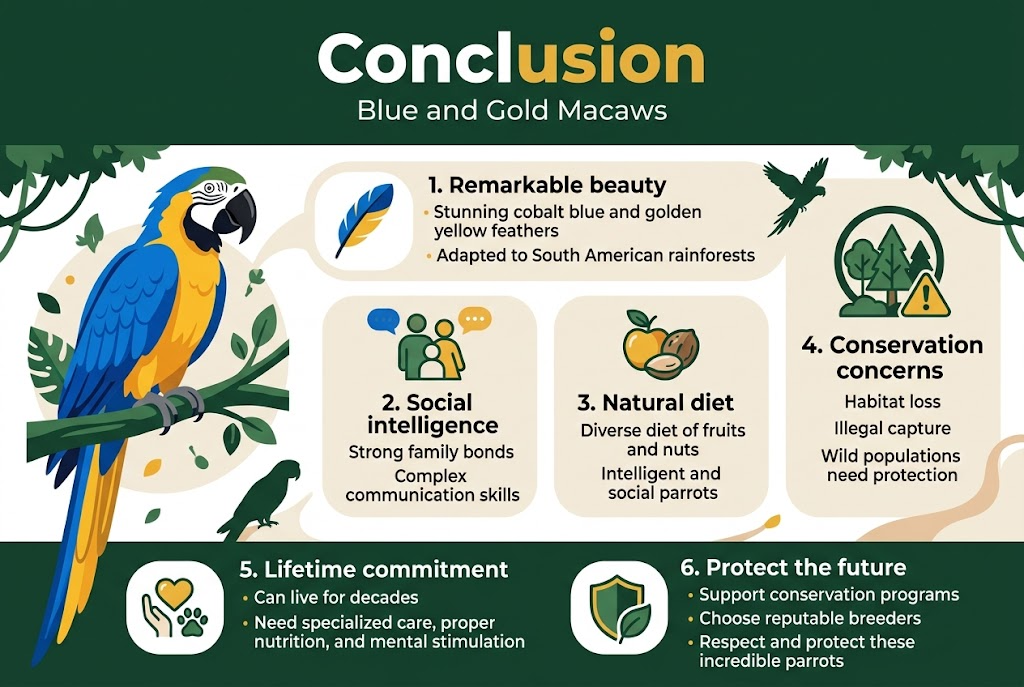
Blue and Gold Macaws truly stand out as one of nature’s most remarkable birds. From their stunning cobalt blue and golden yellow feathers to their complex social behaviors, these magnificent creatures have adapted perfectly to life in South American rainforests. Their strong family bonds, diverse diet of fruits and nuts, and impressive communication skills show just how intelligent and social these parrots really are. Unfortunately, habitat loss and illegal capture continue to threaten wild populations, making conservation efforts more important than ever.
If you’re considering bringing one of these amazing birds into your life, remember that they need serious commitment and expertise. Blue and Gold Macaws can live for decades and require specialized care, proper nutrition, and plenty of mental stimulation. Supporting conservation programs and choosing reputable breeders helps protect both wild populations and ensures healthy captive birds. These incredible parrots deserve our respect and protection, whether they’re soaring through the Amazon canopy or sharing our homes as beloved companions.
