
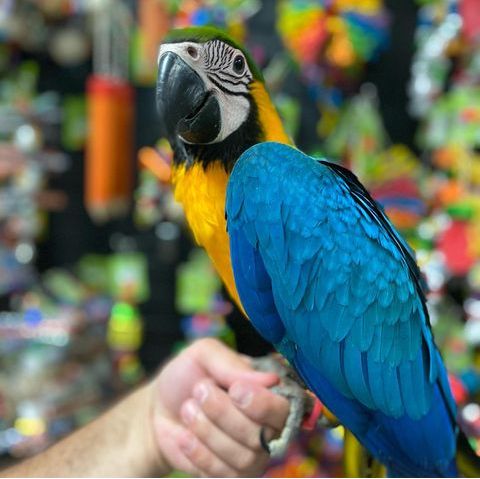
Blue and Gold Macaw for Sale
Parrot Blue and Gold Macaw for Sale
Blue and Gold Macaw for Sale, in the wild, blue and gold macaws are found across a large area, starting from Panama in Central America and extending into most countries of northern South America They have also been introduced to Puerto Rico. Usually, they travel in pairs, but they may gather in larger groups at certain times of the year or during the mornings and evenings to search for food.
Their population has declined significantly due to habitat loss, hunting, and trapping. In the past, many young birds were taken directly from their nests and sold as pets. This practice led to the death of many protective parents and the loss of many young parrots. Since 1935, blue and gold macaws have been successfully bred in the United States. There are many breeders available, and because of this, they are one of the more affordable large parrots to own.
Temperament
Blue and gold macaws are friendly and have a calm, gentle nature, making them great pets.
They are intelligent, eager to learn, and very good at talking. When given the chance to interact with different people and other birds, they adapt well and enjoy learning new tricks. At home, these macaws can behave like affectionate dogs, wanting to be close to their owners and seeking attention. They are also content perched and watch the activities around them.
Speech and Vocalizations
Blue and gold macaws can make very loud noises, which may not be suitable for people living in apartments or condominiums, or for those with young children.
These birds are excellent talkers and can learn quickly, enjoying the opportunity to please their owners. They can learn around 20 words and phrases.
Blue and Gold Macaw Colors and Markings
They usually have a green forehead that transitions into a teal blue on the neck, back, tail, and wings. The chest, under the wings, and belly are bright yellow.
They have large black beaks and a black patch of feathers just below the beak.
Blue and gold macaws are a single species, although some experts believe there are two variations or subspecies. The Bolivian blue and gold macaw is a larger bird with more true blue coloring, while the blue-throated macaw has a teal blue throat instead of a black one.
This species is monomorphic, meaning that it is difficult to tell males and females apart.
Some believe that males have a flatter head and females a narrower beak, but the only reliable way to determine the sex is through surgery or genetic testing.
Caring for a Blue and Gold Macaw
Blue and gold macaws thrive on attention from their owners and form strong bonds with their families. Proper socialization and mental stimulation are important to keep them happy and prevent boredom-related behaviors like excessive screaming.
These birds need a spacious cage that is at least 5 feet tall and 3 to 4 feet wide and long.
This allows them to stretch, hop, and move around. Some owners create a bird-safe room for them to roam in freely. Since they can chew on almost anything, it is important to remove items like electrical wires, jewelry, and wooden furniture.
Before bringing a blue and gold macaw into your home, consider the cost of ownership.
This includes the bird’s price, veterinary care, quality food, and the cost of a cage, play stand, and toys.
Common Health Problems
Although macaws can live for many years, they are susceptible to several health issues.
These include a viral infection known as macaw wasting syndrome and overgrown beaks. Like other parrots, blue and gold macaws may engage in self-harm by plucking their own feathers if they feel neglected or bored. A balanced diet and regular exercise are essential for maintaining a healthy macaw. These birds are at risk of developing diseases like obesity, fatty liver disease, and fatty tumors.
Diet and Nutrition
In the wild, blue and gold macaws eat a variety of seeds, plant matter, fruits, and nuts.In captivity, they should be fed a diet that includes a wide range of fresh fruits and vegetables.
Each macaw will eat approximately 1/2 to 3/4 cup of parrot mix and 1/2 to 3/4 cup of fruits and vegetables daily. It is best to feed them once in the morning and once at dusk.
Fruits that are safe for macaws include apples, pears, plums, cherries, grapes, oranges, bananas, mangos, papayas, and berries. Healthy vegetables include carrots, sweet potatoes, cucumbers, zucchini, and leafy greens. Avoid feeding avocado, chocolate, or rhubarb, as these are toxic to birds.

Elizabeth Kate –
OMG!! When you told me some months back that your Blue and Gold Macaw were great talkers i wasn’t so sure due to my past experienced with kigi who was so silent and that made me a little sad sometimes. Now I’m so happy that the new baby has already started saying good morning and calling my daughter’s name “suzi”. I will definitely recommend anyone to buy their birds from you. I appreciate everything you did for us.
Brenda Sims –
We had our birds at Pet bird breeders about a year ago. while we get away for a vacation Pet bird breeders gives our birds the love, care, and attention they need. Thank you Pet bird breeders
Elsie Barboza –
I received my parrot safely and on time. The bird is beautiful, active, and very social. Great communication throughout the purchase
Wayne Austin –
One of the best online pet-buying experiences I’ve had. The seller was trustworthy, the shipping
Joey Ziebarth –
I highly recommend this seller. The bird arrived safely, looked great, and adapted quickly to its new home. A truly positive experience