
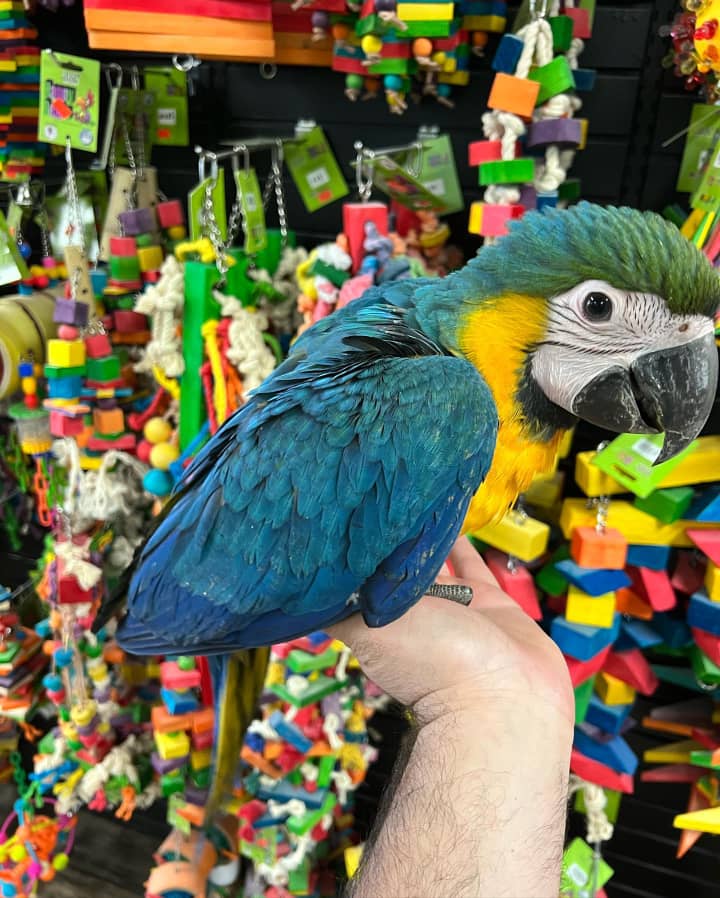
Catalina Macaw for Sale
Baby Catalina Macaw for Sale
Catalina Macaw for Sale, Catalina Macaws has two very popular types of macaws as its parents. The other parent, the Blue and Gold Macaw, has been has been one of the most popular pet birds in the trade, renowned not only for its beauty but for its gentle, amiable nature. for more details about their Taxonomy and History: You can read about their origins at Catalina Macaw Wikipedia Page.
The Catalina Macaws are a first generation hybrid macaw, though today there are second generation Catalina Macaws whose parents are both Catalinas. Father’s have the dominant gene, so this will generally influence the offspring’s coloration and overall appearance. The Catalina inherits its gorgeous coloring from these two striking parents.
The behavior and temperament of hybrid macaws are more unpredictable and uncertain than the coloration. The personality of a Scarlet is such that it requires good socialization and a firm consistent hand in training, especially as it matures. The Catalina can have these characteristics, but it can also have the gentle nature and the speaking ability of the Blue and Gold Macaw mixed in. It can be a very affectionate, inquisitive, and fun pet that is beautiful.
Care and Feeding Catalina Macaw for Sale
Proper bird care for Macaws involves more than just the Macaw diet.
Bird Food
Foods available for Macaws include formulated diets, either pelleted or extruded, seed only diets, and parrot mixes which offer a mixture of both. There are pros and cons to feeding only a formulated diet as well as feeding only a seed diet.
Formulated Diet
Also, parrots can become bored with it due to the lack of variety.
Seed Diet
A seed only diet offers much more variety but requires additional vitamin and calcium supplements. Macaws need not only nutritional requirements met but also variety for psychological enrichment. Along with this, provide a daily supplement of fresh fruits and vegetables.
Supplements
Fruits and vegetables
Many vegetables including carrots, sweet potatoes, cucumbers, zucchini, dark green leafy veggies, many garden vegetables, and even dandelions and chickweed are good. Do not feed avocado as it may be toxic to birds!
Behavior of Catalina Macaws
Catalina Macaws make excellent pets. They have very nice temperaments and are very playful. A hand reared macaw is usually gentle and easily handled.
Socializing A Macaw
Socializing a macaw and providing it lots of experiences are the keys to a great pet. Doing these things will develop a well rounded bird that doesn’t become frightened of new things. It will also prevent too strong a bond with only one person developing.
Macaws and Children
Macaws and children can mix very successfully if the child learns how to interact with the parrot.
Catalina Macaws and Pets
Again, however, be very careful to monitor all groupings of animals. A macaw can be very dangerous to small pets such as hamsters, guinea pigs, mice, and even small birds. Close friendships are just as possible as deadly enemy behaviors. You won’t know until the relationship unfolds over time.
Training
Catalina Macaws are excellent for taming, and relatively easy to train. This ability to learn and perform tricks makes them a favorite bird for use in shows all over the world.
Taming and training your parrot depends first on trust, so go slowly and be consistent. Remember that taming and training a bird takes patience, never ‘punish’ your parrot! This only serves to destroy the trust you’ve spent so much time building.
Temperament
Catalina macaws have characteristics of both scarlet and blue and gold macaws. While the former has a lively and dynamic nature, the latter is more shy and gentle. As a result, your pet will be a magnificent blend of these two varieties of macaws.
This very clever bird responds well to teaching and soon forms a bond with its owner.

sandy stevenson –
I have no words at all. Other than just OUTSTANDING with a few rubbish experiences elsewhere trying to get a Catalina Macaw was a complete nightmare, called this lovely guy from pet bird breeders and he delivered me a wonderful Catalina Macaw hours later! Bird is wonderful, healthy and inquisitive…so happy, will 100% recommend. Friendly and informative from start to finish as I was so anxious due to other experiences so was great, allowed me to check the bird to make sure I was happy. Also carried the cage in that I brought, that I put together and looks amazing, sturdy and strong 💪 very pleased. Thankyou so much for being the good that came from the bad
Gale Chapman –
Pet bird breeders is a clean safe trustworthy place to get your bird . If you’re looking for a trustworthy and fantastic bird breeders this is the place.
Todd Swick –
Great breeders
Many thanks for everything
Bless