Description
Lovebirds for Sale
Rosy Faced Lovebirds for Sale
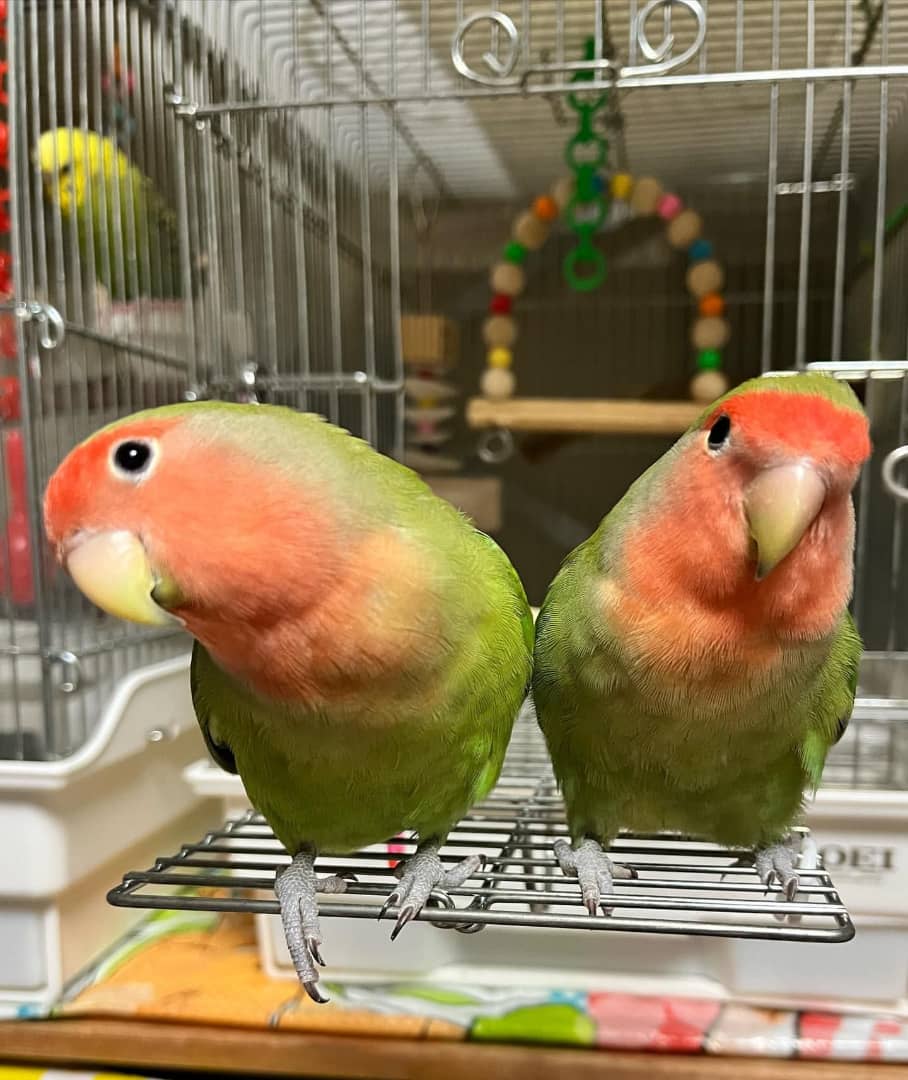
Lovebirds for Sale Peach Faced Lovebird, are one of three lovebird species that are very popular, affectionate, and readily available. The others are the Masked Lovebird and Fischers lovebirds varieties. It is a most playful, clever, and amusing little bird. This small parrot is also an excellent beginner’s bird, being relatively hardy, easy to care for, a willing breeder, and reasonably priced.
The Peach-faced Lovebirds are very friendly and love companionship. Although they make an excellent and affectionate pet when hand raised, they will require much attention if kept alone. Also it is advised to not leave a lovebird and parakeet together.
Social Behaviors
Lovebirds are very social birds. If raising a lovebird, you must provide the necessary social interaction that the other bird lacks. As a result, these birds develop a strong loyalty to their keepers or mates.
In addition to their social nature towards you or their mates, lovebirds can be highly aggressive towards other birds. Bonded pairs constantly groom and feed each other from crops during breeding and throughout the year. These small birds will chatter all day long.
Another aspect of this parrot’s behavior is that they form a strong bond with anyone they consider to be their mate. That could be another lovebird or a human companion. Jealousy of others can be a problem. After losing a spouse, they become depressed. Socializing with multiple people can minimize problems, but they can be one-person birds.
Peach-faced lovebirds must interact with a mate of their choice daily to maintain their mental health. Lack of proper psychology
and physical stimulation can cause your bird to resort to plucking.
Handling/Training
Young birds have a fantastic ability to learn tricks and be affectionate. On the other hand, all adults are very difficult to tame and generally won’t learn a lot of tricks or imitate behaviors. Young people raised by hand are the easiest to work with. They’ve been very social and tame, but unfortunately, they’re not always available. Taming involves acceptance and Believe
between you and your parrot. This means spending a lot of time with your bird every day. Start with whispers and slow action. You can begin manual taming when your bird is comfortable with you. Use the dowel to gently push it toward the bird’s chest while offering a treat to coax it onto the dowel. This may take multiple attempts. Once you can step comfortably on the dowel, replace the dowel with your fingers.
Care and feeding
Foods available for lovebirds include formula diets, pellets or squeezes, seed-only diets, and small parrot mixes that offer a combination of the two. There are many pros & cons to feeding only formula feeds and feeding only seed feeds.
Formula Diet:
Formulated diets provide an excellent nutritional foundation and do not require added vitamins. In addition, due to the lack of breeds, parrots may become bored with formula diets.
Seed Diet:
A pure seed diet offers more variety but requires additional vitamin and calcium supplements. Lovebirds not only need to meet nutritional needs but also psychological enrichment.
A lovebird’s diet will consist of 1 1/2 to 2 ounces (45-60 grams) of feed per day for a single bird.
Speech and Vocalizations
It might consist of single notes or repeated tones. Peach-Faces are a chatty bunch. Regarding pets, they may be pretty loud when they want to be. Lovebirds aren’t excellent talkers, and they rarely imitate human sounds. However, your bird may be able to mimic a few words if persistently trained from a young age.
Breeding/Reproduction of Peach-faced lovebird
Lovebirds for Sale is excellent for beginner breeders. When you provide them with a nest-box, be-sure also to give lots of willow twigs, palm fronds, or other nesting-materials, as they will build a small nest inside the box.
The-young fledge leave the nest in about 30-38 days but will still be dependent until about 43 days. When they become independent, remove the young from their housing.
Jennifer Wix –
I bought my new Lovebirds through this company – the lady was helpful and quick in communication and delivered the bird to my door. Misty is a happy, healthy and intelligent little Lovebirds.