
Description
Senegal Parrot for Sale
African Senegal Parrot for Sale
Senegal Parrot for Sale The Senegal parrot is originally from the woodlands in central western Africa. These birds belong to the Poicephalus genus, which contains 10 species found in central Africa. The capture of these birds from the wild is illegal. However, Senegal parrots are easy to breed in captivity, so prospective owners typically find it simple to acquire captive-bred pets.
Temperament
Most well-socialized birds have friendly personalities, but they can sometimes become attached to one person and may not show interest in others in the household.To avoid this, it’s best if all family members spend time with the bird.
Speech and Vocalizations
Senegal Parrot for Sale can learn to talk and mimic sounds as the African Grey Parrot, though they are generally quieter than many other parrot species. They make a variety of sounds, including whistles and clucks, and are not loud or screechy. This makes them a good choice for people living in apartments or in spaces where a loud bird might not be suitable.
Senegal Parrot Colors and Markings
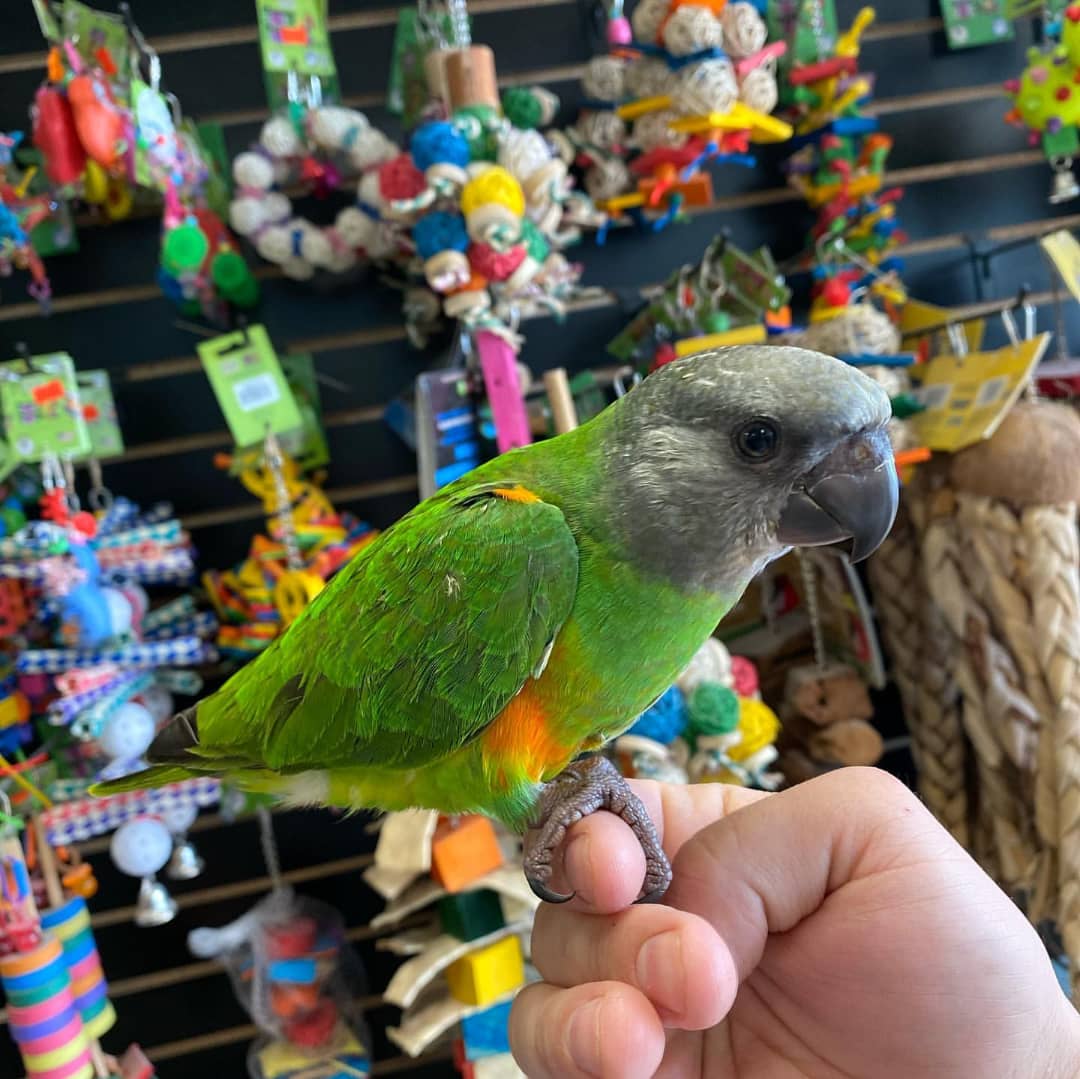
Adult Senegals have gray heads, with green wings and chests. Their bellies have a V-shaped patch of color that can range from yellow and orange to red, depending on the subspecies.
Senegal parrots are monomorphic, meaning that males and females look the same.
To determine the sex, a surgical procedure or a DNA test is necessary.
Caring for a Senegal Parrot
Because they are relatively small, Senegal parrots don’t need a very large cage.
A minimum size is a cage that is 20 inches by 20 inches in the base and 28 inches in height. A bigger cage is better, especially if you’re keeping more than one bird. The spacing between the bars should be about three-quarters of an inch.
Add horizontal bars inside the cage to serve as perches.
Prospective owners should also prepare for a variety of toys and accessories for their birds. Senegals are strong chewers, so providing them with toys to exercise their beaks is a good idea.
These birds, known as “Sennies” by many owners, form strong bonds with their human companions and enjoy daily interaction. Those interested in owning a Senegal parrot should be ready to commit time to handling and socializing with the bird each day. This is usually not a burden, as they often enjoy sitting on their owner’s shoulder.
Common Health Problems
The most significant health issue for Senegal parrots and other Poicephalus species is Aspergillosis, a fungal disease common in birds. Keeping the cage clean and feeding a balanced diet reduces the risk of this infection. Also, proper ventilation is important, especially in warm and humid areas.
Bornavirus is another infectious disease that can affect Senegal parrots.
Signs include weight loss and poor digestion.
Senegal parrots can also become overweight if their diet is mainly seeds and lacks fresh fruits and vegetables.
Diet and Nutrition
In the wild, Senegal parrots mainly eat fruits, seeds, and flowers.
On average, they eat about a quarter cup of food per day. Feed them a seed/pellet mix every morning, and offer as much as the bird will eat. Add fruits and vegetables to their pellet food for extra nutrition. It’s a convenient way to provide a wide range of vegetables, grains, and protein sources.
Like all companion birds, Senegal parrots should have fresh water in a clean bowl daily.
Avoid feeding them an all-seed diet, as it lacks essential nutrients and can cause serious health problems or even death from nutritional deficiency.
Exercise
Senegal parrots should get at least one hour of outside-of-cage time each day on a play stand or a bird-safe area. These toys will keep the bird entertained while it’s outside the cage.
Scott Cook –
I brought lovely colour full Senegal Parrot from Pet Bird Breeder. Really appreciate your service .trust worthy. I will come back and recommend you.
One again thank you Mrs jessica