
Catalina Macaw
Baby Catalina Macaw

Catalina Macaw These stunning hybrid parrots make incredible companions for experienced bird owners who understand their complex needs and long-term commitment.
Catalina macaws combine the best traits of blue-and-gold macaws and scarlet macaws, creating vibrant, intelligent birds that can live over 50 years. This guide helps prospective owners navigate the buying process responsibly and prepare for successful ownership.
We’ll cover what makes these hybrids special and how to identify their unique characteristics. You’ll also learn how to find trustworthy breeders, avoid common scams, and set up your home properly. Finally, we’ll walk through the daily care requirements that keep these magnificent birds healthy and happy for decades.
Understanding Catalina Macaws and Their Unique Characteristics
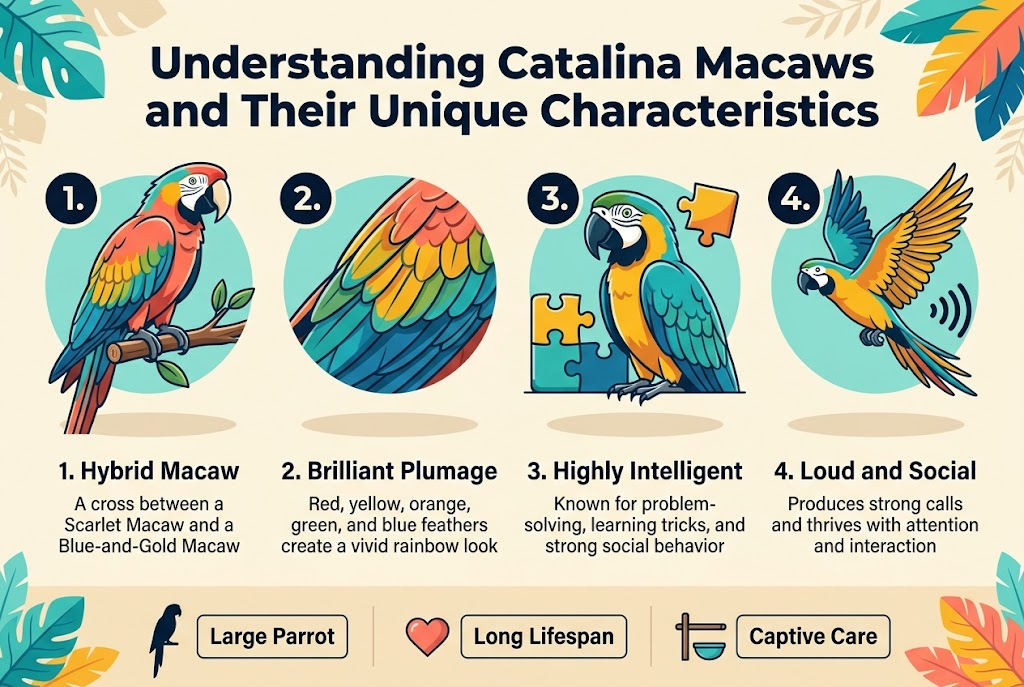
Hybrid Heritage Combining Blue-and-Gold and Scarlet Macaw Traits
Catalina macaw are first-generation hybrids created by breeding a Blue-and-gold macaw with a Scarlet macaw. This crossbreeding produces birds that inherit the best characteristics from both parent species, creating a unique combination of traits that makes them particularly appealing to bird enthusiasts. Unlike some hybrid birds that may struggle with health issues, Catalina macaws typically display hybrid vigor, often showing enhanced resilience and adaptability compared to their parent species.
The genetic makeup of these birds means they cannot reproduce fertile offspring when bred together, making each Catalina macaw a deliberate breeding decision rather than a naturally occurring phenomenon. This hybrid status also means that no two Catalina macaws look exactly alike, as the genetic expression can vary significantly between individuals.
Stunning Rainbow Plumage and Size Specifications
Catalina macaw showcase breathtaking coloration that combines vibrant elements from both parent species. Their heads typically display brilliant orange and red hues inherited from the Scarlet macaw parent, while their backs and wings often feature the stunning blue coloration characteristic of Blue-and-gold macaws. The chest area usually presents a beautiful gradient of yellow and orange tones.
These magnificent birds reach impressive sizes, typically measuring 34-36 inches from head to tail tip. Their wingspan can extend up to 45 inches, making them substantial birds that require adequate space. Adult Catalina macaws generally weigh between 2-3 pounds, with males often being slightly larger than females.
| Physical Attribute | Measurement |
|---|---|
| Total Length | 34-36 inches |
| Wingspan | Up to 45 inches |
| Weight | 2-3 pounds |
| Beak Length | 3-4 inches |
Intelligent Personality and Social Behavior Patterns
These remarkable birds possess exceptional intelligence that rivals that of a 5-year-old child. They demonstrate problem-solving abilities, can learn complex tricks, and often develop vocabularies of 20-30 words or phrases. Many Catalina macaws show a particular talent for mimicking not just words but also household sounds like doorbells, telephone rings, and even musical melodies.
Social bonding is incredibly important for these birds. They form deep emotional connections with their human companions and can become quite attached to specific family members. This strong bonding tendency means they thrive on interaction and can develop behavioral issues if left alone for extended periods. They’re naturally curious and playful, often engaging in acrobatic displays and enjoying puzzle toys that challenge their minds.
Catalina macaws can be somewhat territorial and may show preferences for certain people while being more cautious around strangers. Early socialization plays a crucial role in developing well-adjusted birds that can interact comfortably with various people and situations.
Lifespan Expectations and Long-Term Commitment Requirements
Catalina macaw represent a lifelong commitment, with proper care enabling them to live 60-80 years or even longer. This extended lifespan means that potential owners must consider not just their current life situation but also their long-term plans, including family changes, relocations, and even estate planning.
The longevity of these birds creates unique considerations that don’t apply to most other pets. Many Catalina macaws will outlive their original owners, making provisions for their continued care essential. Some owners establish trust funds or arrange for care facilities specifically designed for aging parrots.
This remarkable lifespan also means that the bird will go through various life stages, each with different care requirements and behavioral patterns. Young Catalina macaws are often more energetic and require extensive training, while older birds may develop more settled personalities but could face age-related health challenges that require specialized veterinary care.
Essential Considerations Before Purchasing Your Catalina Macaw

Space Requirements for Proper Housing and Flight Areas
Catalina macaw demand substantial living space due to their impressive 32-34 inch wingspan and active nature. Your bird’s cage should measure at least 40 inches wide, 30 inches deep, and 60 inches tall as an absolute minimum. However, bigger is always better for these magnificent birds. The bar spacing needs to be between 1 to 1.5 inches to prevent injury while allowing comfortable perching.
Beyond the primary cage, you’ll need a dedicated flight area or aviary where your macaw can exercise daily. Indoor flight spaces should span at least 12 feet in length and 8 feet in height. Many owners convert spare rooms or enclosed patios for this purpose. Outdoor aviaries work wonderfully in suitable climates, requiring minimum dimensions of 20 feet long, 10 feet wide, and 12 feet high.
Your macaw also needs multiple perches of varying diameters (1-3 inches) made from safe woods like manzanita or apple. Avoid sandpaper perches and opt for natural branches that promote foot health through different gripping positions.
Time Commitment for Daily Interaction and Enrichment
Catalina macaw are incredibly social creatures that require 4-6 hours of direct interaction daily. This isn’t passive time – your bird needs active engagement through training sessions, play time, and social interaction. Morning and evening periods typically work best for these activities.
Training sessions should occur 2-3 times daily, lasting 10-15 minutes each. These intelligent birds thrive on mental stimulation through puzzle toys, foraging activities, and learning new commands. Rotate toys weekly to prevent boredom, which can lead to destructive behaviors like feather plucking.
Your macaw will also need supervised out-of-cage time in a bird-proofed room for several hours daily. During this time, you’ll engage in activities like target training, flight recall, and simple tricks that keep their minds sharp.
Social interaction extends beyond training. These birds form strong bonds with their owners and expect to be part of family activities. Meal times, watching television, and general household activities should include your feathered companion whenever possible.
Financial Planning for Initial Costs and Ongoing Expenses
The initial purchase price for a Catalina macaw ranges from $2,000 to $5,000, depending on the bird’s age, training level, and breeder reputation. However, this represents just the beginning of your financial commitment.
Setup costs include a quality cage ($800-2,000), play stands ($200-500), toys and enrichment items ($300-500 initially), and safety modifications to your home ($200-800). Professional bird-proofing might add another $500-1,000 to ensure your macaw’s safety.
Monthly expenses break down as follows:
| Expense Category | Monthly Cost |
|---|---|
| High-quality pellets and fresh foods | $50-80 |
| Toy replacements and enrichment | $30-60 |
| Veterinary care fund | $50-100 |
| Utilities (heating/lighting) | $20-40 |
| Miscellaneous supplies | $20-30 |
Annual veterinary checkups cost $200-400, but emergency visits can reach $1,000-3,000. Specialized avian veterinarians charge premium rates, and macaws can live 60-80 years, making this a significant long-term financial commitment.
Consider pet insurance specifically designed for exotic birds, which typically costs $30-60 monthly but can save thousands during medical emergencies.
Legal Requirements and Permits in Your Location
Before purchasing your Catalina macaw, research local and state regulations regarding exotic bird ownership. Many municipalities have specific ordinances about large parrots, particularly regarding noise levels and housing requirements.
Some areas require permits for keeping macaws, especially if you live in apartments or condominiums with strict pet policies. Homeowner associations frequently have rules about exotic pets that could affect your ability to keep a macaw legally.
Check with your local animal control office and city clerk about registration requirements. Some jurisdictions mandate annual permits, health certificates, or specific housing standards for large parrots.
If you’re purchasing from out-of-state breeders, understand interstate transportation laws. The Lacey Act governs the transport of certain bird species, and you may need health certificates or CITES documentation depending on your location and the bird’s origin.
Noise ordinances present another consideration. Macaws are naturally loud, especially during dawn and dusk calling periods. Research your local noise regulations and consider your neighbors’ proximity. Some areas have specific decibel limits that could affect your ability to keep these vocal birds.
Contact local exotic animal attorneys if you’re unsure about regulations in your area. The investment in legal consultation upfront prevents costly problems later and ensures you’re operating within all applicable laws.
Preparing Your Home for a Catalina Macaw
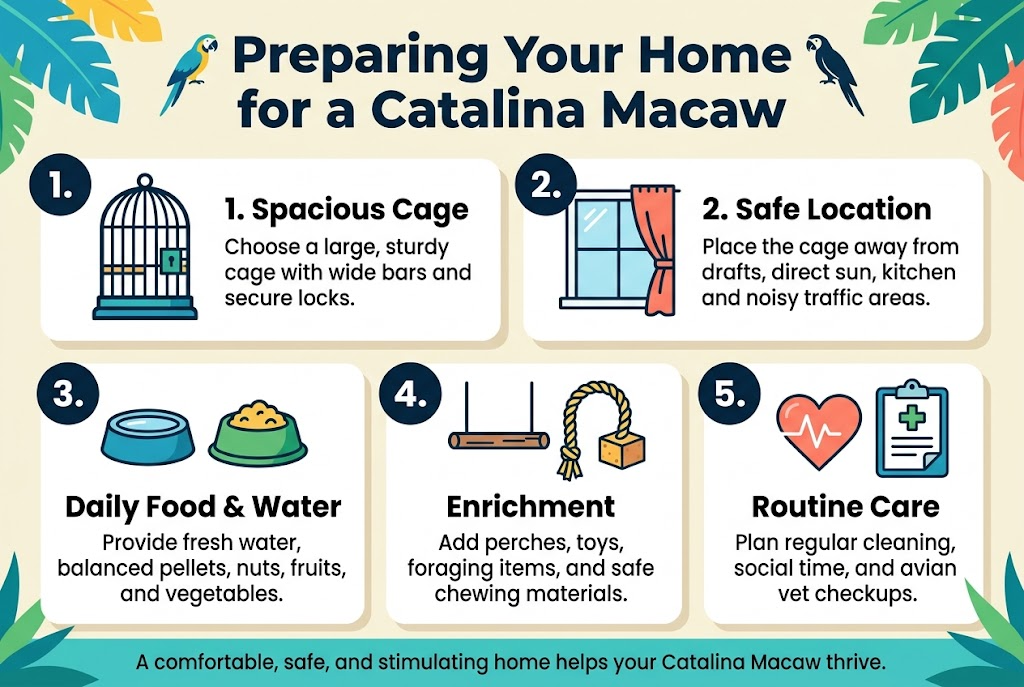
Selecting Appropriate Cage Size and Accessories
Catalina macaw are large, energetic birds that need substantial living space. The minimum cage size should be 40″ wide x 30″ deep x 75″ tall, though bigger is always better. These birds have impressive wingspans of up to 45 inches, so they need room to stretch and move without hitting the bars.
Choose stainless steel or powder-coated cages since macaws have powerful beaks that can destroy cheaper materials. Bar spacing should be 1 to 1.5 inches to prevent escape while allowing comfortable grip for climbing.
Essential accessories include multiple perches of varying diameters and textures – natural wood branches work best. Avoid sandpaper perches as they can cause foot injuries. Install heavy-duty food and water bowls made from stainless steel. Add several toy hooks at different heights for rotating enrichment items.
Bird-Proofing Your Living Space for Safety
Macaws are naturally curious and will investigate everything with their beaks. Remove or secure all electrical cords, as these pose serious electrocution risks. Cover or relocate houseplants since many common varieties like avocado, chocolate, and certain flowers are toxic to birds.
Install safety locks on cabinets containing cleaning supplies, medications, or small objects that could be swallowed. Check ceiling fans – these should never operate when your bird is out of its cage. Cover mirrors and windows to prevent collision injuries, and ensure all non-stick cookware is replaced with bird-safe alternatives since Teflon fumes can be fatal.
Setting Up Enrichment Stations and Play Areas
Create multiple activity zones throughout your bird’s space. Foraging stations with hidden treats encourage natural behaviors and mental stimulation. Rotate puzzle toys, shreddable materials like untreated wood blocks, and safe rope toys weekly to maintain interest.
Establish a dedicated play gym or tree stand in your main living area where your macaw can interact with the family. Include different textures like leather strips, wooden beads, and acrylic toys. Position this area away from high-traffic zones but where your bird can observe household activities.
Establishing Quiet Zones for Rest and Sleep
Catalina macaw need 10-12 hours of uninterrupted darkness for proper sleep cycles. Create a designated sleep area away from household noise and activity. Many owners use a separate sleep cage in a quiet room or cover the main cage completely.
Install blackout curtains or use a cage cover to block external light sources. Maintain consistent sleep schedules – disrupted rest patterns can lead to behavioral issues and health problems. Keep this area at comfortable temperatures between 65-80°F with minimal air circulation to prevent drafts.
Ongoing Care Requirements and Best Practices

Nutritional Needs and Balanced Diet Planning
Catalina macaw need a carefully planned diet that mirrors what they would eat in the wild. Fresh fruits and vegetables should make up about 60-70% of their daily intake. Think colorful options like sweet potatoes, carrots, leafy greens, berries, and tropical fruits. Dark orange and red vegetables pack the most nutritional punch.
High-quality pellets designed for large macaws should comprise 25-30% of their diet. Avoid seed-only diets – they’re like junk food for birds and lead to nutritional deficiencies. Seeds should be treats, not main courses.
Protein comes from cooked beans, quinoa, and small amounts of cooked chicken or fish. Never give your macaw chocolate, avocado, caffeine, or foods high in salt and sugar. These can be toxic.
Feed your bird twice daily, removing uneaten fresh food after a few hours to prevent spoilage. Water should be changed daily and offered in stainless steel or ceramic bowls.
Regular Veterinary Checkups and Health Monitoring
Annual wellness exams with an avian veterinarian are non-negotiable. These birds hide illness well, so professional health screenings catch problems early. Your vet should check for common issues like psittacosis, polyomavirus, and nutritional deficiencies.
Watch for warning signs at home: changes in appetite, droppings, behavior, or vocalizations. Fluffed feathers, sitting at the bottom of the cage, or discharge from eyes or nostrils require immediate attention.
Blood work every 1-2 years helps track organ function and detect diseases before symptoms appear. Keep detailed records of your bird’s weight, eating habits, and behavior patterns to share with your veterinarian.
Training Techniques and Behavioral Management
Positive reinforcement works best with these intelligent birds. Use treats, praise, and attention to reward good behavior. Never yell at or punish your macaw – this damages trust and can create aggressive behaviors.
Start with basic commands like “step up” and “step down.” Keep training sessions short (10-15 minutes) but frequent. Consistency from all family members prevents confusion.
Address screaming by ignoring attention-seeking calls and rewarding quiet behavior. Provide acceptable outlets for natural behaviors like chewing by offering safe wooden toys and branches.
Establish routines for meals, playtime, and bedtime. Macaws thrive on predictability and can become stressed without structure.
Exercise Routines and Mental Stimulation Activities
Catalina macaw need at least 3-4 hours of supervised out-of-cage time daily. Create a bird-safe room where they can stretch their wings, climb, and explore. Flight is crucial for their physical and mental health.
Rotate toys weekly to maintain interest. Puzzle feeders, foraging toys, and items they can shred satisfy natural instincts. Hide treats in paper cups or wrapped in paper for foraging opportunities.
Social interaction is exercise for their minds. Teach them new words, play peek-a-boo, or engage in simple games. These birds crave mental challenges and can become destructive without adequate stimulation.
Climbing opportunities like play gyms, rope perches, and natural branches exercise different muscle groups and prevent foot problems from staying on the same perch size all day.

Catalina macaw make extraordinary companions, but they need owners who understand their complex needs and long-term commitment. These vibrant, intelligent birds require spacious living environments, specialized diets, regular veterinary care, and hours of daily interaction to thrive. Taking the time to research reputable breeders, prepare your home properly, and understand the financial and emotional investment involved will set both you and your feathered friend up for success.
Before bringing home your Catalina macaw, make sure you’re ready for a relationship that can span several decades. Connect with experienced bird owners, visit local aviaries to observe these magnificent creatures firsthand, and consider volunteering at bird rescues to gain hands-on experience. Your future macaw deserves an owner who’s fully prepared for the incredible journey ahead – and with the right preparation, you’ll discover why these remarkable birds capture the hearts of so many dedicated enthusiasts.
