
Citron Cockatoo
Baby Citron Cockatoo

This guide is designed for potential bird owners who want to make an informed decision before bringing home one of these beautiful creatures. We’ll walk you through what makes Citron Cockatoos unique, including their temperament and care needs. You’ll also learn how to find trustworthy breeders and what costs to expect when budgeting for your new feathered friend. Finally, we’ll cover the essential steps to prepare your home for a happy, healthy Citron Cockatoo.
Understanding Citron Cockatoo Characteristics and Temperament
Physical appearance and distinctive orange crest features
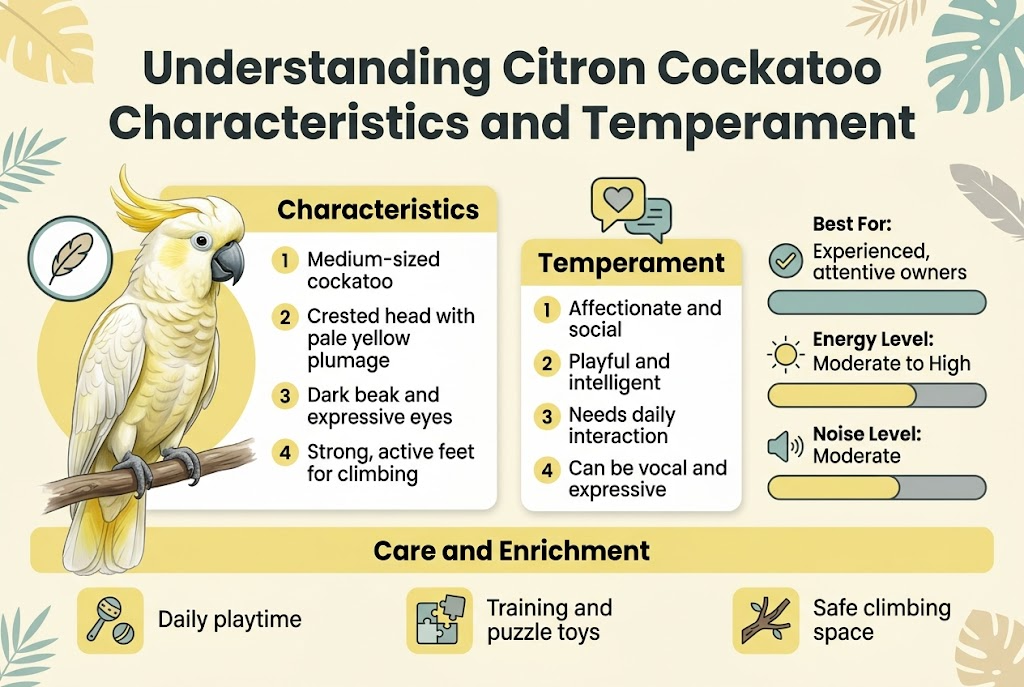
Citron Crested Cockatoo are medium-sized parrots that immediately catch your eye with their striking appearance. These beautiful birds typically measure 13-15 inches in length and weigh between 300-500 grams. Their most defining feature is the brilliant orange crest that gives them their name – when raised, these vibrant feathers create a stunning crown that ranges from pale salmon to deep orange. The crest serves as an emotional barometer, rising when the bird is excited, curious, or alert.
Their body plumage is predominantly white with subtle cream undertones, creating an elegant contrast against their colorful crest. The wing undersides often display yellow tinges, particularly visible during flight. Males and females are nearly identical in appearance, though experienced breeders might notice slightly larger head crests in males. Their strong, curved beaks are dark gray to black, perfectly designed for cracking nuts and manipulating objects with remarkable precision.
Intelligent and social personality traits
Citron Crested Cockatoo possess remarkable intelligence that rivals that of a young child. They demonstrate problem-solving abilities, can learn complex tricks, and often figure out how to open cage latches or manipulate puzzle toys. This intelligence comes with a need for constant mental stimulation – bored citrons can become destructive or develop behavioral problems.
These birds are incredibly social creatures that form deep emotional bonds with their human families. They crave interaction and can become quite attached to one particular person, though early socialization helps them remain friendly with multiple family members. Their playful nature shines through in their love of games, dancing to music, and learning new behaviors. However, this social dependency means they don’t do well when left alone for extended periods and may develop separation anxiety or engage in feather plucking if neglected.
Lifespan expectations and long-term commitment requirements
Bringing home a citron cockatoo means making a commitment that could span several decades. These remarkable birds typically live 60-80 years in captivity, with some individuals reaching even older ages with proper care. This longevity means your citron could outlive you, making it essential to consider long-term care plans and possibly include provisions for your bird in your will.
The extended lifespan requires consistent veterinary care, proper nutrition, and environmental enrichment throughout their lives. Young citrons are particularly energetic and require extensive training and socialization. As they mature, their personalities stabilize, but they maintain their need for daily interaction and mental stimulation. Potential owners should consider their own life plans, family changes, and ability to provide consistent care for what could be a lifetime companion.
Vocal abilities and communication patterns
Citron Crested Cockatoo are naturally loud birds with impressive vocal capabilities. They can learn to mimic words and phrases, though they’re not as skilled at speech as some other parrot species. Their natural vocalizations include loud contact calls, especially at dawn and dusk, which can reach decibel levels comparable to a motorcycle. These calls are instinctual behaviors that help them communicate with their flock in the wild.
Beyond their volume, citrons are expressive communicators who use body language extensively. They bob their heads when excited, pin their eyes when focused, and raise their crests to show various emotions. They can learn to whistle tunes, make kissing sounds, and even imitate household noises like doorbells or phones. Their communication style is highly interactive – they expect responses to their vocalizations and can become more vocal if they feel ignored. Understanding these patterns helps owners develop better relationships with their birds and manage noise levels in residential settings.
Essential Care Requirements for Citron Cockatoos
Proper Diet and Nutritional Needs
Citron cockatoos thrive on a varied, nutrient-rich diet that mimics what they’d eat in their natural Indonesian habitat. High-quality pellets should form the foundation of their daily meals, making up about 75-80% of their food intake. Choose pellets specifically formulated for medium to large parrots, avoiding those with artificial colors or excessive sugars.
Fresh fruits and vegetables should comprise 15-20% of their diet. Citron cockatoos particularly enjoy:
- Safe fruits: Apples (remove seeds), berries, grapes, papaya, mango, and citrus fruits in moderation
- Nutritious vegetables: Leafy greens, carrots, sweet potatoes, broccoli, and bell peppers
- Healthy grains: Quinoa, brown rice, and whole wheat pasta as occasional treats
Never feed chocolate, avocado, caffeine, salt, or fruit pits, as these are toxic to birds. Seeds and nuts should be limited to 5% of their diet since these birds can become overweight easily.
Fresh water must be available daily in clean containers. Many citron cockatoos enjoy bathing in their water dishes, so expect to change water frequently. Some owners provide separate drinking and bathing bowls to maintain hygiene.
Spacious Cage Setup and Environmental Enrichment
Your Citron Crested Cockatoo needs a generously sized cage that allows full wing extension and comfortable movement. The minimum cage dimensions should be 40 inches wide, 30 inches deep, and 60 inches tall, though bigger is always better for these active birds.
Bar spacing should measure 3/4 to 1 inch apart to prevent escape while allowing safe climbing. Stainless steel or powder-coated cages work best, as cockatoos are notorious for their strong beaks and destructive tendencies.
Essential cage accessories include:
| Item | Purpose | Placement Tips |
|---|---|---|
| Natural wood perches | Foot health and exercise | Vary diameters and heights |
| Stainless steel bowls | Food and water | Easy to clean and replace |
| Foraging toys | Mental stimulation | Rotate weekly to prevent boredom |
| Shredding materials | Natural behavior outlet | Paper, cardboard, safe wood |
Position the cage away from kitchens (cooking fumes are dangerous), direct sunlight, and high-traffic areas that might cause stress. Your bird needs 10-12 hours of quiet, dark sleep each night, so consider a sleep cage or cover system.
Daily Exercise and Out-of-Cage Time Necessities
Citron Crested Cockatoo require a minimum of 3-4 hours of supervised out-of-cage time daily. These intelligent birds need physical activity and social interaction to prevent behavioral problems like feather plucking, excessive screaming, or aggression.
Create a bird-safe room by removing or covering potential hazards:
- Ceiling fans (turn off completely)
- Open water containers
- Toxic plants
- Electrical cords
- Other pets that might pose threats
Establish structured playtime routines that include:
Morning sessions: 1-2 hours of active play, training, and social interaction when birds are most energetic.
Evening sessions: 1-2 hours of calmer activities like gentle handling, quiet conversations, or puzzle-solving games.
Provide climbing opportunities with play gyms, rope perches, and safe branches. Citron cockatoos love to explore and manipulate objects with their feet and beaks. Rotate toys regularly to maintain interest and challenge their problem-solving abilities.
Flight exercise is ideal when possible. If full flight isn’t feasible, encourage wing-flapping exercises and climbing activities that engage their large flight muscles. Regular exercise prevents obesity and promotes overall physical and mental health.
Preparing Your Home for a Citron Cockatoo
Bird-proofing your living space for safety
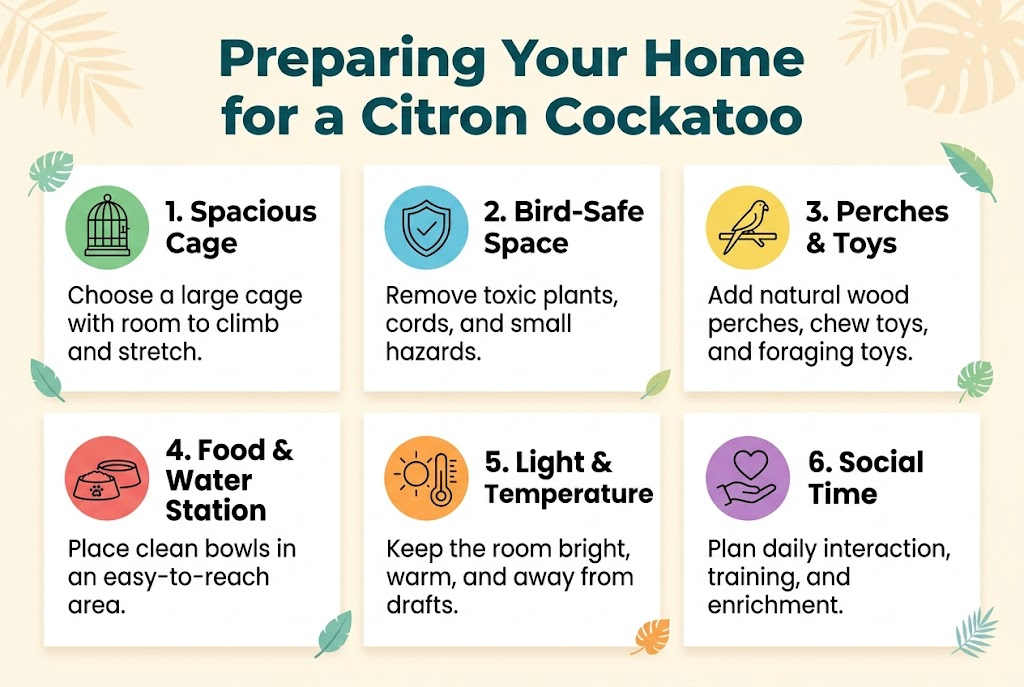
Citron Crested Cockatoo are naturally curious and love to explore with their beaks, which means your home needs serious safety upgrades before your feathered friend arrives. Start by removing or securing any items containing zinc, lead, or copper, as these metals are toxic to birds. Check for galvanized hardware, stained glass decorations, and old paint that might contain lead.
Electrical cords pose a major hazard since cockatoos view them as perfect chew toys. Use cord protectors or run cables through PVC tubing to prevent electrocution. Remove ceiling fans from rooms where your bird will spend time, or ensure they’re always turned off when your cockatoo is out of its cage.
Kitchen dangers include non-stick cookware, which releases deadly fumes when overheated. Switch to stainless steel, cast iron, or ceramic cookware. Keep your bird away from the kitchen during cooking, as hot surfaces, boiling water, and gas flames create multiple risks.
Check your home for toxic plants like avocado, chocolate, caffeine, onions, and garlic. Many common houseplants are also poisonous to birds. Replace dangerous varieties with bird-safe options like spider plants, Boston ferns, or African violets.
Secure windows and doors with screens, and cover mirrors temporarily since some birds become obsessed with their reflection. Remove small objects that could be swallowed and store cleaning supplies, candles, and air fresheners in locked cabinets.
Creating an optimal environment for mental stimulation
Citron Crested Cockatoo are incredibly intelligent birds that need constant mental engagement to prevent boredom and destructive behaviors. Design multiple activity zones throughout your home where your bird can safely explore and play.
Set up foraging opportunities by hiding treats in paper cups, wrapping food in paper towels, or using commercial foraging toys. Rotate these activities daily to keep your cockatoo engaged. Create puzzle feeders using cardboard boxes with holes cut in different sizes, encouraging your bird to work for its food.
Provide a variety of textures and materials for exploration. Natural wood branches of varying diameters give your bird different perching experiences while helping maintain healthy feet. Hang different types of toys including shreddable items like paper strips, cardboard, and natural fiber ropes.
Music and television can provide auditory stimulation when you’re not home. Many cockatoos enjoy classical music, nature sounds, or even specific TV shows. Some birds learn to anticipate their favorite programs and get excited when they hear familiar sounds.
Position perches near windows so your bird can watch outdoor activity, but ensure the glass is visible to prevent collisions. Consider installing bird-safe lighting that mimics natural sunlight patterns, which helps regulate your cockatoo’s circadian rhythms and supports healthy hormone production.
Establishing daily routines and socialization schedules
Cockatoos thrive on predictable schedules that provide structure and security. Start planning your daily routine before bringing your bird home, considering both your lifestyle and your cockatoo’s natural behaviors.
Morning routines should include fresh food and water, along with some quality interaction time. Many cockatoos are most active in the early morning and evening, mimicking their natural feeding times in the wild. Plan for at least two hours of direct interaction daily, broken into multiple sessions.
Create a consistent sleep schedule by covering your bird’s cage at the same time each evening. Cockatoos need 10-12 hours of uninterrupted darkness for proper rest. Choose a quiet, dark room or use a cage cover to block out light and reduce noise.
Citron Cockatoo
Meal times offer excellent bonding opportunities. Eat “together” by having your own snack while your bird enjoys its food. This mimics flock behavior and strengthens your relationship. Always supervise when introducing new foods and maintain consistent feeding times.
Establish rules about cage-free time, including which rooms are accessible and which family members can handle the bird. Consistency prevents confusion and helps your cockatoo understand household boundaries.
Plan for social interaction with different family members to prevent over-bonding with one person. However, introduce new people gradually and always supervise interactions with children. Your cockatoo should learn to accept handling from multiple trusted individuals while maintaining its primary bond with its main caregiver.

Bringing a Citron Crested Cockatoo into your life means welcoming an intelligent, affectionate companion that will need your dedicated care for decades to come. These beautiful birds thrive with proper nutrition, spacious housing, regular vet checkups, and plenty of social interaction. Remember that their loud vocalizations and need for attention make them better suited for experienced bird owners who can provide consistent training and enrichment.
Before you make this significant commitment, take time to research reputable breeders, budget for both initial and ongoing costs, and prepare your home with safe, bird-friendly modifications. A citron cockatoo isn’t just a pet purchase – it’s a long-term relationship with a feathered family member who will depend on you for everything. If you’re ready for this rewarding challenge and can meet their complex needs, you’ll find yourself with one of the most loving and entertaining companions in the bird world.
