
Blue Fronted Amazon Parrots
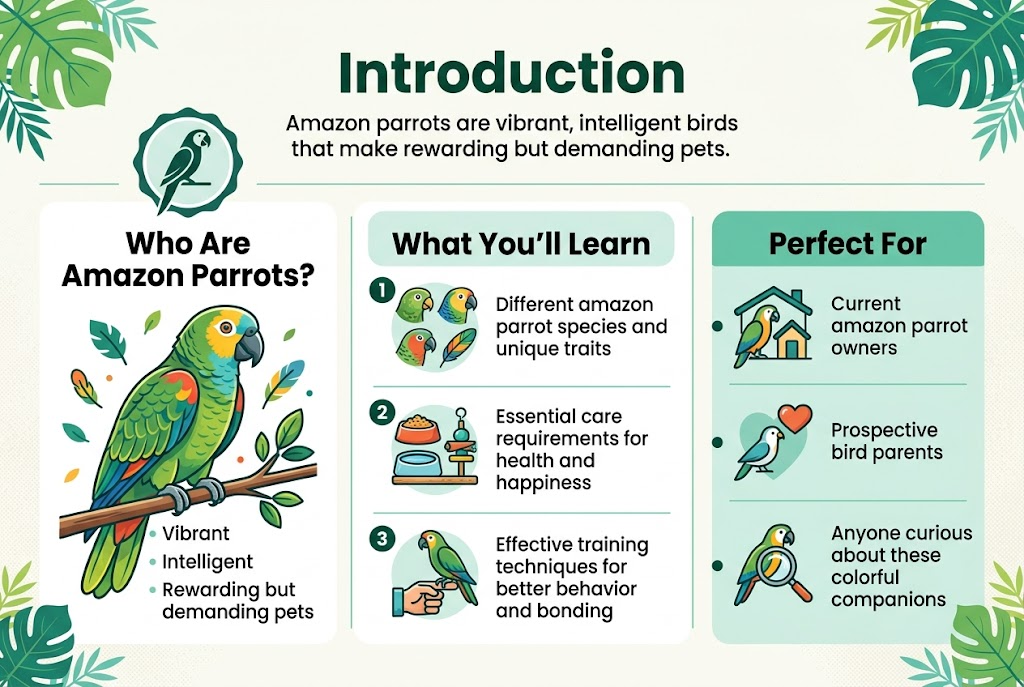
Amazon parrots are vibrant, intelligent birds that make rewarding but demanding pets. This comprehensive guide is perfect for current amazon parrot owners, prospective bird parents, and anyone curious about these colorful companions.
We’ll explore the different amazon parrot species and their unique traits, helping you understand what makes each type special. You’ll also learn about essential care requirements that keep these birds healthy and happy, plus discover effective training techniques that strengthen your bond while encouraging good behavior.
Understanding Amazon Parrot Species and Characteristics
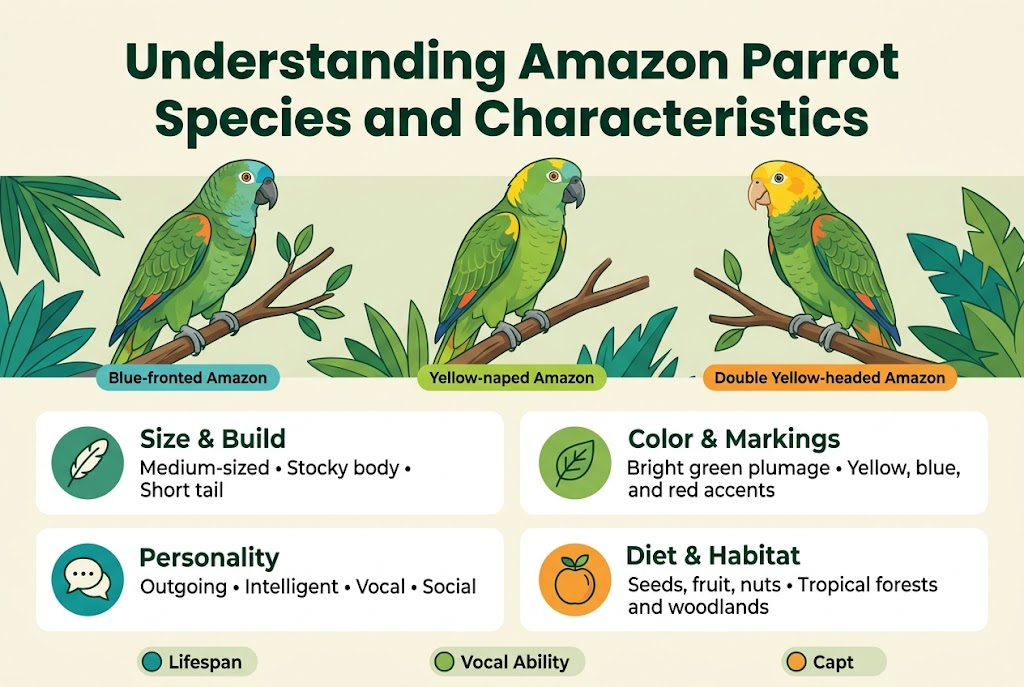
Identify the Most Popular Amazon Parrot Varieties for Pet Owners
Amazon parrots come in over 30 species, but several stand out as favorites among bird enthusiasts. The Blue-fronted Amazon tops the list with its striking blue forehead and excellent talking ability. These birds typically measure 15 inches and weigh around 400 grams, making them manageable for most households.
Yellow-crowned Amazons bring personality and intelligence to any home. Their distinctive yellow head markings and playful nature make them engaging companions. Double Yellow-headed Amazons, while larger at 16-17 inches, are prized for their exceptional vocal abilities and can learn extensive vocabularies.
Green-cheeked Amazons offer a slightly smaller option at 13 inches, perfect for those wanting Amazon personality in a more compact package. Orange-winged Amazons display beautiful orange flight feathers and adapt well to family life.
Red-lored Amazons feature vibrant red forehead patches and are known for their gentle temperament. Lilac-crowned Amazons, though less common, captivate owners with their unique purple crown coloring and calm demeanor.
Recognize Key Physical Features and Size Differences
Amazon parrots share several defining characteristics that distinguish them from other parrot families. Most species display predominantly green plumage with colorful head markings that serve as their primary identification feature. Their robust, stocky build and broad shoulders give them a distinctive silhouette.
| Species | Length | Weight | Key Features |
|---|---|---|---|
| Blue-fronted | 15 inches | 400g | Blue forehead, yellow cheeks |
| Yellow-crowned | 14-15 inches | 380-450g | Yellow crown, red bend of wing |
| Double Yellow-headed | 16-17 inches | 500g | Extensive yellow head |
| Green-cheeked | 13 inches | 300g | Green cheeks, red forehead |
Their beaks are powerful and curved, designed for cracking tough nuts and seeds. Adult Amazons have dark brown or black eyes, while juveniles display lighter-colored irises. Wing spans typically range from 20-24 inches depending on the species.
Sexual dimorphism is minimal in most Amazon species, making visual gender determination challenging. Males might display slightly brighter coloring during breeding season, but DNA testing remains the most reliable method for sex determination.
Learn About Natural Habitat and Geographic Origins
Amazon parrot inhabit diverse ecosystems across Central and South America, from Mexico down to northern Argentina. These adaptable birds thrive in tropical rainforests, woodland savannas, and even urban parks in their native range.
Most species prefer the forest canopy, spending their days foraging for fruits, nuts, seeds, and flowers. They’re particularly fond of palm fruits and figs. Blue-fronted Amazons range throughout Bolivia, Brazil, Paraguay, and northern Argentina, often gathering in large flocks during non-breeding seasons.
Yellow-crowned Amazons call the Amazon Basin home, specifically areas of Colombia, Venezuela, Brazil, and the Guianas. They favor riverine forests and gallery woodlands where food sources are abundant.
Double Yellow-headed Amazons originally inhabited Pacific coastal regions from Mexico to Costa Rica. Unfortunately, habitat destruction and capture for the pet trade have severely impacted wild populations.
These parrots are cavity nesters, choosing hollow trees or palm trunks for breeding. They’re highly social, forming monogamous pairs during breeding season while maintaining flock connections year-round.
Understand Lifespan and Maturity Expectations
Amazon parrots are long-term companions with lifespans ranging from 40-80 years in captivity when properly cared for. This longevity makes them generational pets that often outlive their original owners.
Sexual maturity arrives between 3-6 years of age, varying by species and individual development. Blue-fronted Amazons typically mature around 4-5 years, while larger species like Double Yellow-headed Amazons may take up to 6 years.
Behavioral changes accompany maturity, including increased territorial behavior, potential aggression during breeding season, and stronger pair bonding preferences. Young Amazons are generally more adaptable and easier to train, while mature birds may display more stubborn personalities.
Physical development continues into their second year. Juvenile plumage gradually gives way to adult coloring, with head markings becoming more pronounced. Eye color darkens from light brown or red in babies to deep brown or black in adults.
Peak talking ability often emerges between ages 2-5, though some individuals continue learning throughout their lives. Cognitive abilities remain sharp well into their senior years, making mental stimulation crucial throughout their extended lifespan.
Essential Care Requirements for Optimal Health

Create the Perfect Cage Setup and Environment
Your Amazon parrot needs a spacious cage that allows for natural movement and wing stretching. The minimum dimensions should be 36 inches wide, 24 inches deep, and 48 inches tall for most Amazon species. Horizontal space matters more than height since these birds prefer to move side to side rather than just up and down.
Choose stainless steel or powder-coated cages with bar spacing between 3/4 to 1 inch. Avoid galvanized metal, which can cause zinc poisoning. Position multiple perches at different heights using natural wood branches like apple, willow, or manzanita. Vary the diameters from 1/2 inch to 2 inches to exercise their feet and prevent arthritis.
Place food and water bowls away from perches to prevent contamination. Stainless steel or ceramic bowls work best and resist bacterial growth. Add enrichment items like foraging toys, puzzle feeders, and rotating selection of safe toys made from natural materials.
Location plays a huge role in your parrot’s wellbeing. Position the cage against a wall so your bird feels secure with a protected back. Choose a spot with natural light but away from direct sunlight, drafts, kitchen fumes, and high-traffic areas that might cause stress.
Establish Proper Nutrition and Feeding Schedules
Amazon parrots thrive on a varied diet that mimics their natural foraging behavior. High-quality pellets should make up 60-70% of their daily intake, providing balanced nutrition without the selective eating problems of seed-only diets.
Fresh vegetables should comprise 20-25% of their diet. Dark leafy greens like kale, collard greens, and spinach provide essential vitamins. Orange vegetables like carrots, sweet potatoes, and bell peppers offer beta-carotene. Broccoli, cauliflower, and Brussels sprouts add variety and nutrients.
Fruits should be limited to 5-10% of their diet due to high sugar content. Apples, berries, grapes, and tropical fruits make excellent treats. Always remove seeds and pits, which can be toxic.
| Food Type | Percentage | Examples |
|---|---|---|
| Pellets | 60-70% | Harrison’s, Zupreem, Roudybush |
| Vegetables | 20-25% | Kale, carrots, broccoli, bell peppers |
| Fruits | 5-10% | Apples, berries, grapes, mango |
| Healthy treats | 5% | Nuts, whole grain pasta, sprouted seeds |
Feed your parrot twice daily – morning and evening – removing uneaten fresh foods after 2-4 hours to prevent spoilage. Always provide fresh, filtered water and change it daily.
Maintain Ideal Temperature and Humidity Levels
Amazon parrots come from tropical environments and need consistent temperatures between 65-80°F (18-27°C). Sudden temperature changes can stress their immune system and lead to illness. Avoid placing cages near heating vents, air conditioning units, or drafty windows.
During colder months, provide supplemental heating with ceramic heat emitters or infrared panels rather than heat lamps that can disrupt sleep cycles. Never use Teflon-coated space heaters, which release toxic fumes fatal to birds.
Humidity levels should stay between 50-60% to support healthy respiratory function and prevent dry, itchy skin. Low humidity can cause excessive preening, feather picking, and respiratory irritation. Use a digital hygrometer to monitor levels accurately.
Increase humidity naturally by:
- Placing shallow water dishes around the room
- Using a cool-mist humidifier (cleaned regularly)
- Misting your parrot lightly with warm water 2-3 times weekly
- Providing opportunities for bathing in shallow dishes
Air quality matters just as much as temperature and humidity. Ensure proper ventilation without creating drafts, use air purifiers if needed, and never expose your parrot to cigarette smoke, aerosols, or cooking fumes from non-stick cookware.
Training Techniques for Better Behavior and Bonding
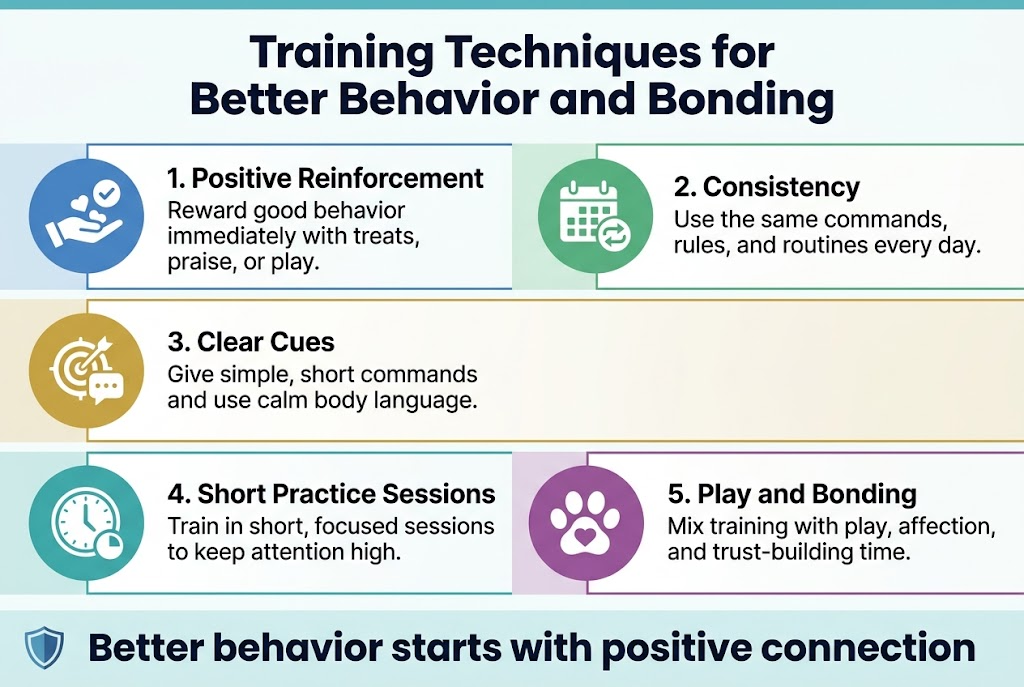
Master Basic Commands and Socialization Skills
Teaching your Amazon parrot basic commands creates the foundation for all future training success. Start with simple cues like “step up” and “step down” using consistent verbal commands paired with hand gestures. Hold your finger or a perch steady about two inches from your parrot’s feet while saying “step up.” Reward immediately with praise or a small treat when they comply.
The “stay” command proves invaluable for safety and routine care. Practice this by having your parrot remain on their perch while you step back gradually. Begin with just a few seconds and build up to several minutes. Always return to praise them before they decide to leave on their own.
Socialization requires exposing your Amazon to various people, sounds, and experiences during their critical learning period. Invite friends over regularly and encourage gentle interactions. Play different types of music, household sounds, and even recordings of other birds to broaden their comfort zone.
Create positive associations with new experiences by pairing them with favorite treats or activities. If your parrot seems nervous around strangers, have visitors sit quietly nearby while offering treats through the cage bars. This builds positive connections without forcing direct contact.
Daily training sessions work best when kept short – around 10-15 minutes – but frequent throughout the day. Amazons have excellent memories and learn faster with consistent, repeated exposure rather than marathon training sessions that can cause frustration or boredom.
Address Common Behavioral Issues Effectively
Screaming represents the most common behavioral challenge Amazon parrot owners face. These intelligent birds naturally vocalize at dawn and dusk, but excessive screaming often signals boredom, attention-seeking, or environmental stress. Never yell back or react dramatically, as this reinforces the behavior by providing the attention they seek.
Instead, identify triggers that cause screaming episodes. Does it happen when you leave the room, during meal preparation, or when other pets are active? Once you recognize patterns, you can address root causes. Provide engaging activities during known trigger times, or teach a “quiet” command by rewarding moments of silence.
Biting typically stems from fear, territorial behavior, or overstimulation. Watch for body language warning signs like pinned eyes, raised neck feathers, or leaning away. Amazons often give clear signals before resorting to biting. Respect these warnings and give your bird space rather than forcing interactions.
Redirecting aggressive behavior works better than punishment. Offer an appropriate toy or perch when you notice tension building. If your Amazon becomes territorial around their cage, train them to step up away from their personal space before handling.
Feather plucking requires immediate attention as it can quickly become a compulsive habit. Ensure adequate humidity levels, provide diverse foraging opportunities, and rule out medical issues with your avian veterinarian. Amazons need significant mental stimulation to prevent destructive behaviors like plucking.
Build Trust Through Consistent Daily Interactions
Trust develops through predictable, positive experiences that happen every single day. Establish routines your Amazon can anticipate, like morning greetings, training sessions, and bedtime conversations. Consistency helps them feel secure and builds confidence in your relationship.
Spend time simply being present near your parrot without demanding interaction. Read a book, work on your laptop, or enjoy your morning coffee while sitting near their cage. This passive companionship teaches them you’re a safe, non-threatening presence in their environment.
Respect your Amazon’s body language and personal boundaries. Some days they’ll eagerly engage, while others they prefer observing from a distance. Pushing for interaction when they’re clearly uncomfortable can damage trust and create negative associations with handling.
Food sharing creates powerful bonding opportunities. Offer healthy treats directly from your hand, or eat meals near your parrot while sharing bird-safe portions. Amazons are flock animals who naturally eat together, so sharing food mimics natural social behaviors that strengthen your connection.
Talk to your Amazon throughout daily activities, narrating what you’re doing in a calm, friendly voice. They love being included in household routines and will often respond with their own vocalizations. This ongoing conversation builds familiarity and helps them learn your vocal patterns and emotional states.
Develop Safe Handling and Exercise Routines
Safe handling starts with reading your Amazon’s mood and energy level before any interaction. Approach slowly and let them see your hands clearly. Quick movements or grabbing can trigger defensive responses that set back training progress.
Practice the “earthquake test” by gently moving your hand while your parrot perches on it. This teaches them to maintain balance and grip during unexpected movements, which proves essential during emergencies or when moving between rooms.
Create supervised out-of-cage time daily, starting with shorter periods in bird-proofed areas. Remove potential hazards like ceiling fans, open windows, toxic plants, and other pets. Amazons need several hours of exercise and exploration to maintain physical and mental health.
Establish designated play areas with appropriate perches, toys, and climbing opportunities. Amazons are athletic birds who enjoy using their feet and beaks to explore. Provide branches of varying diameters to exercise their feet and prevent arthritis.
Wing and nail trimming requires professional guidance initially, but you can learn to do basic maintenance at home. Handle your Amazon’s wings and feet regularly during calm moments to desensitize them to these necessary procedures. Always use proper restraint techniques and have someone assist you to prevent injuries.
Flight training, even with clipped wings, provides excellent exercise and mental stimulation. Teach recall commands in safe, enclosed spaces, gradually increasing distances as your Amazon’s confidence grows.
Health Monitoring and Veterinary Care
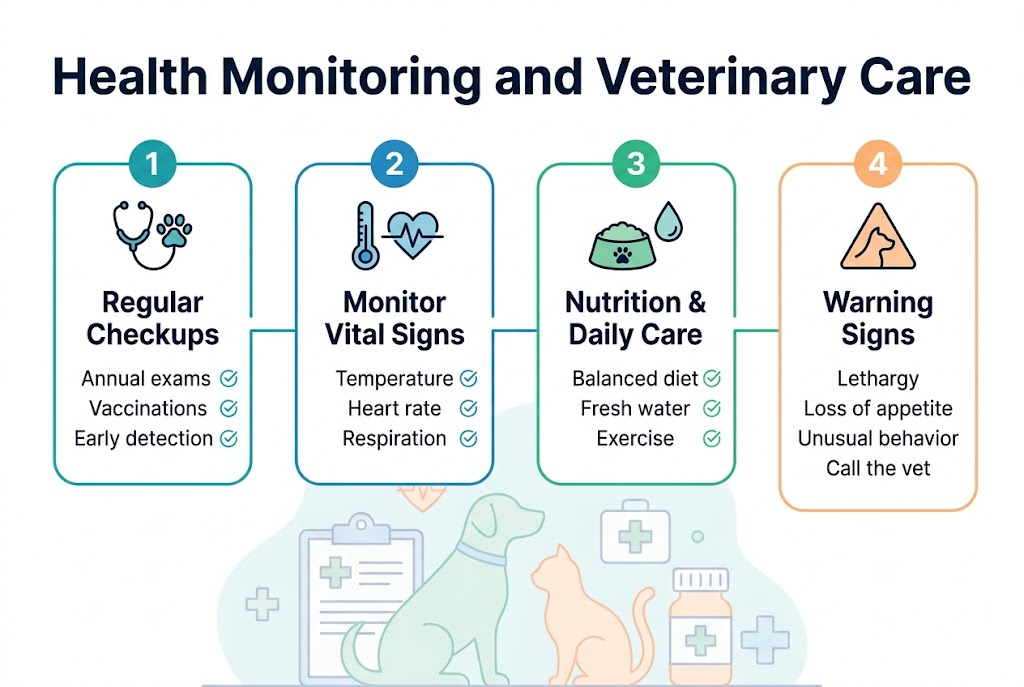
Recognize Early Warning Signs of Illness
Amazon parrots are masters at hiding illness, an evolutionary trait that protected them from predators in the wild. Your bird might seem perfectly fine one day and critically ill the next, making daily observation absolutely crucial for catching problems early.
Watch for subtle changes in your parrot’s routine first. A bird that usually greets you loudly but stays quiet, or one that normally perches high but sits low, could be telling you something’s wrong. Changes in appetite are red flags – if your Amazon suddenly loses interest in favorite foods or eats significantly more or less than usual, take notice.
Physical signs require immediate attention. Fluffed feathers when the room isn’t cold, sitting with eyes closed during active hours, or any discharge from the nose, eyes, or beak signals potential illness. Breathing changes like tail bobbing, open-mouth breathing, or unusual sounds during respiration need urgent veterinary care.
Monitor droppings daily since they reveal a lot about health. Normal Amazon parrot droppings have three parts: dark feces, white urates, and clear urine. Watch for color changes, unusual consistency, blood, or dramatic increases in the watery portion. Keep a simple chart tracking eating, drinking, and elimination patterns to spot trends your vet might find helpful.
Schedule Regular Check-ups and Preventive Care
Annual wellness exams are non-negotiable for Amazon parrots, even when they appear healthy. These birds live 50-80 years with proper care, making preventive medicine essential for catching age-related issues before they become serious problems.
Your avian veterinarian should perform comprehensive physical examinations including weight monitoring, beak and nail trims as needed, and discussions about diet and behavior changes. Many vets recommend baseline blood work for adult birds to establish normal values for future comparison.
Schedule appointments during your bird’s most active time of day when their true personality shines through. This helps your vet assess normal behavior and spot any deviations. Bring a list of questions about diet, behavior, or environmental changes since your last visit.
Consider semi-annual visits for birds over 20 years old or those with chronic conditions. Senior Amazon parrots benefit from more frequent monitoring since age-related issues like heart disease, kidney problems, or arthritis develop gradually and respond better to early intervention.
Handle Emergency Health Situations Confidently
Emergency preparedness can save your Amazon’s life when every minute counts. Keep your avian vet’s after-hours contact information easily accessible, along with directions to the nearest emergency animal hospital that treats birds.
Create a basic first aid kit containing clean towels for safe restraint, styptic powder for bleeding nails or beaks, saline solution for flushing eyes, and a heating pad or lamp for warmth. Never give medications without veterinary guidance, but having these supplies ready reduces panic during crises.
Learn proper towel restraint techniques before you need them. Practice gently wrapping your bird during calm moments so both of you know what to expect. A properly restrained Amazon feels secure rather than frightened, making examination and treatment easier.
Transport your bird in a secure, well-ventilated carrier lined with soft towels. Keep the environment warm but not hot, and minimize noise and visual stimulation during the trip. Call ahead to let the veterinary team know you’re coming so they can prepare for your arrival.
Remember that staying calm helps your bird stay calm. Amazon parrots pick up on human emotions quickly, so your confident, steady presence during emergencies provides comfort when they need it most.
Enrichment Activities for Mental Stimulation

Provide Engaging Toys and Puzzle Games
Amazon parrots are incredibly intelligent birds that need constant mental challenges to stay happy and healthy. Puzzle toys that require problem-solving skills work wonders for keeping their minds sharp. Look for toys with hidden compartments, sliding panels, or mechanisms that require your parrot to manipulate different parts to access treats. Foraging balls filled with nuts or dried fruits encourage natural behaviors while providing entertainment for hours.
Rotate toys weekly to prevent boredom. Wooden blocks that can be shredded satisfy their natural chewing instincts while providing mental engagement. Interactive feeding toys that dispense food slowly not only stimulate their minds but also prevent overeating. Acrylic puzzle boxes with multiple chambers challenge their dexterity and patience.
Musical toys and bells appeal to their vocal nature, encouraging them to experiment with sounds and rhythms. Rope toys offer physical challenges as they climb and manipulate the fibers. Always choose bird-safe materials and inspect toys regularly for wear or damage.
Create Interactive Foraging Opportunities
Wild Amazon parrots spend most of their day searching for food, and captive birds need similar opportunities to express this natural behavior. Hide small treats throughout their cage using paper cups, toilet paper rolls, or specialized foraging toys. Wrap nuts in paper towels or coffee filters, creating simple packages they must unwrap to reach the reward.
Create foraging trees using natural branches and hiding food items in the bark crevices or hanging small containers from the branches. Paper bag foraging involves placing treats inside paper bags and allowing your parrot to tear them apart to find the goodies inside.
Food kabobs made with safe fruits and vegetables encourage both foraging and healthy eating habits. Thread pieces of apple, carrot, or leafy greens onto bird-safe skewers. Ice cube foraging during warmer months involves freezing small treats or food items in ice cubes, providing both enrichment and cooling relief.
Establish Social Play and Communication Time
Amazon parrots are highly social creatures that thrive on interaction with their human family members. Daily conversation sessions help develop their vocabulary and strengthen your bond. Spend at least 30 minutes each day talking directly to your parrot, using consistent words and phrases they can learn to mimic.
Teaching simple games like peek-a-boo or waving creates positive interactions while stimulating their minds. Many Amazon parrots enjoy dancing to music, so play different genres and observe their preferences. Some birds prefer classical music while others respond better to upbeat rhythms.
Training sessions that incorporate tricks and commands provide mental stimulation while building trust. Start with basic commands like “step up” and gradually introduce more complex behaviors. Always use positive reinforcement and keep sessions short but frequent to maintain their attention and enthusiasm.
Design Rotating Activity Schedules
Consistency paired with variety keeps Amazon parrots mentally engaged without overwhelming them. Create a weekly schedule that alternates different types of enrichment activities. Monday might focus on puzzle toys, Tuesday on foraging games, Wednesday on social interaction, and so on.
Morning activities should be more energizing, such as music sessions or active play, while evening activities can be calmer, like gentle training or quiet conversation. Track which activities your parrot enjoys most and adjust the schedule accordingly.
Seasonal variations add extra interest to their routine. Summer activities might include water play or outdoor supervised time, while winter schedules can focus more on indoor enrichment and extended social time. Always introduce new activities gradually and observe your bird’s response to ensure they’re comfortable and engaged.
Build DIY Enrichment Projects at Home
Creating homemade enrichment saves money while providing customized entertainment for your Amazon parrots. Paper cup foraging toys are simple to make by poking holes in disposable cups and filling them with treats. Cardboard box mazes can be constructed using different sized boxes taped together with holes cut for exploration.
Natural branch perches collected from bird-safe trees provide variety in perching options while encouraging natural behaviors. Always clean and disinfect found branches before introducing them to your bird’s environment.
Homemade shredding toys using paper strips, cardboard pieces, or natural materials like corn husks satisfy their destructive instincts safely. String-free fabric strips can be braided into colorful toys that provide both visual appeal and tactile stimulation.
Food puzzles made from toilet paper rolls with the ends folded over and holes punched throughout create engaging foraging opportunities. Fill these with your parrot’s favorite small treats for an inexpensive enrichment option that can be replaced regularly.

Amazon parrots make incredible companions when you understand their unique needs and personalities. These intelligent birds require a balanced diet, spacious living environments, and consistent mental stimulation to thrive. Regular training sessions not only improve their behavior but also strengthen the bond between you and your feathered friend. Don’t forget that routine veterinary checkups and staying alert to changes in their behavior can prevent serious health issues down the road.
The key to success with Amazon parrots lies in patience, consistency, and genuine care for their well-being. These social creatures need daily interaction, varied enrichment activities, and owners who respect their intelligence and independence. If you’re ready to commit to providing the time, attention, and resources these amazing birds deserve, an Amazon parrot can bring decades of joy, laughter, and companionship to your life.
