
Description
Baby Blue-Fronted Amazon Parrots for Sale
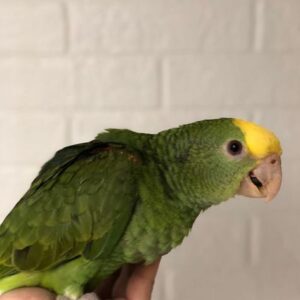
Looking for Blue-Fronted Amazon Parrots for Sale? Blue-Fronted Amazons rank among the most popular companion parrots because of their intelligence, playful personalities, and excellent talking ability. They naturally inhabit the forests, woodlands, and savannas of South America, where they live in flocks and form lifelong pair bonds. With proper care, a Blue-Fronted Amazon can live 40 to 60 years, making it a wonderful lifelong companion. Blue Fronted Amazon and yellow naped amazon share similar body sizes
Temperament
Blue-Fronted Amazon parrots have affectionate, outgoing, and entertaining personalities.
In addition, they love interacting with their owners and quickly become part of the family. Many birds develop a close bond with one favorite person while remaining friendly toward everyone else.
Although these parrots usually behave gently, they may become protective if they sense danger. However, early socialization helps them grow into confident, friendly, and easy-to-handle companions. Their playful behavior and natural curiosity keep owners entertained every day.
Speech and Vocalizations
Blue-Fronted Amazons rank among the best talking parrots.
Furthermore, they learn an impressive vocabulary, imitate household sounds, and copy laughter, whistles, and music with ease.
Like most Amazon parrots, they also enjoy vocalizing in the morning and evening.
Therefore, owners should expect occasional loud calls because these vocalizations help wild flocks communicate naturally.
Blue-Fronted Amazon Colors and Markings
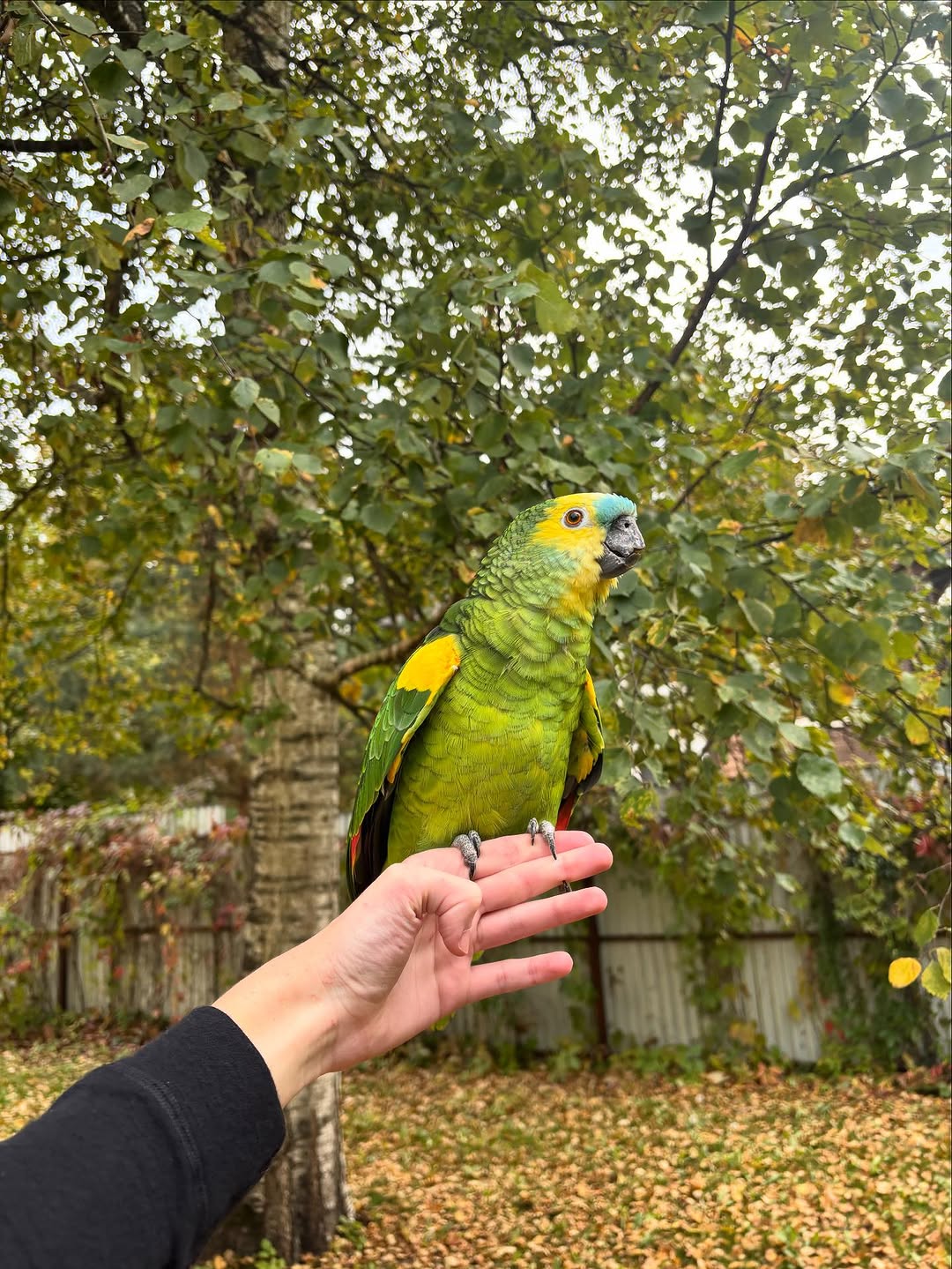
Bright green feathers cover most of the Blue-Fronted Amazon’s body. A striking blue patch above the beak gives the species its name.
Additionally, many birds display bright yellow feathers around the face and forehead, while vivid red feathers decorate the shoulders and wings.
Their dark gray or black beaks and gray feet complete their distinctive appearance. Unlike some bird species, male and female Blue-Fronted Amazons look almost identical, so DNA testing provides the most accurate way to determine their sex.
Caring for a Blue-Fronted Amazon
Blue-Fronted Amazons need daily attention, mental stimulation, and regular exercise to stay healthy and happy.
For example, interactive toys, climbing perches, puzzle feeders, and family interaction keep their minds active and prevent boredom.
A spacious cage gives them room to move comfortably.
At the same time, daily supervised time outside the cage allows them to fly, climb, and explore.
As a result, they remain physically fit and emotionally well-balanced.
Common Health Problems
Routine veterinary care helps Blue-Fronted Amazons enjoy long, healthy lives. With proper nutrition and hygiene, most birds stay healthy for many years. However, poor nutrition or unsanitary living conditions can lead to bacterial infections, respiratory illnesses, obesity, fungal infections, or vitamin deficiencies.
Regular visits to an avian veterinarian help detect health problems early and keep your parrot in excellent condition.
Diet and Nutrition
A nutritious diet plays an important role in your Blue-Fronted Amazon’s overall health. Ideally, offer high-quality pellets as the primary food, along with fresh vegetables, leafy greens, fruits, and moderate amounts of healthy seeds and nuts.
Additionally, provide fresh, clean water every day. Never feed chocolate, avocado, caffeine, alcohol, or foods high in salt or sugar because these foods can seriously harm parrots.
Exercise
Blue-Fronted Amazons love staying active throughout the day. Generally, they need at least 3 to 4 hours of supervised out-of-cage activity every day. Flying, climbing, foraging, and playing with toys keep both their bodies and minds healthy.
Most importantly, regular exercise prevents obesity, reduces boredom, and helps your Blue-Fronted Amazon remain happy, confident, and well-adjusted for many years.
ceckabobi –
I highly recommend petbirdsbreeders.com .They are professionals, honest and very knowledgeable about birds. He employs guys who lovingly and expertly weans babies before they come to you. A positive experience from start to finish. Love my new parrot!
Albert Harris –
Pet bird breeders is the perfect place to buy your parrot. In the past, we have always try to get a Blue Fronted Amazon with my family then we went to one store in my neigbourhood but their bird were not healthy and i was very nervous about their service and i decided to check online and we found Pet bird breeders and they were nice and also advice us on how to care for the Blue Fronted Amazon. Tthey ensure that the parrots were well taken care.