
Description
Yellow Naped Amazon for Sale
Blue Yellow Naped Amazon for Sale
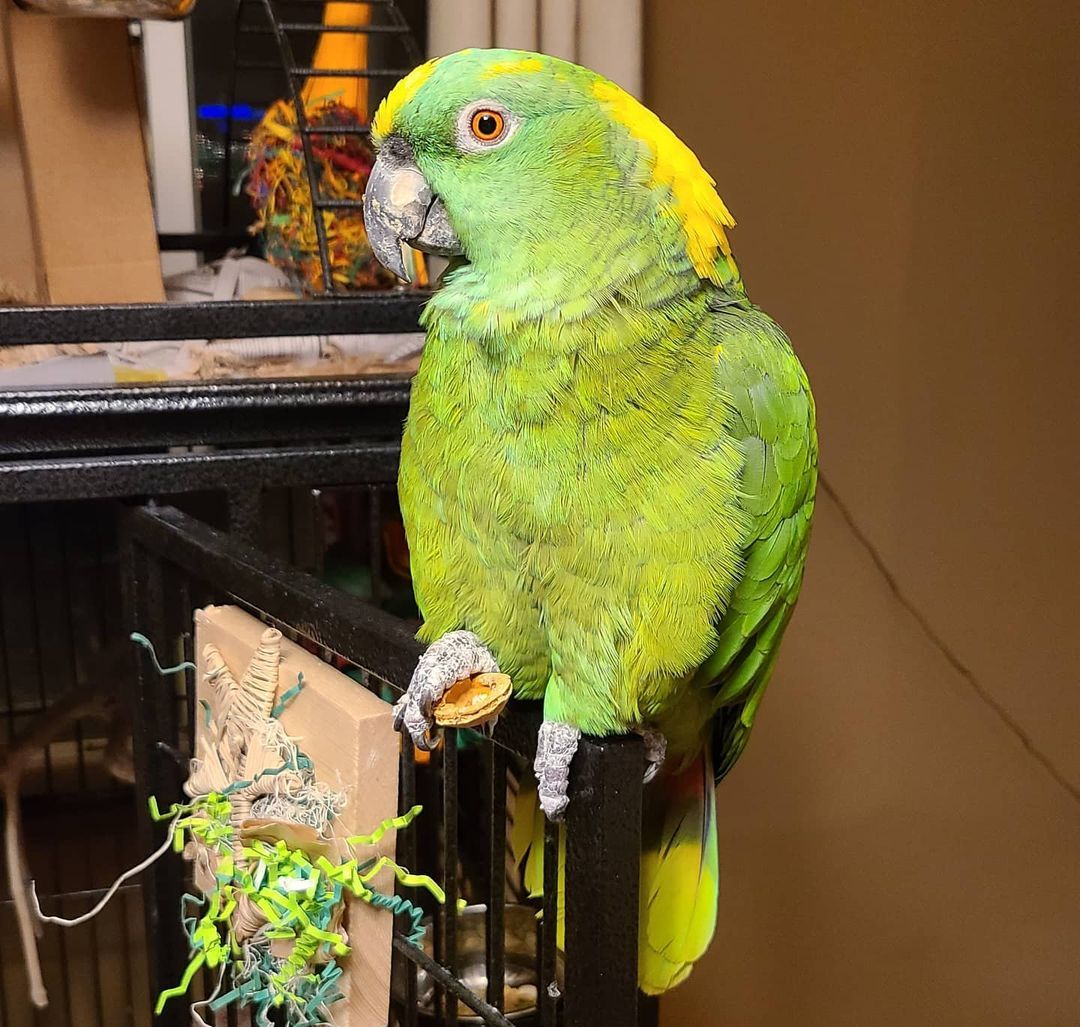
Yellow Naped Amazon for Sale, one of the more popular Amazon species. These parrots can be talkative and gravitate toward toys that challenge them both physically and mentally. They also enjoy plenty of interaction with their people and other animals.
This Amazon is mostly a green birds, but gets its name from a bright yellow patch that develops on the nape of the neck. The Golden Yellow-naped Amazon is very similar to several other Amazon species that also develop yellow markings. Its entire head, rather than just the nape, becomes yellow. Another is the Yellow-crowned Amazon, Amazona ochrocephala, that develops a patch of yellow on the crown. Check more about their physical characteristics, behavior, and native habitats on the Wikipedia Yellow-naped Amazon Page
Diet and Nutrition of Yellow Naped Amazons for sale
Yellow-naped Amazon parrots eat a variety of seeds, nuts, fruits, berries, and vegetation.
Provide your parrot a healthy diet, limit high-fat foods like seeds and nuts, and give your bird daily exercise. A mentally stimulating activity for your bird is hiding an occasional treat, which mimics the bird’s instinct to forage for its food.
Yellow-naped Amazons do best on a high-quality pelleted diet supplemented with seed mix. Daily servings of fresh bird-safe fruits and vegetables will also ensure that your bird is getting the right balance of the vitamins and nutrients it needs. Feed approximately 1/3 to 1/2 cup of pelleted food and 1/3 to 1/2 cup of fresh fruits and vegetables daily. A raw and varied diet will help ensure that your bird maintains top nutrition.
Yellow-nape Behavior and Personality
The Yellow-nape Amazons are wonderful as young birds, but tend to become nippy, even outright aggressive as they get older, particularly the males, though individual birds vary. They are notorious for temperament changes and will attack their owners viciously. Females tend to remain sweeter, so you might want to consider a hen when making your purchase. This may not be a bird for children, as a bite from a yellow nape’s beak is formidable. But don’t let this daunt you — they have wonderful pet potential, and they are certainly a popular choice for many reasons.
Caring for a Yellow-Naped Amazon for sale
They require a great deal of attention, and you will need to set aside a period each day for one-on-one interaction with your parrot. This socialization is the key to establishing and maintaining a healthy bond with your bird.
Also, you should consider adopting a pair so that they can keep each other company. In the wild, these birds form relationships that can last a lifetime; this probably explains why they tend to bond so strongly with their owner.
These birds thrive on social interaction, and they need it to remain healthy and happy. Depression or anxiety can lead to physical and emotional problems, including feather plucking and biting people.
Potential owners should remember that if they adopt a yellow-naped Amazon, they are taking on the care of a creature that is every bit as intelligent and emotional as a human toddler. The bird may seem small, but it still needs room to move and play. Keep the bird occupied while you are not available by outfitting the cage with ladders, perches, and interactive toys.
Speech and Vocalizations
These parrots may not screech as much as others, but they can be rather noisy at times. They are, nevertheless, outstanding talkers and singers. You can educate these birds to have a rather large vocabulary of words that they can speak with human-like clarity, but be careful what you say. They’re also notorious for picking up (and persistently recalling) phrases you’d rather the bird forget.
Reproduction
At this point, they form permanent alliances. Courtship begins when the weather warms up, which is usually around April or May. A clutch normally contains 3-4 eggs. After hatching, the young can leave the nest after around 8-12 weeks. The male guards the nest from the outside during incubation and weaning, never entering it. The male gets nourishment for himself and his female, which causes him to become less specific in his hunting. He regurgitates food for the female when he returns to the nest.
Kristin Steele –
Honestly I was so impressed with the birds and the breeder.
The whole experience from first contact getting my birds to after care is do brilliant and I’m so happy.
Thank you pet birds breeders