
Baby Black Headed Caique Parrot
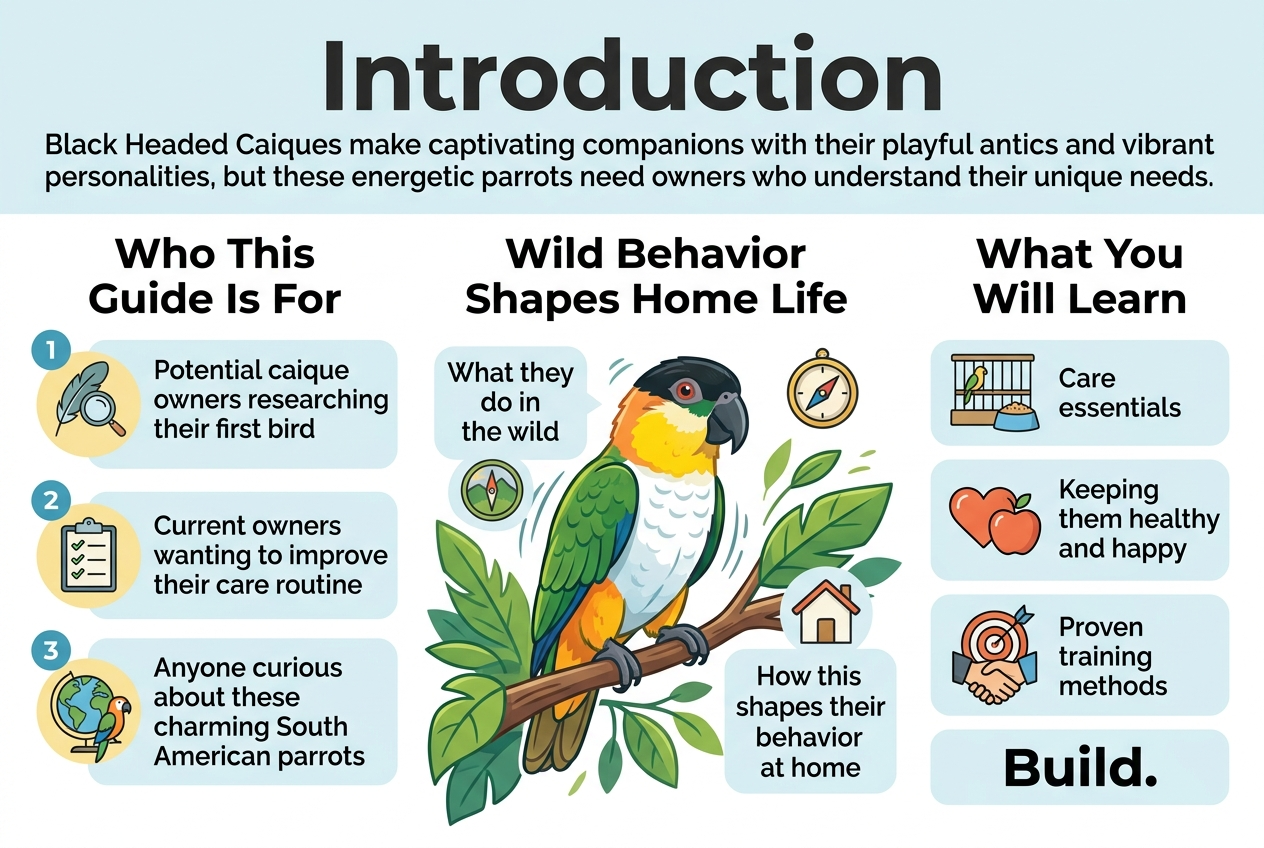
This guide is perfect for potential caique owners researching their first bird, current owners wanting to improve their care routine, and anyone curious about these charming South American parrots.
You’ll discover what makes Black Headed Caiques tick in the wild and how this shapes their behavior at home. We’ll also dive into their care essentials – from setting up the right environment to keeping them healthy and happy. Finally, you’ll learn proven training methods that help build a strong bond with your feathered friend while managing their spirited nature.
Understanding Black Headed Caique Characteristics
Physical Features and Distinctive Markings
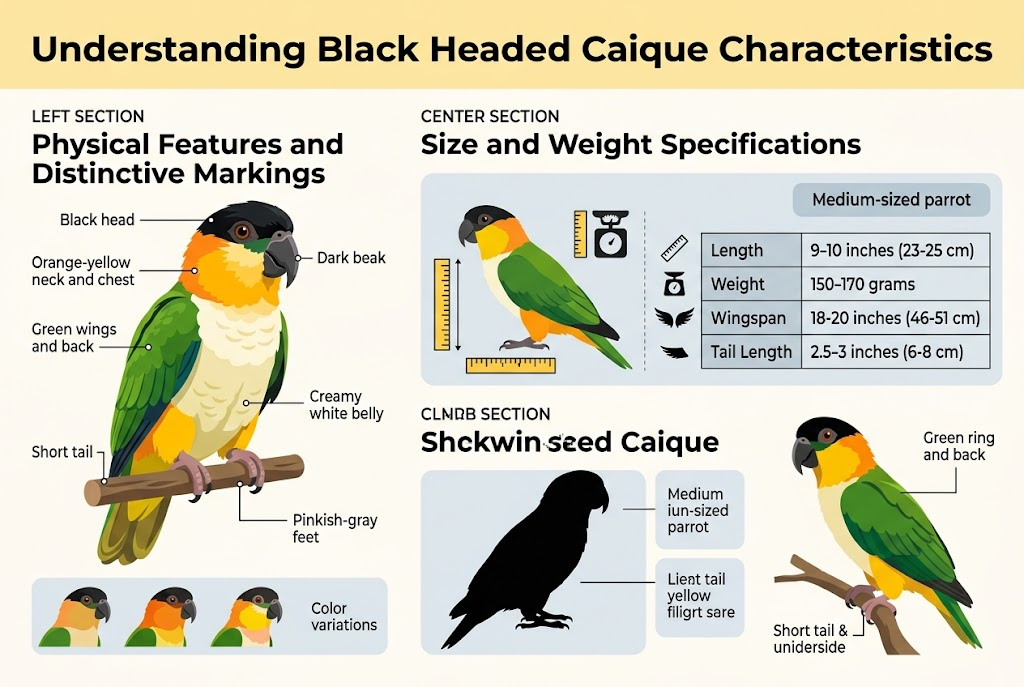
Black Headed Caique Parrot showcase one of nature’s most striking color combinations. Their jet-black heads create a bold contrast against their vibrant orange-yellow necks and upper chest areas. This dramatic transition from dark to bright creates an unmistakable appearance that sets them apart from other parrot species.
The wings display beautiful green plumage with darker flight feathers, while their backs maintain the same rich green coloration. Their bellies feature creamy white feathers that often have a subtle yellow tinge. The tail feathers are relatively short compared to other parrots, with green upper surfaces and yellowish undersides.
Their beaks are dark gray to black, perfectly complementing their head coloring. The eyes are typically dark brown or black, giving them an alert and intelligent expression. Their legs and feet are a pinkish-gray color with strong, gripping toes designed for their active lifestyle.
What makes each bird unique are the subtle variations in their color intensity and the exact boundaries between color zones. Some individuals may have slightly more orange in their chest area, while others display deeper yellow tones. The black head cap can extend slightly differently on each bird, creating individual personality markers.
Size and Weight Specifications
Black Headed Caique Parrot are considered medium-sized parrots, measuring approximately 9-10 inches (23-25 centimeters) from beak to tail tip. Their compact, stocky build gives them a robust appearance despite their relatively modest size.
Adult birds typically weigh between 150-170 grams, with males often being slightly larger than females. This weight range represents healthy, well-nourished birds, though individual variations can occur based on genetics and overall health status.
| Measurement | Range |
|---|---|
| Length | 9-10 inches (23-25 cm) |
| Weight | 150-170 grams |
| Wingspan | 18-20 inches (46-51 cm) |
| Tail Length | 2.5-3 inches (6-8 cm) |
Their wingspan reaches about 18-20 inches when fully extended, which is proportionally smaller compared to longer-tailed parrot species. The tail itself is quite short at only 2.5-3 inches, contributing to their distinctive square-shaped silhouette when perched.
These proportions make them excellent climbers and acrobats, perfectly suited for their energetic nature. Their size makes them manageable for most bird enthusiasts while still providing the intelligence and personality that larger parrots are known for.
Lifespan and Aging Process
Black Headed Caique Parrot can live 20-30 years with proper care, making them a long-term commitment for potential owners. Some exceptional individuals have been known to reach their mid-30s when provided with excellent nutrition, veterinary care, and mental stimulation.
Young caiques display the brightest, most vibrant colors. As they mature, subtle changes occur in their plumage intensity and overall appearance. The aging process in these birds is generally gradual and less noticeable than in many other species.
Life Stages:
- Fledgling (0-6 months): Duller colors, learning basic skills
- Juvenile (6 months-2 years): Colors brightening, high energy levels
- Adult (2-15 years): Peak coloration and activity
- Senior (15+ years): Gradual color fading, reduced activity
During their senior years, you might notice slightly faded colors, reduced activity levels, and changes in sleep patterns. Their beaks may show more wear, and they might become less acrobatic in their movements. Regular health checkups become increasingly important during this stage to catch any age-related issues early.
The key to maximizing their lifespan lies in consistent quality care from day one. Proper diet, regular exercise, mental stimulation, and preventive veterinary care all play crucial roles in helping these remarkable birds live full, healthy lives.
Natural Habitat and Wild Behavior Patterns
Geographic Distribution in South America
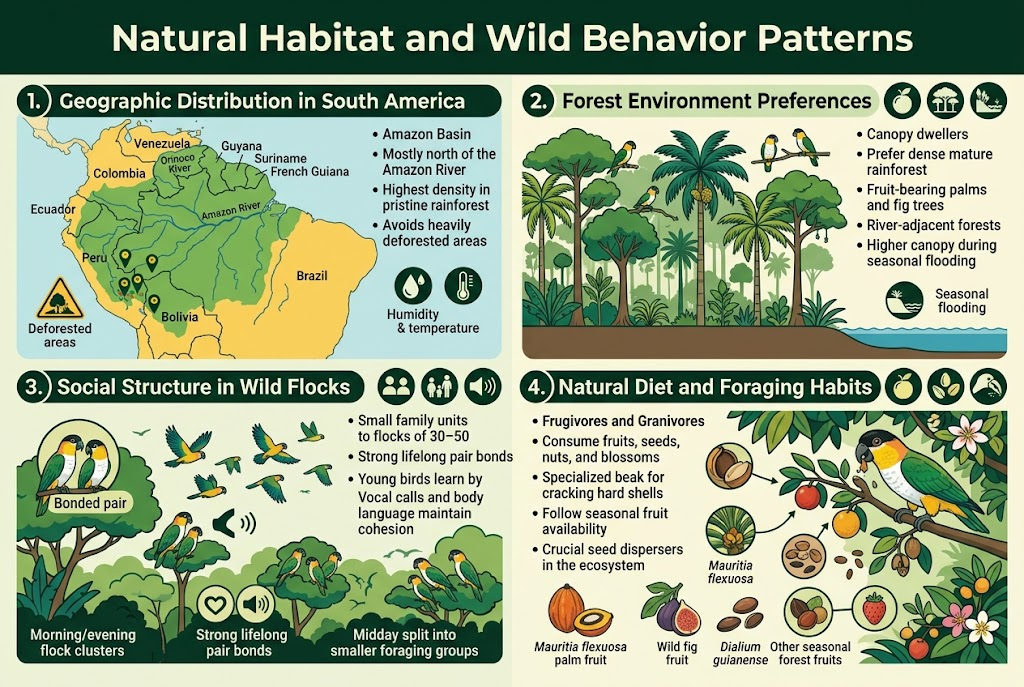
Black Headed Caique Parrot call the vast Amazon Basin their home, stretching across multiple countries in South America. These vibrant parrots inhabit regions of Brazil, Peru, Ecuador, Colombia, Venezuela, Guyana, Suriname, and French Guiana. The species thrives primarily north of the Amazon River, with their range extending from the Orinoco River basin in the north down to the central Amazon regions.
Population density varies significantly across their range, with the highest concentrations found in pristine rainforest areas of Peru’s Madre de Dios region and Brazil’s Acre state. These birds avoid heavily deforested areas and show strong preferences for undisturbed primary forest habitats. Climate patterns heavily influence their distribution, as they require consistent humidity levels and stable temperatures year-round.
Forest Environment Preferences
Black Headed Caique Parrot show distinct preferences for specific forest layers and microhabitats. They spend most of their time in the forest canopy, typically 20-40 meters above ground, where they find optimal foraging opportunities and nesting sites. Dense, mature rainforest with diverse tree species provides the complex ecosystem these birds need to thrive.
The birds gravitate toward areas with abundant fruit-bearing trees, particularly palm species and fig trees. They prefer forests with multiple canopy layers that offer protection from predators while providing easy movement between feeding areas. River-adjacent forests attract caiques because of increased biodiversity and water access, though they rarely venture to ground level except during specific foraging activities.
Seasonal flooding patterns in their habitat influence their movement and behavior. During high-water periods, caiques adapt by staying higher in the canopy and adjusting their foraging patterns to match available food sources.
Social Structure in Wild Flocks
Wild black-headed caiques live in complex social groups ranging from small family units to larger flocks of 30-50 individuals. These intelligent birds maintain strong pair bonds throughout their lives, with mated pairs often staying together for decades. Family groups typically include breeding pairs and their offspring from multiple seasons.
Flock dynamics shift throughout the day and seasons. Morning and evening hours see the largest gatherings as birds coordinate feeding activities and roost selection. During midday heat, flocks often split into smaller groups or pairs for more efficient foraging. Young birds learn essential survival skills by observing experienced flock members, creating a natural mentorship system within the group.
Communication plays a huge role in maintaining social cohesion. Caiques use a variety of vocalizations, from soft contact calls between mates to loud alarm calls that warn the entire flock of danger. Body language and positioning within the flock also communicate social status and relationships.
Natural Diet and Foraging Habits
Black-headed caique parrot are opportunistic feeders with diets varying seasonally based on fruit availability. Their primary food sources include seeds, fruits, nuts, flowers, and young leaves from dozens of plant species. Palm fruits make up a significant portion of their diet, particularly during peak fruiting seasons.
These birds demonstrate remarkable foraging intelligence, using their strong beaks to crack tough nuts and extract seeds from challenging fruit structures. They often hang upside down or assume acrobatic positions to reach food sources, showcasing their incredible agility. Caiques also consume clay from riverbanks, which provides essential minerals and helps neutralize toxins from certain fruits.
Foraging typically occurs in early morning and late afternoon when temperatures are cooler. The birds work systematically through fruiting trees, often returning to productive feeding sites over multiple days until resources are depleted. Their feeding habits contribute to seed dispersal across the rainforest, making them important ecosystem contributors.
Personality Traits and Temperament Benefits
High Energy and Playful Nature
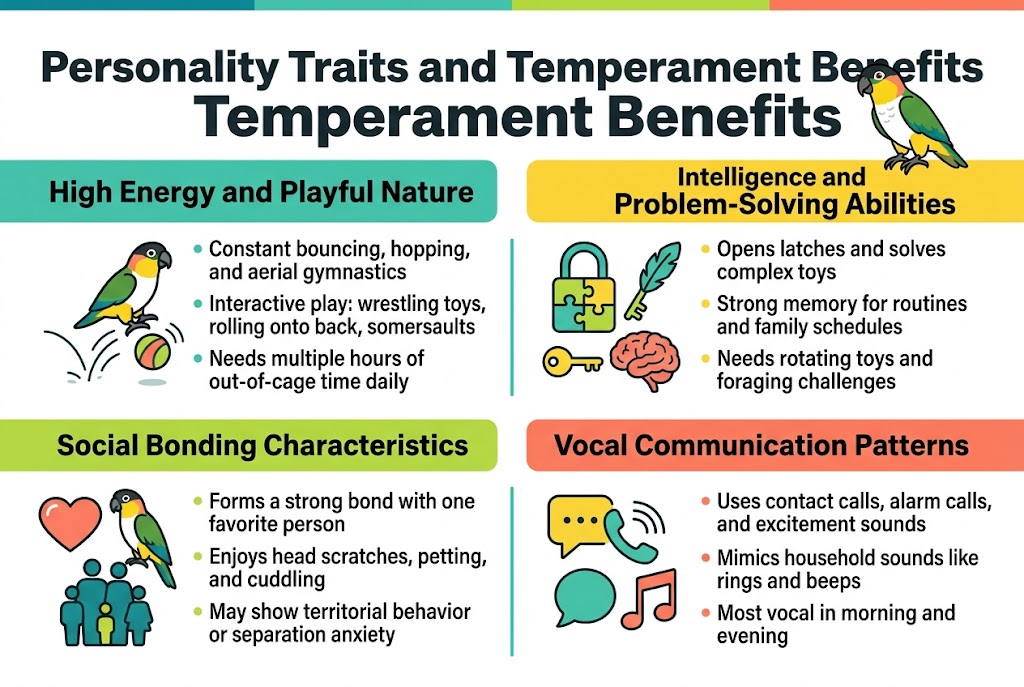
Black Headed Caique Parrot are absolute dynamos in the bird world. These feathered acrobats rarely sit still, constantly bouncing, hopping, and performing what can only be described as aerial gymnastics around their environment. Their energy levels rival those of hyperactive toddlers, making them incredibly entertaining companions for owners who appreciate an active pet.
Their play style is unique among parrots. Rather than simply chewing or foraging, Caiques engage in elaborate physical games. They love to wrestle with toys, roll onto their backs while playing, and perform impressive somersaults. Many owners describe watching their Caique as better than television entertainment.
This high energy translates into specific care needs. Caiques require multiple hours of out-of-cage time daily to burn off their natural exuberance. Without adequate exercise and stimulation, they can develop behavioral problems including excessive screaming, feather plucking, or destructive tendencies.
The playful nature extends to their interaction with humans. Caiques often initiate games with their owners, bringing toys over for interactive play sessions. They particularly enjoy games that involve movement and physical challenge, such as obstacle courses made from household items or complex puzzle toys that require manipulation and problem-solving.
Intelligence and Problem-Solving Abilities
Black Headed Caique Parrot possess remarkable cognitive abilities that consistently surprise even experienced bird owners. Their intelligence manifests in creative problem-solving approaches that often involve using tools or manipulating their environment in unexpected ways.
These birds excel at figuring out complex locking mechanisms on cages and toys. Many owners report their Caiques learning to open multiple latches in sequence or discovering how to remove supposedly bird-proof fasteners. Their spatial reasoning skills allow them to navigate intricate puzzle feeders and foraging toys with impressive efficiency.
Memory retention in Caiques is particularly noteworthy. They remember daily routines, recognize individual family members’ schedules, and can associate specific sounds or actions with upcoming events. This cognitive ability makes them highly trainable but also means they quickly learn both desired and undesired behaviors.
Their problem-solving extends to social situations as well. Caiques can read human emotions and body language, adapting their behavior accordingly. They often figure out which family member is most likely to give treats or provide attention at specific times, demonstrating their ability to analyze and respond to social patterns.
The intelligence of Black Headed Caiques requires mental stimulation to prevent boredom-related issues. Rotating toys, introducing new challenges, and providing foraging opportunities are essential for maintaining their cognitive health and preventing destructive behaviors.
Social Bonding Characteristics
The social nature of Black Headed Caiques creates profound bonds with their human companions. These birds don’t simply coexist with their families; they integrate themselves as active participants in household dynamics. Their bonding style differs from many other parrot species in its intensity and exclusivity.
Caiques typically choose one primary person as their favorite, though they can maintain positive relationships with other family members. This bonding preference often develops based on who spends the most interactive time with the bird, rather than who provides basic care. The chosen person becomes the center of the Caique’s social world.
Physical affection plays a significant role in their bonding behavior. Many Caiques enjoy head scratches, gentle petting, and even cuddling sessions with their preferred humans. They often seek out physical contact, climbing onto shoulders, sitting on laps, or nestling against their owner’s neck during quiet moments.
Their loyalty can sometimes manifest as territorial behavior around their chosen person. Caiques may become protective, showing aggression toward other pets or even family members who approach their favorite human. This behavior requires careful management and socialization to prevent it from becoming problematic.
Separation anxiety can develop in strongly bonded Caiques. They may become distressed when their preferred person leaves, leading to excessive calling or destructive behavior. Proper socialization with multiple family members can help mitigate these tendencies.
Vocal Communication Patterns
Black Headed Caique Parrot possess a diverse vocal repertoire that serves multiple communication functions. Unlike some parrot species known for extensive talking ability, Caiques tend to focus more on expressive calls, whistles, and environmental sounds rather than clear human speech.
Their natural vocalizations include contact calls, alarm calls, and excitement sounds. Contact calls help them maintain connection with flock members (including human family). These calls typically occur when the bird cannot see their preferred humans, serving as a “where are you?” communication.
Many Caiques become excellent mimics of household sounds rather than words. They readily copy telephone rings, microwave beeps, door squeaks, and other environmental noises. This mimicking ability often catches owners off guard when they respond to sounds that aren’t actually occurring.
Morning and evening tend to be the most vocal periods for Caiques, aligning with their natural calling patterns in the wild. These vocal sessions can be quite loud and energetic, requiring understanding neighbors or soundproofing considerations for apartment dwellers.
Some Caiques do learn words and short phrases, though their pronunciation may not be as clear as larger parrot species. They often develop their own unique versions of words, creating a personalized vocabulary that their families learn to understand over time. Their vocal communication becomes an integral part of the daily household rhythm.
Essential Care Requirements for Optimal Health
Proper Cage Setup and Space Needs
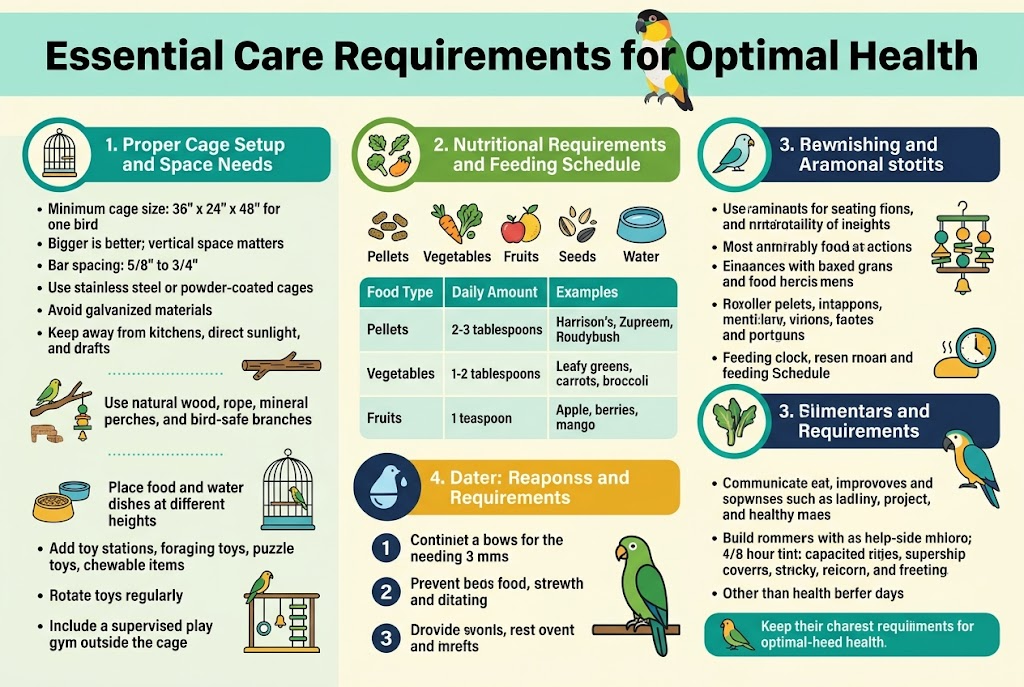
Black Headed Caique Parrot need spacious accommodations to thrive in captivity. A minimum cage size of 36″ x 24″ x 48″ works for a single bird, though bigger is always better. These active parrots love to climb, swing, and play, so vertical space matters just as much as horizontal room.
Bar spacing should measure between 5/8″ to 3/4″ to prevent escape attempts while allowing safe climbing. Stainless steel or powder-coated cages work best, avoiding galvanized materials that can cause zinc poisoning. Position the cage away from kitchens, direct sunlight, and drafty areas.
Natural wood perches of varying diameters help maintain healthy feet. Include rope perches, mineral perches, and natural branches from bird-safe trees like apple or willow. Place food and water dishes at different heights to encourage movement throughout the cage.
Add multiple toy stations with foraging opportunities, puzzle toys, and chewable items. Caiques are notorious toy destroyers, so rotation keeps them engaged. A play gym outside the cage provides additional exercise space during supervised out-of-cage time.
Nutritional Requirements and Feeding Schedule
A balanced diet forms the foundation of caique health. High-quality pellets should make up 60-70% of their daily intake, supplemented with fresh vegetables, limited fruits, and occasional healthy treats.
| Food Type | Daily Amount | Examples |
|---|---|---|
| Pellets | 2-3 tablespoons | Harrison’s, Zupreem, Roudybush |
| Vegetables | 1-2 tablespoons | Leafy greens, carrots, broccoli |
| Fruits | 1 teaspoon | Apple, berries, mango |
| Seeds/Nuts | Few pieces | Safflower seeds, almonds |
Feed your caique twice daily – morning and evening – removing uneaten fresh foods after 2-4 hours to prevent spoilage. Fresh water should be available constantly and changed daily. Avoid chocolate, avocado, caffeine, salt, and fruit pits which are toxic to birds.
Variety keeps caiques interested in their food while providing different nutrients. Rotate vegetables weekly and introduce new foods gradually. Some caiques enjoy warm, cooked grains like quinoa or brown rice as occasional treats.
Exercise and Mental Stimulation Needs
Caiques are incredibly active birds that require several hours of out-of-cage time daily for physical exercise and mental enrichment. These playful parrots need structured activities to prevent boredom and behavioral problems.
Create a bird-safe play area with climbing structures, swings, and interactive toys. Foraging activities tap into their natural instincts – hide treats in paper cups, wrap food in coffee filters, or stuff vegetables into toilet paper tubes. Puzzle feeders make mealtime more engaging while encouraging problem-solving skills.
Social interaction provides crucial mental stimulation. Caiques enjoy learning simple tricks, playing games, and participating in family activities. Training sessions of 10-15 minutes several times daily keep their minds sharp while strengthening your bond.
Physical exercise options include supervised flight time in bird-proofed rooms, climbing expeditions on play gyms, and interactive games like fetch with small toys. Some caiques enjoy music and will dance or bob to rhythmic beats.
Rotate toys weekly to maintain novelty and interest. Provide different textures, colors, and materials to explore. Cardboard boxes, paper bags, and safe household items often fascinate caiques more than expensive store-bought toys. The key is variety and regular engagement to keep these intelligent birds happy and healthy.
Training Techniques for Better Companionship
Basic Command Training Methods
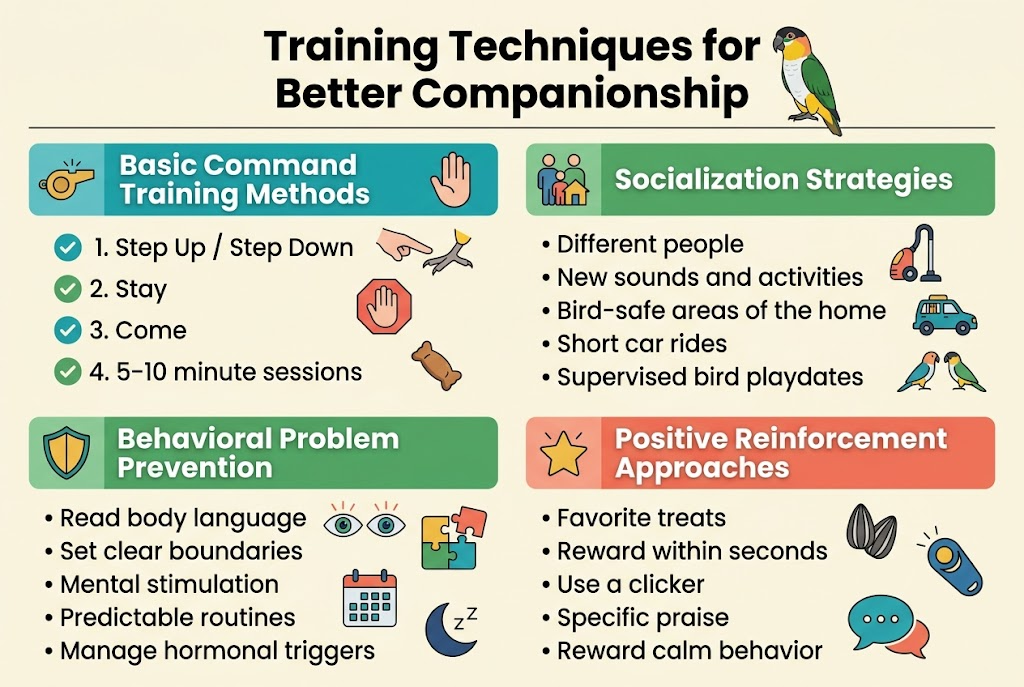
Teaching your Black Headed Caique basic commands creates a foundation for communication and safety. Start with simple verbal cues like “step up” and “step down” during daily interactions. Hold your finger steady near your bird’s feet while saying “step up,” gently pressing against their lower belly if they don’t respond immediately. Reward successful attempts with praise and small treats.
The “stay” command proves invaluable for safety situations. Begin by placing your caique on a perch and holding your hand up in a stop gesture while saying “stay.” Take one step back, wait a few seconds, then return and reward. Gradually increase the distance and duration as your bird masters each level.
“Come” training works best in a safe, enclosed room. Call your caique’s name followed by “come” while holding a favorite treat. Start from short distances and reward enthusiastic responses. Never chase your bird if they don’t comply – this creates negative associations with the command.
Consistency matters more than perfection. Use the same words, tone, and gestures every time. Practice sessions should last 5-10 minutes to maintain your bird’s attention span. Multiple short sessions throughout the day work better than one long training period.
Socialization Strategies
Early socialization shapes your caique’s comfort level with various people, situations, and environments. Expose young birds to different family members, visitors, and gentle handling from multiple people. This prevents over-bonding to a single person and reduces territorial aggression later.
Introduce new experiences gradually. Let your caique observe household activities from their cage before allowing direct participation. Vacuum cleaners, dishwashers, and music should become familiar background sounds rather than sources of fear. Play different types of music and television programs to broaden their comfort zone.
Take your caique to bird-safe areas of your home regularly. Kitchen visits during calm cooking periods, supervised bathroom trips for mirror play, and living room adventures during family time all contribute to a well-adjusted personality. Always supervise these excursions carefully.
Car rides in a secure travel carrier help prepare your caique for veterinary visits and potential relocations. Start with short trips around the block, gradually building up to longer journeys. Bring familiar toys and maintain calm, reassuring conversation during travel.
Arrange playdates with other well-socialized birds if possible. Caiques are naturally social creatures who benefit from observing and interacting with their own kind. Always supervise these interactions and separate birds at the first sign of aggression or stress.
Behavioral Problem Prevention
Understanding caique body language prevents many behavioral issues before they escalate. Pin-point pupils, raised feathers, and lunging motions signal overstimulation or aggression. Back away and give your bird space when these warning signs appear rather than pushing through the interaction.
Establish clear boundaries from day one. Caiques test limits constantly, so consistent responses to unwanted behaviors like biting, screaming, or destructive chewing are essential. Never react with yelling or physical punishment – these responses often reinforce attention-seeking behaviors.
Provide adequate mental stimulation through foraging opportunities, puzzle toys, and interactive play. Bored caiques develop destructive habits like feather plucking, excessive screaming, or aggressive behaviors. Rotate toys weekly and hide treats throughout their environment to encourage natural foraging instincts.
Maintain predictable daily routines for feeding, playtime, and sleep. Caiques thrive on structure and become stressed when schedules change dramatically. If routine modifications are necessary, implement them gradually over several days.
Address hormonal behaviors proactively during breeding season. Limit petting to head and neck areas only, ensure adequate sleep (10-12 hours of darkness), and remove potential nesting materials. Hormonal aggression and territorial behaviors often diminish when environmental triggers are controlled.
Positive Reinforcement Approaches
Reward-based training builds trust while encouraging desired behaviors. Identify your caique’s favorite treats – sunflower seeds, small pieces of fruit, or special nuts work well for most birds. Reserve high-value rewards exclusively for training sessions to maintain their motivational power.
Timing is everything in positive reinforcement. Deliver rewards within seconds of the desired behavior to create clear associations. A clicker can help mark the exact moment your caique performs correctly, especially useful for complex behaviors or when you can’t immediately reach them with a treat.
Praise should be enthusiastic and specific. Instead of generic “good bird” comments, use phrases like “good step up” or “nice quiet voice” that directly relate to the behavior you’re encouraging. Your tone of voice conveys as much meaning as your words to these intelligent birds.
Variable reinforcement schedules maintain long-term motivation. Once your caique reliably performs a behavior, gradually reduce treat frequency while maintaining verbal praise. Random rewards often prove more effective than predictable ones for sustaining learned behaviors.
Ignore unwanted behaviors whenever safely possible rather than providing negative attention. Caiques often repeat behaviors that generate strong reactions, even negative ones. Turn your back on screaming fits or attention-seeking antics, then immediately reward calm, appropriate behavior when it returns.
Health Monitoring and Veterinary Care
Common Health Issues to Watch
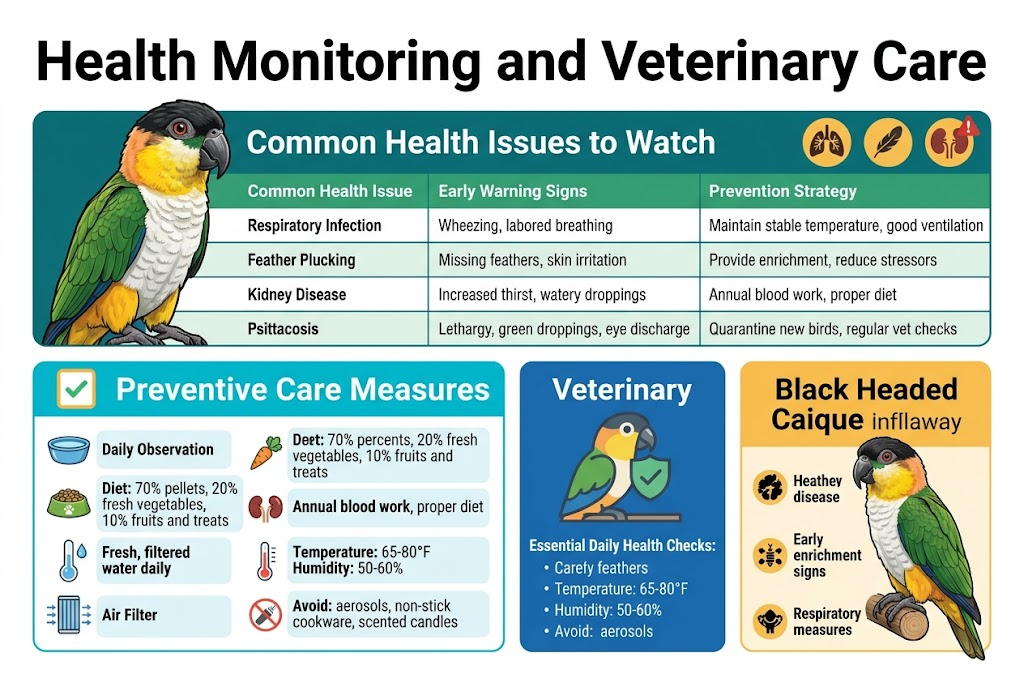
Black Headed Caique Parrot are generally robust birds, but they’re prone to several specific health conditions that owners should monitor closely. Respiratory infections rank among the most frequent concerns, often triggered by drafts, temperature fluctuations, or poor air quality. Watch for symptoms like wheezing, open-mouth breathing, tail bobbing, or discharge from the nostrils.
Feather plucking represents another significant issue, typically stemming from boredom, stress, or underlying medical conditions. These intelligent birds need constant mental stimulation, and lack of enrichment can lead to destructive behaviors targeting their own plumage.
Kidney disease appears more commonly in caiques than many other parrot species. Early signs include increased water consumption, watery droppings, and lethargy. Regular blood work helps catch this condition before it progresses to critical stages.
| Common Health Issue | Early Warning Signs | Prevention Strategy |
|---|---|---|
| Respiratory Infection | Wheezing, labored breathing | Maintain stable temperature, good ventilation |
| Feather Plucking | Missing feathers, skin irritation | Provide enrichment, reduce stressors |
| Kidney Disease | Increased thirst, watery droppings | Annual blood work, proper diet |
| Psittacosis | Lethargy, green droppings, eye discharge | Quarantine new birds, regular vet checks |
Digestive problems often result from inappropriate diets or sudden dietary changes. Caiques have sensitive systems that respond poorly to high-fat foods, chocolate, avocado, or other toxic substances.
Preventive Care Measures
Establishing a comprehensive preventive care routine dramatically reduces the likelihood of serious health complications in black headed caiques. Daily observation serves as your first line of defense – spend time each morning checking your bird’s demeanor, appetite, and droppings quality.
Diet plays a crucial role in prevention. Offer a balanced mix of high-quality pellets (70%), fresh vegetables (20%), and limited fruits and treats (10%). Avoid seed-only diets, which lack essential nutrients and contribute to liver disease. Fresh, filtered water should be available constantly and changed daily.
Environmental management significantly impacts your caique’s health. Maintain temperatures between 65-80°F with minimal fluctuations. Ensure adequate humidity levels around 50-60% to support respiratory health. Install quality air filtration systems and avoid using aerosols, non-stick cookware, or scented candles near your bird.
Essential Daily Health Checks:
- Monitor eating and drinking habits
- Observe droppings consistency and color
- Check for respiratory distress
- Note behavioral changes or lethargy
- Inspect feet and beak for abnormalities
- Look for signs of discharge from eyes or nostrils
Regular wing and nail trimming prevents injuries and maintains your bird’s comfort. Many owners learn to perform basic grooming themselves, though professional grooming ensures safety and proper technique.
Finding Qualified Avian Veterinarians
Locating an experienced avian veterinarian before you need one proves absolutely critical for caique ownership. Not all veterinarians possess specialized bird knowledge, and emergency situations demand immediate expert care.
Start your search through the Association of Avian Veterinarians (AAV) website, which maintains a comprehensive directory of certified avian specialists. Contact local bird clubs, pet stores that sell birds, and parrot rescues for recommendations from experienced bird owners in your area.
During your initial consultation, evaluate the veterinarian’s knowledge and facility. A qualified avian vet should handle birds confidently, maintain specialized equipment like gram scales and appropriate restraint tools, and demonstrate familiarity with caique-specific health concerns.
Questions to Ask Potential Avian Vets:
- How many years of avian experience do they have?
- What percentage of their practice involves birds?
- Do they handle emergency calls or have after-hours referral arrangements?
- Can they perform specialized procedures like endoscopy or crop surgery?
- What’s their approach to preventive care and wellness exams?
Schedule a wellness visit within the first few weeks of bringing your caique home. This establishes baseline health parameters and creates a relationship with your veterinarian before problems arise.
Emergency Health Warning Signs
Recognizing emergency situations can mean the difference between life and death for your black headed caique. Birds instinctively hide illness symptoms, so by the time signs become obvious, the condition may already be critical.
Breathing difficulties require immediate veterinary attention. Watch for open-mouth breathing, tail bobbing with each breath, or audible wheezing sounds. These symptoms indicate severe respiratory distress that can quickly become fatal without intervention.
Neurological symptoms like seizures, loss of balance, head tilting, or inability to perch normally signal serious problems requiring emergency care. Heavy metal poisoning, infections, or traumatic injuries can cause these frightening symptoms.
Immediate Emergency Signs:
- Difficulty breathing or open-mouth breathing
- Bleeding that doesn’t stop within minutes
- Seizures or loss of consciousness
- Inability to stand or maintain balance
- Vomiting or regurgitation (different from normal feeding behavior)
- Severe lethargy or unresponsiveness
- Prolapsed organs
- Fractures or obvious trauma
Changes in droppings consistency, color, or frequency often indicate internal problems. Bloody droppings, completely liquid stools, or absence of droppings for several hours warrant immediate evaluation.
Keep your avian veterinarian’s emergency contact information easily accessible, along with the nearest 24-hour animal hospital that accepts birds. Many areas have specialized avian emergency clinics that provide after-hours care specifically for exotic pets.
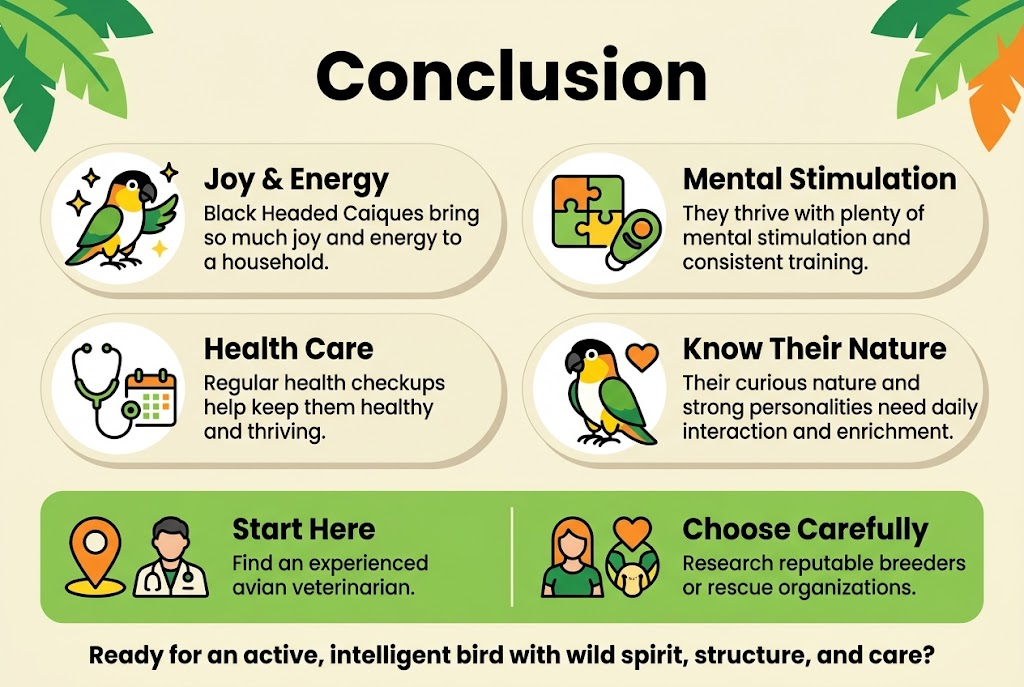
Black Headed Caique Parrot bring so much joy and energy to any household willing to meet their unique needs. These playful parrots thrive when they have plenty of mental stimulation, consistent training, and regular health checkups. Their curious nature and strong personalities make them wonderful companions, but only when their owners understand what makes them tick and commit to providing the right environment.
If you’re thinking about welcoming a Black Headed Caique into your life, make sure you’re ready for an active, intelligent bird that needs daily interaction and enrichment. Start by finding an experienced avian veterinarian in your area and begin researching reputable breeders or rescue organizations. These amazing birds deserve owners who appreciate their wild spirit while providing the structure and care they need to flourish as beloved family members.
