
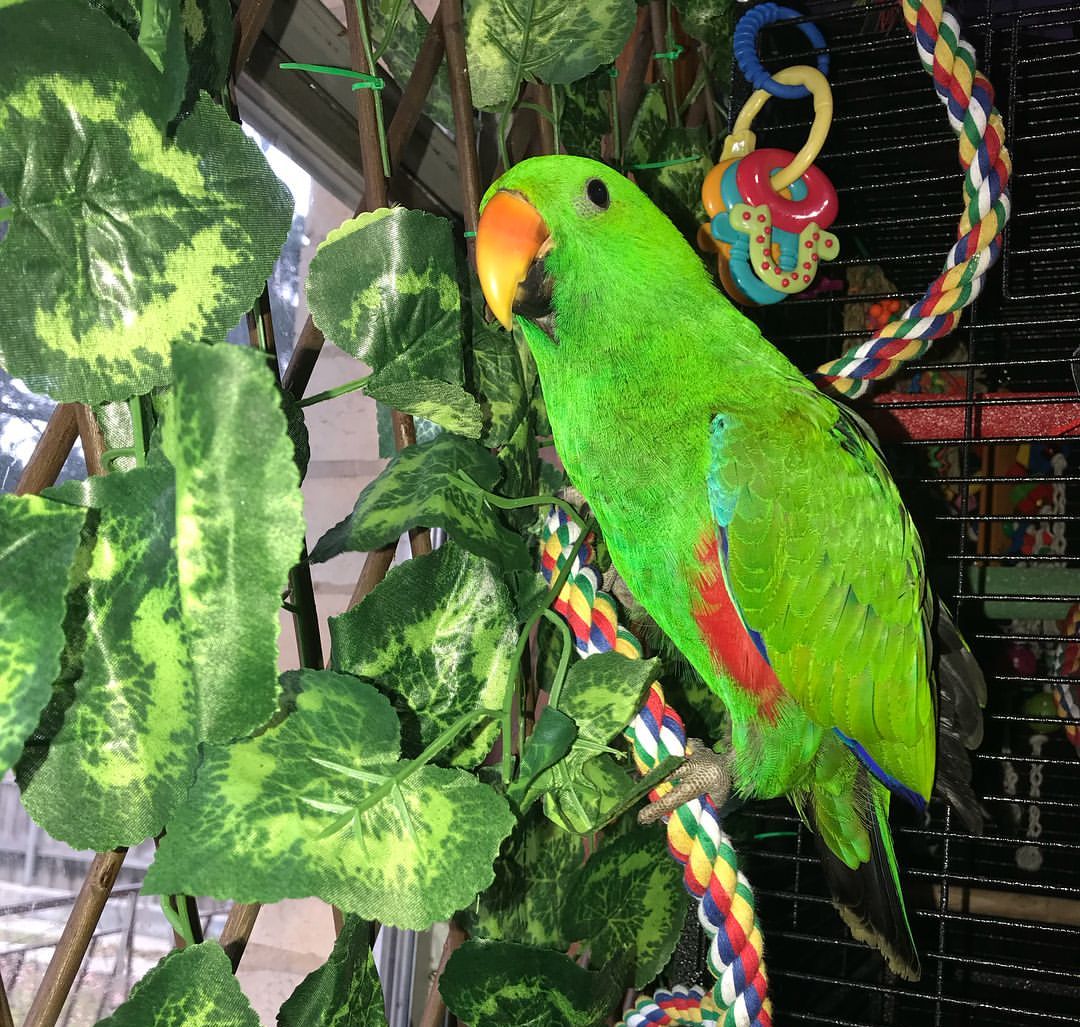
Description
Eclectus Parrot for Sale
Eclectus parrot for sale, the lovely Eclectus parrots are attractive and intelligent birds. They are one of the better talkers as compared to Amazon parrot and delight in making various sounds heard around the home, such as the microwave or the telephone.
Eclectus Parrots have a laid back personality that their humans adore. Eclectus parrots are quite content to sit on a perch for hours at a time playing with their toys. They do not like commotion and they do not react well to it. They are calm birds in captivity, but will display a pensive nature when faced with new things or situations. Eclectus parrot do not adapt easily to new situations or environments so its’ human must be patient and adjust to having a somewhat shy, three year old child-type companion. They can be very territorial of their cage area. Taxonomic and Scientific Information bout this bird Check out on the Eclectus Wikipedia page.
Blue Eclectus Parrot for Sale
The Eclectus is not a demanding bird and is relatively easy to care for; however, they prefer a daily routine. They are slow to adjust or adapt to new things. If you are providing your Eclectus with a new toy, for example, introduce it to him outside the cage. Then let him see it outside the cage for several days before you hang it in the cage.
They enjoy playing with new toys, but they become anxious when their surroundings changes quickly. The best house for an Eclectus is one without kids, lots of visitors, and a lot of play and action.But they do make a good pet for someone who lives alone, rarely has company, and where the environment and daily routine does not change.
The majority of Eclectus are females. As a result, females are more likely than males to be moody and loud. A female may become more aggressive once she reaches breeding age. She might also start exploring the house or aviary’s corners and crevices in search of prospective nesting areas.
Care and feeding of our Eclectus parrot for sale
Fresh food and water must always be available in your home. A ready-made, vitamin-enriched giant hookbill seed mix will be among the foods provided for your pet bird. Additionally, Eclectus must supplement their food with a variety of fruits and vegetables.
Green peas, cucumber, young dandelion greens, sweet corn, beet greens, carrots, broccoli, unsprayed lettuce, chickweed, dandelions, eggplant, green peppers, sorrel, spinach leaves, tomatoes, and zucchini are some examples of fresh fruits and vegetables you can provide.
To keep the Eclectus healthy, the fruits and green foods are essential. Dry seed is notably deficient in Vitamin A, which is why they need additions to a seed based diet. If deprived of a fibrous diet, they may develop Candidiasis. (see ailments below). A cuttle bone or a calcium block is a good source of calcium.
Maintenance
The basic cage care includes daily cleaning of the water and food dishes.
Social Behavior of Eclectus Parrots
Some humans feel the male is the more talented, with more talking ability and easier to tame. Females, in the wild are the more aggressive of the two. However, both sexes can become affectionate pets and enjoy human handling.
Eclectus parrots are also affectionate. Most thrive best when socialization is part of their daily routine. They cherish the time they spend interacting with their families.
Eclectus Parrot Appearance
This medium-sized parrot is quite colorful, though the males and females are distinctly different. In fact, they are so different in color that scientists previously believed that they were two entirely different species. Nonetheless, their plumage has made them as popular as they are.
adaeliza –
good customer service the birds are well and are good
Joan Mosby –
I have just recieved my Eclectus Parrot I ordered yesterday it came next day today .. the lady was lovely she knows what he’s on about with parrots by just talking to her you can tell she does ..there was always good communication either by email also by phone calls.. the bird is beautiful..I was abit sceptical at first as I’d read bad experiences from others but read more good than bad….. but yer im so pleased I would recommend this site they are trustworthy