
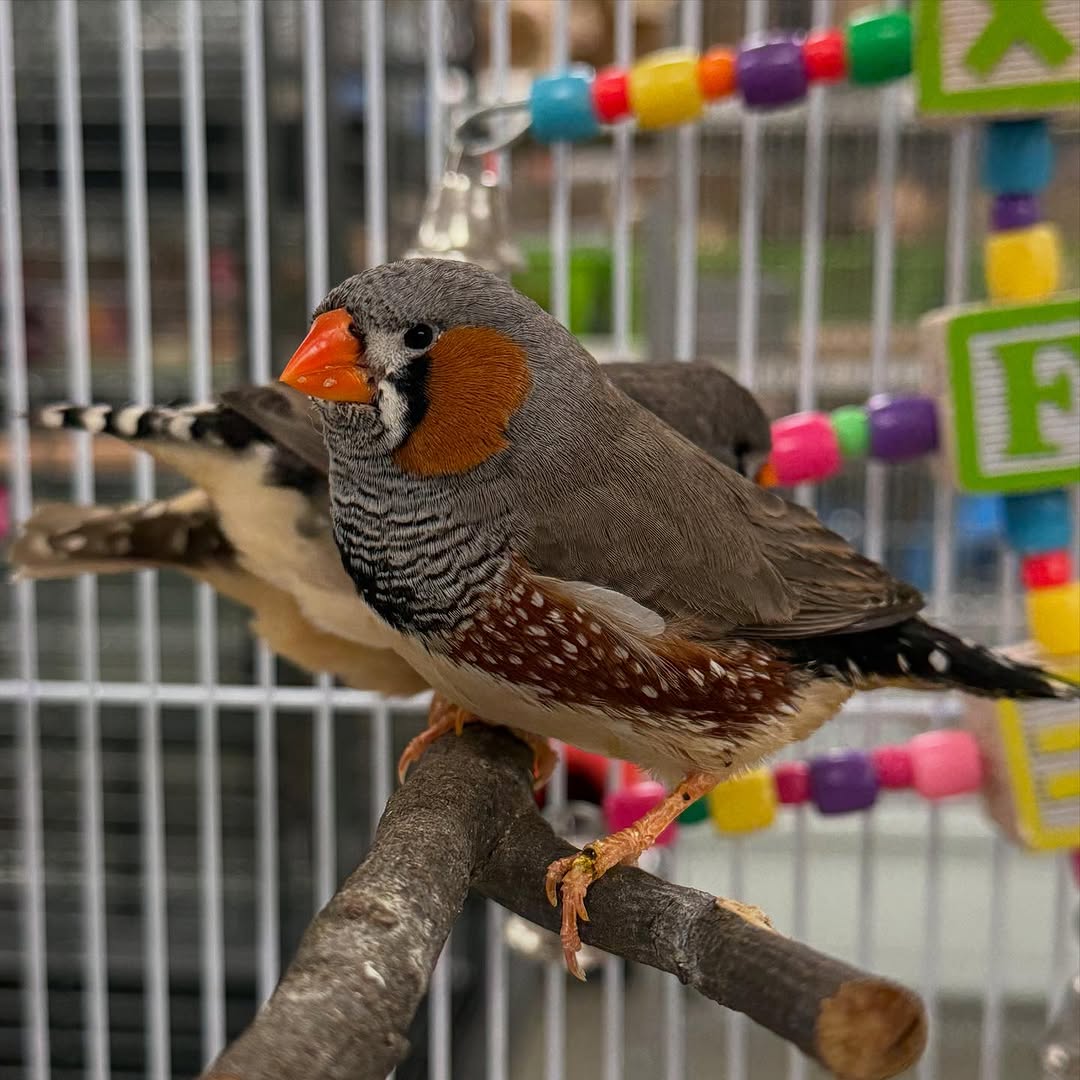
Description
Zebra Finch for Sale
Black Cheek Zebra Finch for Sale
Zebra Finch for Sale, Zebra finches naturally live in large groups in arid areas of central Australia, Indonesia, and East Timor. These birds prefer habitats such as grasslands and forests, especially those near water sources.
Temperament
Zebra finches are small and lively birds that are enjoyable to watch. Despite their small size, they require a spacious cage to allow for flight. A male and female pair often breed easily, so some people choose to keep only females. Others suggest keeping them in pairs or groups of more than six. If you keep more than a pair, make sure you have a larger cage, such as a flight cage or aviary.
Although zebra finches are social with their own kind, they do not form strong attachments to humans. With careful training, it is possible to teach a zebra finch to perch on your hand. In terms of sound, zebra finches make quiet chirps and peeps that are easy to live with. This makes them a good choice for people living in apartments or condominiums.
Speech and Vocalizations
Zebra finches have a range of whistles and calls. They produce a quiet, trilling, and conversational song. Male zebra finches typically teach their young how to sing, offering a song for the chicks to personalize with their own trills and whistles. Often, these songs incorporate sounds from the environment. Some owners sing to their birds or play music to encourage them to be creative.
Zebra Finch Colors and Markings
Zebra finches are visually appealing and show differences between the sexes, which makes it easy to tell them apart.Males have black and white bars on their neck and chest, orange cheek patches, and brown sides. Females have gray coloring in these areas. Both males and females have red-orange beaks, with the male’s being more vivid. In captivity, there are many different color variations available.
Caring for a Zebra Finch
When keeping zebra finches, it is more important to provide enough horizontal space for them to fly than to focus on cage height.A large cage is best, with a size of 30 inches long, 18 inches high, and 18 inches wide being suitable for a pair. For larger groups, an aviary or flight cage is ideal, with wire spacing between 1/4 inch and 1/2 inch.
Offer a variety of perches and avoid over-cluttering the cage to allow for free movement.
Use dowels of different sizes or natural branches, arranged at different angles to give a variety of foot positions.Include swings and ladders, though finches may use ladders as perches rather than for climbing. Place the finch cage in a quiet and secure location in your home.
Unlike parrots, finches do not require much human interaction, so they may be less stressed when kept away from busy areas.
Finches can tolerate a wide range of temperatures, but avoid exposing them to direct sunlight or areas with strong drafts near heating or air conditioning vents. Provide a shallow dish of fresh water several times a week for bathing.
Common Health Problems
Zebra finches can develop a scaly face due to mite infestations, which requires treatment by a veterinarian. They are also susceptible to air-sac mite infections, especially when stressed. This is a serious condition and needs immediate veterinary care. If your finch is having trouble breathing, contact an avian veterinarian right away.
Diet and Nutrition
In the wild, zebra finches and Canaries: Share similar diets and size, though they are not in the same. They mainly eat seeds from plants, weeds, pine cones, and berries. Some also chew fruits to extract the seeds and discard the rest. To encourage foraging behavior, place food dishes on the floor (away from perches) or attach the feeder to the side of the cage. Sprouted seeds offer the highest nutritional value.
Offer a variety of greens, including romaine lettuce, dandelion greens, kale, and spinach (in moderation), as well as fresh vegetables and fruits. Provide about a tablespoon of this mix, either as a salad or chopped pieces. Never give avocado, as it is poisonous to most birds. Try different foods to find what your finches prefer, and continue offering a variety.
Give a teaspoon of pelleted food daily, as pellets offer a balanced and complete source of nutrition.
Be patient in encouraging your finches to accept them. Add supplements like eggs or a commercially prepared egg food a couple of times a week. This is especially beneficial for breeding birds. Provide cuttlebone as a source of calcium, which also helps keep beaks trimmed.
For treats, millet sprays are a popular choice. Offer it occasionally, but be careful not to let your bird develop a preference for millet and stop eating other foods. Provide fresh drinking water daily and clean all food dishes at the end of each day. How to Breed Your Own Zebra Finches
Hugh Carlisle –
Very happy with my Zebra Finch parrots gona take gd care ov them my girlfriend loves them many thanks for ur service
Hugh Carlisle –
Very happy with my Zebra Finch parrots gona take gd care ov them my girlfriend loves them many thanks for ur service