Description
Quaker Parrot for Sale
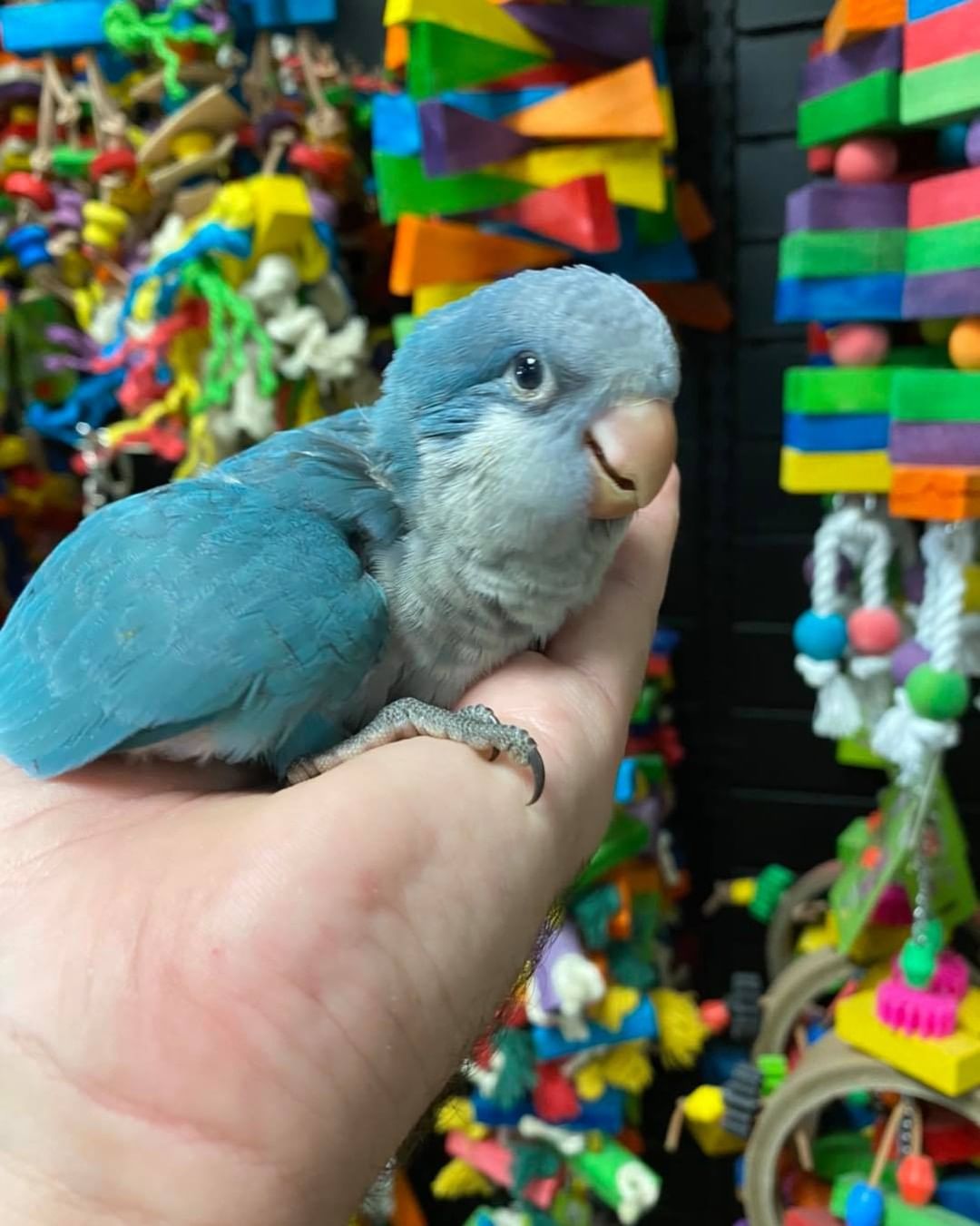
Blue Quaker Parrot for Sale
Quaker Parrot for Sale Quaker parrots are originally from a small area in South America. Their range includes parts of central Bolivia, southern Brazil, and central Argentina.
Quaker parrots are the only parrot species that build nests. They spend a lot of time constructing complex nests made of twigs and branches. These nests can have multiple rooms. Flocks often build nests close together, creating tightly knit communities. Some of these communities can be as large as a compact car.
Quaker parrots are resilient birds and can thrive in urban areas around the world.
In certain areas, especially in the southern United States, wild populations of Quakers can cause issues with crops and native birds.
Temperament
Quaker parrots are confident and social creatures. They are lively and often act like clowns, enjoying being the center of attention. They are talkative and make frequent sounds.
In captivity, Quaker parrots often form close bonds with one person, showing a strong sense of loyalty. It is important to train and socialize them to avoid unwanted behaviors.
They often greet their owners with excited squeaks. Most hand-fed Quaker parrots are gentle and can be great pets for children.
Speech and Vocalizations
Quaker parrots are capable of learning a wide range of words and can even combine phrases.
These birds are very talkative, especially when there are multiple birds together.
The loudness of Quaker parrots can vary from one owner to another. Some find them quiet, while others think they are noisy. They don’t make piercing screams like some other parrots, but they do occasionally call out. Their noise level is usually manageable and typically won’t disturb neighbors.
Quaker Parrot Colors and Markings
Adult Quaker parrots typically have bright green feathers on their heads, wings, and backs.
Their most noticeable features are the gray on their chest, cheeks, and throat, which resemble the colors of Quaker clothing from the past, giving them their name.
Their flight feathers are a brilliant blue, and the undersides of their tails have a light green tint.
Quaker parrots have horn-colored beaks and gray feet, making them look similar to cockatiels. Captive breeding has led to a variety of color mutations in Quaker parrots. The blue hybrid Quaker, developed in the early 2000s, is among the most popular.
Quaker parrots are monomorphic, meaning that males and females look the same.
Accurate sex determination requires DNA or surgical methods.
Caring for a Quaker Parrot
Quaker parrots are very active and need plenty of space to play.
Their cages should be at least 18 inches square. However, they do better in larger enclosures, where they can fully stretch their wings. The cage should be strong since these birds are both chewers and skilled at opening cages. Place the cage in an area away from direct sunlight and strong drafts, as they are sensitive to extreme temperatures.
Also, add a tray at the bottom of the cage since Quakers can be messy eaters. When introducing a new bird, start with separate cages to allow bonding. If you have a dog or cat, keep a close eye on your Quaker, as they can be fearless and may challenge even large dogs.
Common Health Problems
Common health issues in Quaker parrots include:
Self-mutilation: This is a common but harmful reaction to boredom and stress.
Quaker parrots are generally easier to rehabilitate compared to other parrot species.
Fatty liver disease: Often caused by a diet high in fat, especially seed-based foods.
A balanced, varied diet with seeds as occasional treats helps maintain good health.
Diet and Nutrition
Quaker parrots are excellent eaters and should have a diet that includes fruits, vegetables, and nuts similar to what they eat in the wild.
In captivity, their main diet should be a high-quality, commercially made pellet mix, combined with fresh fruits, vegetables, leafy greens, and nuts. Include root vegetables, peppers, and colorful produce to ensure proper nutrition.
Feed them about 3 tablespoons of pellets each day, and offer at least 1/4 cup of fresh fruits and vegetables in the morning. Some Quaker parrots can become overweight if they consume too many fatty foods like sunflower seeds, peanuts, and millet. Avoid feeding foods that are toxic to birds, such as avocado, chocolate, and coffee. Bird Nutrition and Diet Tips
Exercise
Quaker parrots need at least two hours of free time outside of their cage each day in a bird-safe room. Supervise them whenever they are outside their cage.
Alan Pitts –
Lovely birds, beautiful Avery, would recommend
pet birds breeders