
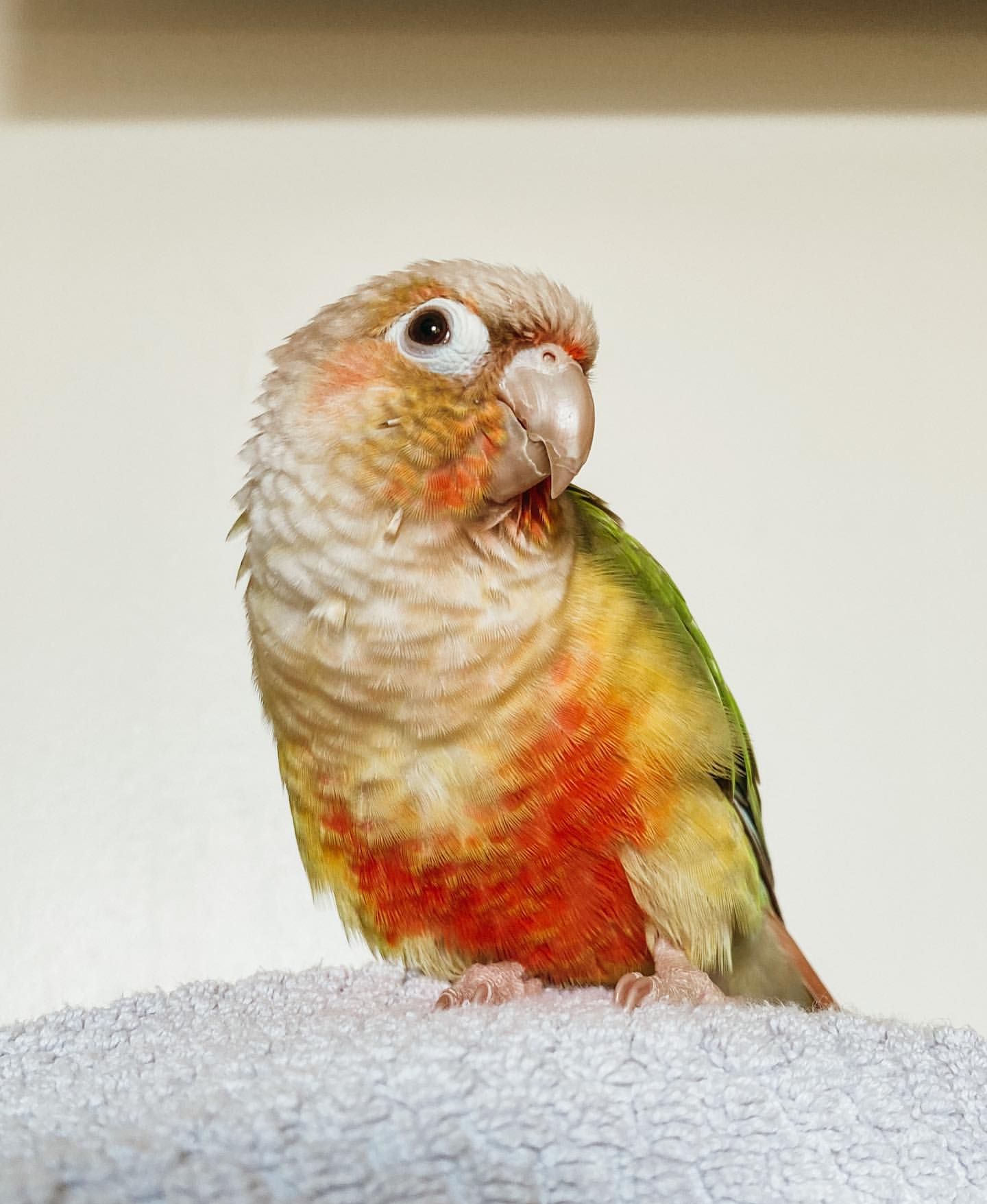
Description
Green Cheek Conure for Sale
Turquoise Green Cheek Conure for Sale
Green Cheek Conure for Sale, the green-cheeked conure is originally from South America and is commonly found in the forests and woodlands of Brazil, Bolivia, Argentina, and Paraguay. These birds typically live in groups of 10 to 20 birds, usually at the top of trees or in larger groups when food is more plentiful.
Temperament
Green-cheeked conures are popular pets due to their affectionate and playful nature. They make excellent pets for families. Although most green-cheeked conures don’t talk, they are quite easy to train and can learn simple tricks. Their lively personalities often make up for their lack of speech.
Speech and Vocalizations
Although quieter than many other conure species, green-cheeked conures can still be quite vocal, which may be challenging for people living in apartments.
Green-Cheeked Conure Colors and Markings
Both male and female green-cheeked conures have the same coloring. Their plumage features bright red feathers on their tails and chests, bright green on their backs and upper wings, olive green around the red chest patch, a white ring around the neck, black feathers on the head, and olive green patches on the cheeks. Their long, pointed tail is usually blue or maroon.
They have black beaks and feet, and their eyes have white rings. Green-cheeked conures are very similar to maroon-bellied conures. Both are the same size and green in color, but the green-cheeked conure has a more vibrant green color with a gray chest spot that turns red on the belly, while the maroon-bellied conure has a golden chest spot that fades to maroon.
Caring for the Green-Cheeked Conure
green-cheeked conures are visually appealing and intelligent, they require proper care.
As parrots, they need a lot of daily attention, regular exercise, and a balanced diet. They also need a suitable living space that allows for flying and movement.
A green-cheeked conure doesn’t require the same large space as bigger parrots like the blue throated macaw, but you should still provide a cage that is at least 24 inches wide, 30 inches tall, with metal bars spaced 1/2 to 3/4 inch apart. A larger cage is always better. Include perches that are at least nine inches long and 1/2 inch thick, with different sizes to keep their feet healthy.
Common Health Problems
Regular check-ups with an avian veterinarian are important to catch health issues early. Some common health problems that can affect green-cheeked conures include:
– Proventricular dilatation disease (PDD), a nervous system condition
– Psittacosis, a bacterial infection
Diet and Nutrition
In the wild, green-cheeked conures eat fruits, vegetables, seeds, and occasionally insects. Your Bird
Exercise
Exercise is very important for green-cheeked conures, just as it is for all parrots.
In the wild, these birds fly many miles daily in search of food, a mate, or a nest.
It can be hard to recreate this in a home setting, but if you can spend at least two hours a day watching your conure play and exercise, they will likely stay healthy and happy. One helpful solution is to choose a cage with a play gym on top, which can give them space to stretch their wings during supervised playtime.
Sara Davidsen –
I brought a Green Cheek Conure from this place yesterday, he must have been hand reared he sits on my shoulder in my hand He does not bite, if you need anything from a cage to bird food this is the place to visit Highly recommended