Cockatoo Care Guide
Healthy Cockatoo Care Guide
Cockatoo Care Guide, The Ultimate Cockatoo Care Guide: Everything You Need to Know to Raise a Happy, Healthy Cockatoo
Cockatoos are among the most intelligent, affectionate, and beautiful companion birds in the world. Their playful personalities, remarkable intelligence, and strong bond with their owners make them wonderful lifelong companions. However, they also require significant time, attention, and specialized care. This comprehensive cockatoo care guide covers everything you need to know, from choosing the right cage and diet to training, grooming, enrichment, and health care.
Whether you’re a first-time bird owner or an experienced parrot enthusiast, this guide will help you provide the best possible life for your feathered friend.
Table of Contents
Understanding Cockatoos
Choosing the Right Cockatoo
Preparing Your Home
Cockatoo Cage Requirements
Healthy Cockatoo Diet
Fresh Fruits and Vegetables
Foods to Avoid
Daily Exercise
Mental Enrichment
Socialization and Bonding
Cockatoo Training Tips
Grooming and Hygiene
Common Health Problems
Signs Your Cockatoo Is Sick
Sleep Requirements
Lifespan and Commitment
Frequently Asked Questions
Understanding Cockatoos
Cockatoos belong to the Cacatuidae family and are native to Australia, Indonesia, Papua New Guinea, and nearby islands. They are famous for their expressive crests, affectionate personalities, and exceptional intelligence.
Popular pet species include
Umbrella Cockatoo
Moluccan Cockatoo
Major Mitchell Cockatoo
Sulphur-crested Cockatoo
Goffin’s Cockatoo
Bare-eyed Cockatoo
Each species has slightly different care requirements, but all cockatoos share the need for companionship, mental stimulation, and proper nutrition.
Why Cockatoos Make Excellent Pets
Cockatoos are popular companion birds because they are:
Extremely intelligent
Highly social
Easy to train with positive reinforcement
Excellent mimics
Affectionate with family members
Curious and playful
Long-lived companions
However, they also require consistent interaction and should never be considered low-maintenance pets.
Choosing the Right Cockatoo
Before bringing a cockatoo home, consider:
Your experience with parrots
Available daily time
Living space
Budget for food and veterinary care
Noise tolerance
Long-term commitment
Some cockatoos can live between 40 and 80 years, making them lifelong companions.
For help selecting the right species, read our Cockatoo Species Comparison Guide to understand differences in size, temperament, and care requirements.
Preparing Your Home
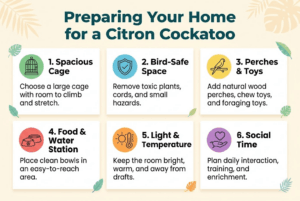
Cockatoos are naturally curious and enjoy exploring. Bird-proof your home by:
Covering electrical cords
Removing toxic houseplants
Keeping windows and doors secure
Eliminating access to harmful chemicals
Supervising out-of-cage time
A safe environment reduces the risk of injury and helps your bird thrive.
Cockatoo Cage Requirements
A spacious cage is essential because cockatoos are active climbers and enjoy spreading their wings.
Place the cage in a bright family area where your cockatoo can interact with household members while avoiding direct drafts and kitchens.
For more housing ideas, visit our Guide to Choosing the Best Cockatoo Cage.
Healthy Cockatoo Diet
Nutrition is one of the most important aspects of cockatoo care.
A balanced diet should include:
High-quality pellets (60–70%)
Fresh vegetables
Fresh fruits
Healthy grains
Sprouted seeds
Limited nuts as treats
Fresh, clean water daily
Best Fruits for Cockatoos
Apples (without seeds)
Mango
Papaya
Blueberries
Strawberries
Bananas
Grapes
Kiwi
Pears
Pomegranate
Rotate fruits regularly to provide a wide range of nutrients.
Best Vegetables
Vegetables should make up a significant portion of your cockatoo’s daily meals.
Excellent choices include:
Fresh vegetables offer vitamins, minerals, and dietary fiber.
For meal ideas, explore our Healthy Parrot Diet and Nutrition Guide.
Foods Cockatoos Should Never Eat
Avoid feeding:
Chocolate
Avocado
Onion
Garlic
Alcohol
Caffeine
Fruit pits
Apple seeds
Salty snacks
Sugary foods
Fried foods
These foods can cause serious illness or even be fatal.
Daily Exercise
Healthy activities include:
Flying in a safe room
Climbing play gyms
Foraging
Puzzle toys
Rope swings
Training sessions
Exercise helps prevent obesity and behavioral problems.
Mental Enrichment
Cockatoos are among the smartest parrots on Earth.
Keep them mentally stimulated with:
Puzzle feeders
Foraging toys
Wooden chew toys
Rotating enrichment activities
Interactive games
Clicker training
Problem-solving toys
Changing toys regularly prevents boredom and destructive behaviors.
Read our Parrot Enrichment Toy Guide for ideas that encourage natural behaviors.
Socialization and Bonding
Cockatoos crave interaction with their families.
Spend quality time every day by:
Talking
Playing games
Gentle head scratches
Teaching tricks
Reading aloud
Sharing supervised family activities
Strong social bonds reduce stress and help prevent feather plucking.
Cockatoo Training Tips
Positive reinforcement works best.
Reward desired behaviors with:
Praise
Favorite treats
Clicker training
Gentle encouragement
Step up
Step down
Recall
Target training
Entering the cage willingly
Short, consistent sessions produce the best results.
Grooming and Hygiene
Regular grooming keeps your bird healthy.
Routine care includes:
Clean living conditions reduce the risk of bacterial and fungal infections.
Common Cockatoo Health Problems
Watch for:
Feather plucking
Obesity
Respiratory infections
Psittacine Beak and Feather Disease (PBFD)
Calcium deficiency
Vitamin A deficiency
Bumblefoot
Stress-related behaviors
Schedule regular wellness exams with an avian veterinarian to detect problems early.
Signs Your Cockatoo May Be Sick
Loss of appetite
Weight loss
Difficulty breathing
Fluffed feathers for long periods
Tail bobbing
Nasal discharge
Lethargy
Changes in droppings
Excessive sleeping
Sitting at the bottom of the cage
Early treatment greatly improves recovery.
Sleep Requirements
Cockatoos need 10–12 hours of uninterrupted sleep every night.
Create a quiet sleeping environment by:
Proper sleep supports healthy behavior and immune function.
Cockatoo Lifespan
With excellent care, many cockatoos live:
Small species: 40–50 years
Medium species: 50–60 years
Large species: 60–80+ years
Owning a cockatoo is a long-term commitment that requires planning for decades of care.