
Lovebird for Sale
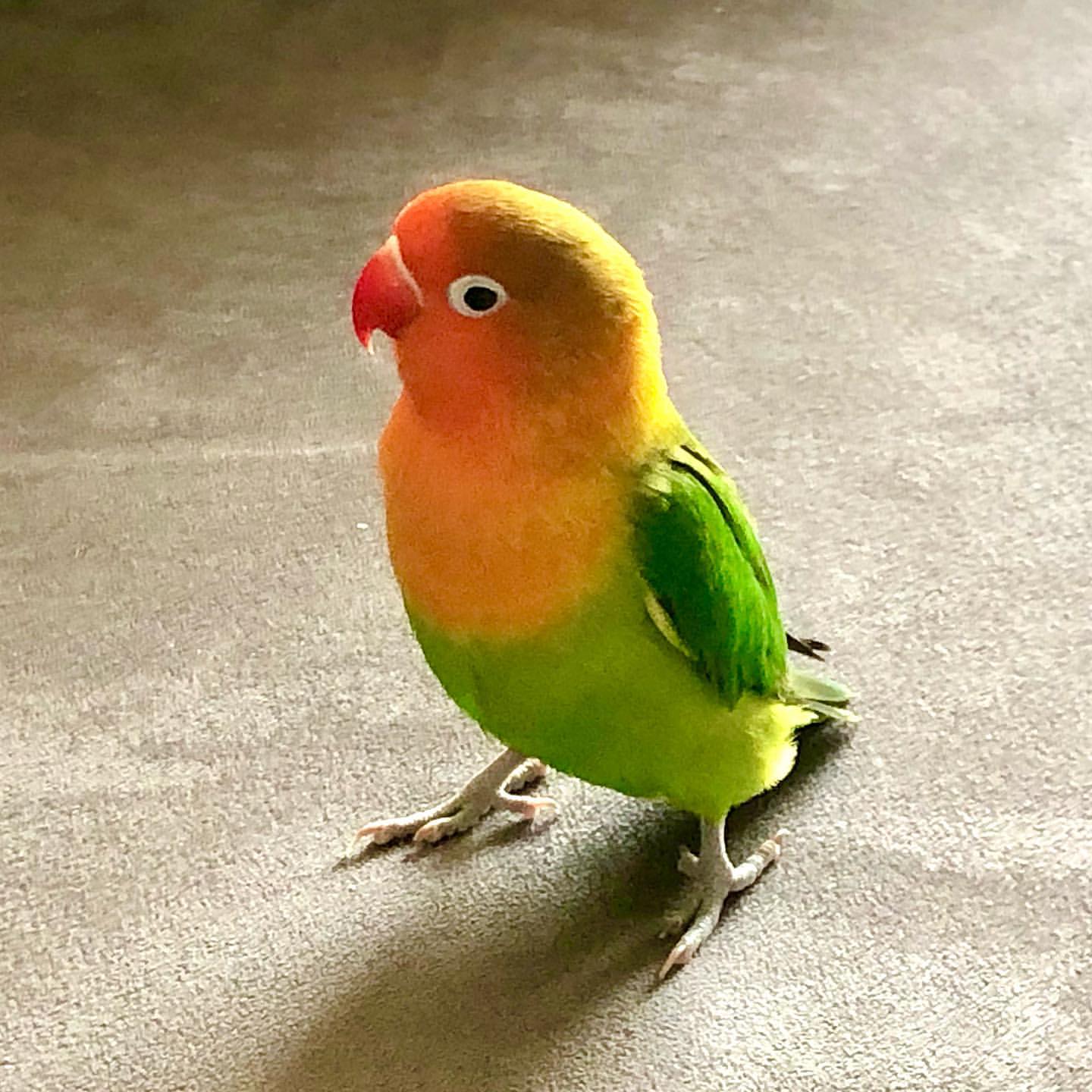
Rosy Faced Lovebird for Sale
Lovebird for Sale, these birds usually live in small groups. These lovebird species are mostly not kept in captivity except in show aviaries:
– Abyssinian or black-winged lovebird (Agapornis taranta)
– Black-cheeked lovebird (Agapornis nigrigenis)
– Madagascar or grey-headed lovebird (Agapornis cana)
– Nyasa or Lillian’s lovebird (Agapornis lilianae)
– Red-faced or red-headed lovebird (Agapornis pullaria)
– Swindern’s or black-collared lovebird (Agapornis swindernia)
In the wild, the Fischer’s, Nyasa, and black-cheeked lovebird populations are of concern.
Temperament
Lovebirds are active, curious, feisty, and playful, so they have a lot of personality for their small size. They are very social and often form strong bonds with their owners, which can make them quite affectionate.
Lovebirds can also be territorial, aggressive like the Amazon parrots , and jealous if not properly trained from an early age. Some experts suggest that female lovebirds are more likely to be jealous and territorial than males, but both genders can have wonderful temperaments. While not as loud as some larger parrots, lovebirds can still make a loud, high-pitched screech, especially when trying to get your attention. Their usual chirps and squawks are not very loud, but they enjoy talking to their owners.
Generally, lovebirds are not known for mimicking speech or sounds, though there are always exceptions. Some experts believe females are more likely to mimic than males, but both can chatter.
Lovebird Colors and Markings
They also have a stockier build. The colors of these species vary widely, including peach, teal, white, and green. Most have bright plumage, with different-colored heads and faces compared to their body feathers. Many popular pet lovebirds are mostly green in color.
Several color variations exist in different lovebird species. This is especially true for the peach-faced lovebird, the most commonly kept as a pet. It is easy to breed in captivity, and this has been done for many years, resulting in many color forms. The Absynian, Madagascar, and red-faced lovebirds are dimorphic, allowing for easy sex identification based on feather color.
Other species are monomorphic, meaning the males and females look nearly identical.
Some lovebird species have a noticeable white eye ring, a feature common in parrots.
The peach-faced and Swindern’s lovebirds do not have this. The bill of a lovebird is hooked, and its color varies by species, ranging from bright orange-red to pale beige.
Their feet are zygodactyl, with two toes pointing forward and two backward, which helps them grip branches and be more agile. Lutino Lovebird – Peach-Faced Lovebird variant
Colorful Fischer’s lovebirds kiss
Caring for Lovebirds
Regular handling and training are important to keep a lovebird tame.
However, many single lovebirds can do well on their own as long as they get enough attention and social interaction from their owner.
That said, lovebirds are flock animals and typically thrive when they feel part of a group and can interact with others of their kind. If you have limited time to spend with your lovebird, getting a companion is especially important.
Feeding Lovebirds
Like other parrots, lovebirds should be fed a variety of foods. In the wild, they eat fruits, seeds, grasses, and vegetables, so a pet lovebird’s diet should be equally diverse. A good pelleted bird food should form the basis of their diet. This can be supplemented with fresh foods and some seeds.
Try to switch up the types of fresh foods you give. Keep in mind that it may take some time for your lovebird to get used to new items, including food. A cuttlebone can be provided in the cage as a calcium supplement.
Cages
At a minimum, your lovebird will need a cage that is at least two feet wide, two feet long, and two feet tall. However, a larger cage is always better. If possible, focus more on the length rather than the height. This allows your lovebird to spread its wings and even fly around the cage.
The bars on the cage should be no more than 1/2 to 5/8 inch apart and placed horizontally to allow the bird to climb the sides. Avoid round cages as they can damage the tail feathers. Offer a variety of perch sizes and materials, including natural branches if available, to keep the feet healthy and strong.
Exercise
Like all parrots, lovebirds are very active and playful. They do best with plenty of interaction and playtime. Giving them daily attention will help strengthen your bond and prevent unwanted behavior. It’s a good idea to have lots of toys available and to change them around the cage to keep the birds entertained. Make sure all toys are free from zinc and lead, and that there are no loose threads.

Richard Lesh –
Very happy with the service provided & happy with my little bird beautiful little thing she came untamed but is a very quick learner would defiantly recommend
Warren Araujo –
Can you provide details about feeding hummingbirds?
What kind of food should I give them?
jessicaaura39 (store manager) –
Hello Warren, Hummingbirds are able to survive on their own by feeding on flower nectar and tiny insects.
However, you can encourage them to visit your garden by using a commercial hummingbird feeder filled with a sugar-water solution. You can prepare this mixture at home by combining one cup of water with one cup of granulated white sugar in a saucepan, then boiling it to dissolve the sugar. After that, add three cups of cold water to the mixture, which creates a 4-to-1 ratio of water to sugar. Once the hummingbirds start visiting the feeder regularly, you can dilute the solution to a 6-to-1 ratio by adding five cups of cold water to the boiled mixture. This helps prevent liver damage in the birds and encourages them to seek out natural food sources. Any leftover sugar-water should be stored in a sealed container and kept in the refrigerator.