
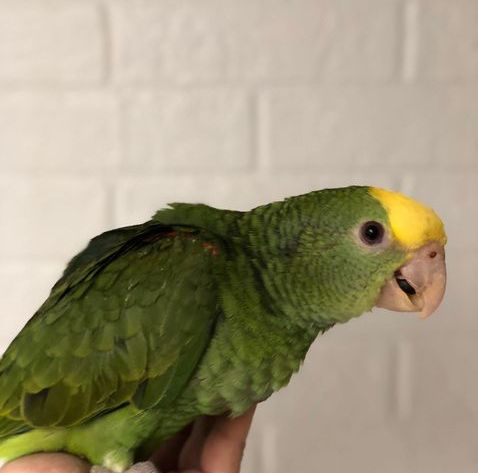
Description
Amazon Parrots for Sale
Baby Amazon Parrots for Sale
Amazon Parrots for Sale. An Amazon parrot is a classification of several different kinds of parrots that originally hail from the Amazon. There are many species of Amazon parrots; 10 types are common as pets. These medium- to large-sized exotic birds can live for up to 50 years. They require consistent attention, exercise, and training, especially if you want a less noisy, gentle bird. Several species, like the Yellow-Naped Amazon and Double Yellow-Headed Amazon, are pretty good talkers and mimics, too. Before bringing an Amazon parrot home, prospective owners should learn about the species’ long-term needs. The Association of Avian Veterinarians’ pet bird care resources provide additional information about caring for companion parrots.
Temperament
Amazons are brilliant and playful birds that love being the center of attention. They need lots of affection and time with their owners. They are curious, athletic, and seem to enjoy entertaining their owners with clownish antics. Hand-fed Amazon parrots typically make loving, affectionate pets.
An Amazon parrot uses body language to indicate its mood. For example, an excitable Amazon parrot might be indicating it does not want to be handled, and failure to recognize this might result in a bite.
Speech and sound
They seem to be especially fond of music and singing. Blue-fronted, double-yellow headed, and yellow-naped Amazons are considered the best talkers of the Amazon family. They can speak with clarity and even understand the context. In general, most Amazon species can learn to talk; a majority of the species are mumblers or will jumble the words.
As for other sounds, Amazons can be quite noisy and loud. Amazons are also good screamers and screechers, though not as loud as cockatoos or macaws. These loud vocalizations are how the birds communicate with the flock—usually indicating danger, anger, excitement, or calling for attention.
Care and Feeding
The majority of Amazon parrots love to bathe, and bathing opportunities can include joining their owner in the shower, getting a spray bath, or jumping in their water dish and splashing water all about the place. Bathing is an important part of an Amazon’s feather health.
An Amazon parrot needs a spacious cage. Included in the cage should be toys and swings spread out within the cage, as well as a play gym/play tree, climbing rope, or ladders to scale. This equipment will encourage movement and exercise. The minimum cage size should be 24 inches by 36 inches and 48 inches tall, with bar spacing of 3/4 to 1 inch. An aviary or safe free flight area is ideal.
Besides the initial purchase of the bird, the cage, and food, the bulk of your remaining expenses will be for toys for your pet parrot. Being very playful, Amazons need lots of sturdy toys. Plan to go through a lot of toys over the lifetime of your bird. Think about bird toy safety when you choose toys. Amazons particularly like to chew toys and hold toys with their feet.
Behavior of Amazon parrots
Amazon Parrots are very social birds, and a single parrot will make a wonderful pet if it gets plenty of attention. They adapt well to captivity, adjusting easily to their cage or aviary. These birds will tame quickly, bond to their keeper, and may soon begin to mimic sounds. They enjoy interaction and like their human companions.
– Highly intelligent and curious; Amazons love to explore their surroundings
– Considered by many to be the most trainable of all parrots
– Have the capacity to learn a large vocabulary
– Tamed birds readily adapt to new surroundings and activities; expose early to daily activities in your household as well as to other pets
– Need environmental enrichment, interesting toys, and foraging exercises to reduce the chance of behavioral problems.
Amazons as Pets
With the intricacy and time commitment that comes with owning a large parrot. People who are untrained or reluctant to devote time to training and socializing a parrot will eventually cause (or enable) the parrot to become highly snappy and overly noisy.
A bored Amazon parrot will not thrive, nor will a pet with behavioral disorders provide much joy to its owner. Once formed, unskilled or casual bird keepers will find it difficult to reverse them. Larger parrots, in general, are best kept by those who understand their demands.
Housing
An Amazon parrot’s cage should be as large as you can fit and afford. At minimum, the cage should be 2 feet by 3 feet by 4 feet, but the bigger the better. Some owners even dedicate small rooms as free-flight aviaries for their pet birds. Make sure the cage bar spacing is narrow enough that your bird can’t get any body parts stuck.
The enclosure includes toys, swings, ladders, and perches of various sizes.


Madalina Isabela –
The Owner is very knowledgeable and open/honest. Makes sure the breed you want is what you’re expecting. Keeps you informed and explains aftercare. Our baby has only been home 3 days and already eating from our hand, letting us hold and pick him up.
Shelia Stone –
I cannot rave about Pet bird breeders. Their staff are so caring and go above and beyond to make sure all birds are well cared for. My male Amazon Parrots learned a new whistle, just two day after we got him. which is also a bonus
Lloyd Johnson –
Wonderful service and a beautiful bird. The seller provided regular updates and made sure I felt confident throughout the entire process
Richard Singleton –
I was impressed by how well everything was organized. My Amazon Parrots arrived on time, healthy, and already comfortable interacting with people
Karen G. Boswell –
My parrot settled into its new home almost immediately. It’s healthy, intelligent, and has a great personality. Highly recommend this site pet bird breeders