
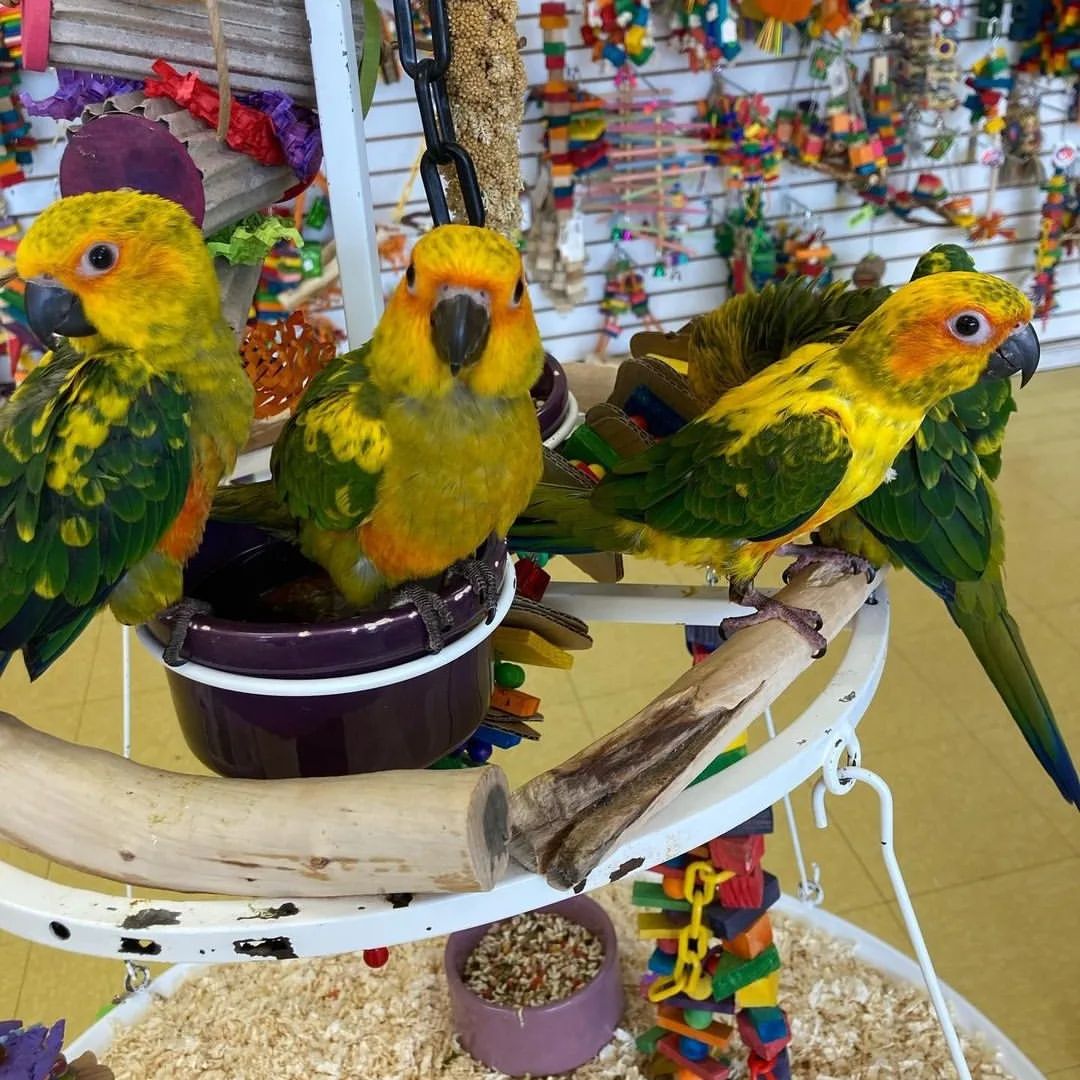
Sun Conure Bird for Sale
Healthy Sun Conure Bird for Sale
Sun Conure Bird for Sale, the Sun Conure, a small member of the parrot family, is one of the most colorful of the conures. Their nice personalities and their gorgeous coloring make them a favorite pet. There are a variety of conures, and most make excellent pets. They vary in coloring and size, the Nanday Conure, for example, is a larger conure with a black head and green body. For a smaller bird and a great pet, a conure is a great choice.
The sun conure has a long, tapering tail, a black beak, and white rings around its eyes. Because of its stunning colour and charming nature, the sunny’s striking color makes it a favorite among pet owners and a favorite among experienced aviculturists due to its ease of breeding. It takes roughly two years for immature birds to reach their full colour. Though the coloring of the sexes is nearly identical, males are considered to be significantly brighter. Males are reported to have a squarer, flatter head, while females have a rounder, smaller head, yet only experienced breeders are capable of observing the birds and making an educated judgment. There is no difference in pet quality.
Care and feeding of a Sun Conure
A roomy cage is required unless the bird is to be let out for extended periods. Many birds can spend most of their time on a play pen or parrot perch. They eat a variety of sprouts, seeds, nuts, fruits, vegetables, and commercial pellets, as well as the same nutritional foods humans eat.
As is true of most other parrot species, the sun conure needs safe out-of-cage areas to explore and investigate. This athletic bird loves to create its own tricks. Provide it a play gym on top of its cage so it can stretch its legs and wings.
Like most pet birds, sun conures require training if you want to have a positive and fun relationship with them. Use positive reinforcement techniques to train this parrot to do several athletic tricks. This bird will not respond well to scolding or any kind of negative reinforcement.
Pet Care & Behavior: Learn about their temperament and care requirements from the Lafeber Co. Sun Conure Guide
Maintenance
The basic cage care includes daily cleaning of the water and food dishes. Weekly you should wash all the perches and dirty toys. The floor should be lined with newspaper and changed daily, or covered with an absorbent bedding such as corn cobs or pine shavings and changed weekly. A total hosing down and disinfecting of an aviary should be done yearly, replacing anything that needs to be freshened, such as old dishes, toys and perches.
Activities of Sun Conures
Sun Conures need a great deal of exercise, and all sun conures are chewers. They must have distractions to keep them from becoming bored and lonely. Gnawing and climbing are great activities for this. They will generally chew up anything wooden! Natural perches and fresh twigs from willow, elder, poplar, and hawthorn work well
Other great toys include bells, ropes, swings, untreated leather, chew toys and ladders. They love mirrors and shiny unbreakable objects. Exercise and play are important activities for the physical well being and psychological health of your conure, but remember, they also need 10 – 12 hours of rest per day.
Handling/Training
Always handle your pet sun conure gently. If a person is a afraid of a bird, the bird can sense this and it can make it impossible to develop a relationship. Never hit your bird or you will loose it’s trust, probably forever.
Taming Basics:
To train you sun conure pet, the first thing you should do is have it’s wings clipped. A bathroom is a good area for working with your conure to train it. Be sure to cover the mirrors, have the windows closed and covered and the door closed.
Always reward good behavior and each success with loving praise and a treat. Some treats are a cracker, fruit such as a piece of grape, or a nut. Repeat the hand-taming lessons several times a day but for short periods of time, about 20 minutes a session.
Initial Training:
Place the Sun Conure (for Sale) on a perch. If it insists on flying off, pick it up and replace it on the perch until it becomes use to the perch and is comfortable with it.
The next step is to take a second perch and gently push into your pet’s chest to encourage it to step up on it. Sometimes offering a treat to coax it up on the perch as it reaches for the treat will help.
>Once it steps up without hesitation, you can then substitute your finger for the perch. If your conure tries to bite, you can blow on it and it will soon learn to behave.
Breeding Sun Conures
Sun Conures are easy to breed. The female produces three or four eggs, which take around 24 days to incubate. The young stay in the nest for seven to eight weeks.
Speech and Vocalizations
In captivity, this bird’s loud, harsh calls may elicit return calls from angry neighbors. This bird is not suitable for apartment or condo dwellers. You can’t expect to “train away” their calls, but you can train them from early on to curb excessive screaming. They do express excitement and fear with shrill screams.

Karen Hensler –
I bought birds from them. very good and will recommend it as value for money.