Description
Rose Breasted Cockatoo for Sale
Galah Rose Breasted Cockatoo for Sale
Rose Breasted Cockatoo for Sale, They can learn to talk, as can most cockatoos and are easy to teach all kinds of tricks. Cockatoos in general are a very loving type of bird that needs a lot of attention from their owners. Buy a cockatoo only if you can spend a lot of time with it.
Galahs make lovely, lively pets and have a good speech ability when properly trained. These birds are incredibly popular as pets because of their friendly and lively personalities.
For detailed information and an authoritative overview of the rose-breasted cockatoo), you can visit the comprehensive Wikipedia Galah Article.
They are incredibly intelligent and like human company, as well as learning new skills to amaze their owner. The Galah is a sturdy and robust bird that adapts well to climate changes due to its adaptation to the dry environments of central Australia.
Care and feeding
Many birds can spend most of their time on a play pen or parrot perch. They eat a variety of seeds, nuts, fruits, and commercial pellets, as well as the same nutritional foods humans eat. The Rose-breasted Cockatoo should be fed a less oil in their diet (which comes from sunflower seeds and other oily seeds) than other cockatoos since they can develop fatty tumors known as lipomas.
As an added source of advanced vitamins, you should introduce fresh common fruits and green vegetables.
Maintenance of Rose Breasted Cockatoo for Sale
The basic cage care includes daily cleaning of the water and food dishes and wiping off the feather dust from the bars and perches. Twice weekly change the bottom trays and replace the soiled litter. Weekly you should wash all the perches and dirty toys and monthly you should clean the entire cage.
Social Behaviors
In the wild, all cockatoo species live together in flocks. Some species may flock in groups of only 8-10 birds while others species will flock in the thousands. This high socialization need has a profound affect on cockatoo behavior. If they don’t get the necessary attention and interaction they can quickly become bored. A bored cockatoo will often develop bad habits like screaming and feather plucking, and these habits are extremely difficult to break.
A Galah is energetic and full of silly behavior like most other cockatoos, but it is also quite affectionate.
Temperament
These birds, unlike umbrella cockatoos, are not big on cuddling. They are, nevertheless, used to dealing with it. If you want to own a galah, be sure you have enough of spare time to devote to your pet. It is a delicate bird that demands a great deal of attention and engagement from its owners.
Galah Cockatoo Colors and Markings
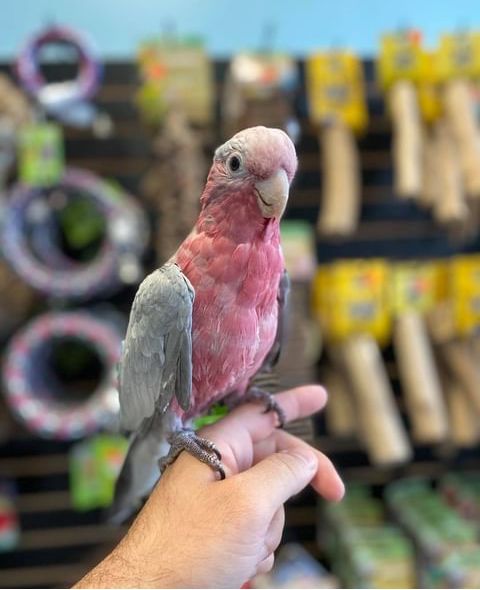
Their bold colors and friendly personalities have made galah cockatoos increasingly popular as pets. As its descriptive name suggests, rose-breasted cockatoos have bright pink feathers on their chests, bellies, and the lower half of their faces. They have pinkish-white crests and gray backs, wings, and tail feathers, gray feet, and horn-colored beaks.
Thomas Haynes –
We contacted pet bird after we’d had Bella and Bobby for a few years. Much loved birds we had no choice but to rehome. Jessica was good with his replies, punctual on arrival and took them carefully. He followed up with replies ensuring the birds are safe and well cared for. 5 stars would recommend.